Posted in Creative writing, hope, disappointment,, Literature, Aesthetics, power

The Tragedy of the Ordinary Man: Vulnerability, Resilience and Adversity in John Munonye’s The Oil Man of Obange

By

Noel A. Ihebuzor

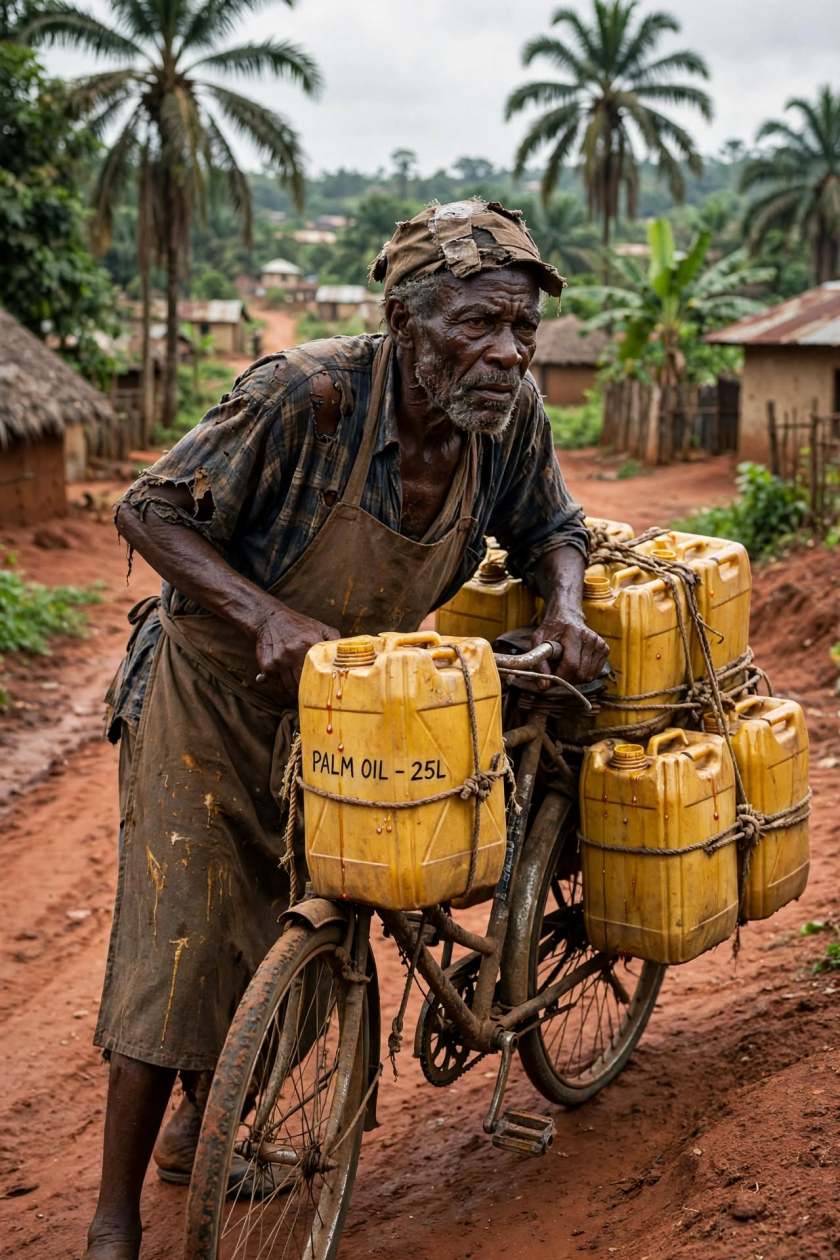
John Munonye’s The Oil Man of Obange invites a reconsideration of what constitutes tragedy and, more importantly, whose suffering is considered worthy of tragic representation. In the classical conception of tragedy, particularly as inherited from Greek drama, the tragic protagonist is frequently a person of elevated social standing whose fall from fortune is associated with error, misjudgment, or hamartia. Tragedy derives part of its force from the distance between the protagonist’s former stature and his eventual ruin. Munonye radically alters this configuration. His protagonist, Jeri, has no great height from which to fall. He is an ordinary palm-oil trader struggling to sustain himself and his family in a precarious colonial economy. His tragedy lies not in falling from greatness but in the exhausting struggle to achieve even a modest degree of security.

It is precisely this ordinariness that gives The Oil Man of Obange its distinctive tragic power. Munonye relocates tragedy from the palace to the marketplace, from the exceptional individual to the economically vulnerable household. Jeri is neither king nor warrior, neither statesman nor aristocrat. His aspirations are correspondingly modest: to work, provide for his family, educate his children, preserve his dignity and gradually improve his material circumstances. Yet the novel demonstrates how even these modest ambitions can become heroic when pursued under conditions of persistent deprivation and insecurity.

Jeri may therefore be understood as the protagonist of a modern social tragedy—a tragedy in which vulnerability, rather than hamartia, assumes explanatory importance. His suffering does not arise primarily from a fatal defect of character. Indeed, many of the qualities traditionally regarded as virtues—industry, perseverance, responsibility, thrift and devotion to family—are strongly present in him. The tragic irony is that these virtues prove insufficient. Munonye presents a social environment in which personal virtue cannot always compensate for structural disadvantage.

Adversity and the Architecture of Tragedy

Munonye constructs Jeri’s tragedy cumulatively. Adversity does not arrive as a single catastrophic event. Instead, the novel subjects him to a succession of pressures whose combined effects gradually diminish his capacity to recover. Taxation, financial insecurity, family obligations, bereavement, educational expenses, accident and the premature assumption of adult responsibilities by his daughter form part of an expanding field of misfortune.

This accumulation is crucial to the novel’s tragic method. A relatively prosperous individual may absorb an isolated shock; a poor household often cannot. The significance of adversity therefore depends not simply on the severity of the event itself but also on the resources available to the person experiencing it. Jeri’s vulnerability lies precisely in the narrowness of his margin for error. He possesses few reserves with which to absorb misfortune.

Munonye reinforces this vulnerability through the physical representation of his protagonist. Jeri’s scarred hands and his clothing—including the memorable oversized black shorts—locate him firmly within the world of manual labour and material scarcity. His body becomes, in a sense, an archive of hardship. The marks of labour upon him remind the reader that poverty in the novel is not an abstraction. It is lived physically, socially and psychologically.

This representational strategy generates pathos without requiring Jeri to be conventionally heroic. The reader’s sympathy derives from witnessing the disproportion between his efforts and his rewards. He works, saves, sacrifices and persists, yet every modest gain remains exposed to destruction by another unforeseen event.

Resilience and Its Limits

One of Jeri’s defining characteristics is resilience. Each encounter with adversity produces an effort at recovery. He refuses to surrender easily to despair, and Munonye repeatedly allows him to reconstitute his hopes after they have been damaged. In contemporary psychological language, one might describe Jeri as possessing considerable self-efficacy: he continues to believe that purposeful action can improve his circumstances.

Yet The Oil Man of Obange complicates any simplistic celebration of resilience. Jeri’s persistence does not guarantee success. This is one of the novel’s most important insights. Resilience is valuable, but resilience without resources has limits.

The distinction is critical. Popular narratives of success often suggest that perseverance eventually triumphs over adversity. Munonye offers a more disturbing proposition: perseverance may be necessary for survival while remaining insufficient for escape from poverty. Jeri can recover psychologically from one setback, but each recovery consumes resources—money, property, labour, social standing and emotional strength. Resilience itself therefore becomes progressively more expensive.

This is particularly evident when financial pressures force Jeri into increasingly desperate coping strategies. Funeral expenses, school fees, accident and other demands erode the small economic base upon which his aspirations depend. His eventual willingness to surrender land is especially significant. Land represents more than an immediately disposable economic asset. In the social world represented by the novel, it carries implications of security, continuity and belonging. To relinquish it is therefore to mortgage part of the future in order to survive the present.

Munonye thus exposes what might be called the paradox of poverty: the poor frequently survive today’s crisis by sacrificing resources needed to protect themselves against tomorrow’s.

Deferred Gratification and the Collapse of the Future

Jeri’s economic behaviour may also be interpreted through the concept of deferred gratification. He repeatedly accepts present hardship in anticipation of future improvement. His labour, savings and sacrifices are investments in a future that he imagines will be better than the present. Education, family advancement and economic security constitute different versions of this deferred future.

In conventional economic reasoning, postponing immediate consumption may permit accumulation and eventual improvement in welfare. But Munonye introduces a crucial qualification: deferred gratification works only where the present and its structures are sufficiently secure for sacrifice to yield its expected return in the future. Jeri inhabits no such secure environment.

Every attempt at accumulation remains vulnerable to illness, death, taxation, family emergency, and accident. Consequently, the future continually consumes the resources accumulated for it before it can arrive. The irony is devastating. Jeri sacrifices the present for the future, but repeated crises compel him to spend the future merely to survive the present.

The novel therefore transforms deferred gratification from a straightforward economic virtue into a tragic mechanism. Prudence cannot guarantee prosperity when individuals are exposed to risks against which they possess little protection.

The Death of Marcelina and the Social Production of Tragedy

The death of Jeri’s wife, Marcelina, is particularly revealing. Her death from tetanus carries significance beyond personal bereavement. It directs attention towards the inadequacy of the social and medical environment within which the family exists. What is experienced privately as devastating grief may simultaneously be understood as evidence of wider institutional deprivation.

This is an important feature of Munonye’s tragic vision. Misfortune appears personal because individuals experience its consequences, yet its origins and severity are often social. Illness becomes catastrophic where healthcare is inaccessible or inadequate. Bereavement becomes economically ruinous where households lack insurance or meaningful social protection. Educational aspiration becomes fragile where school costs must compete with subsistence. An accident becomes an existential economic threat where savings are negligible.

Munonye thereby blurs the distinction between private tragedy and public failure.

The circumstances surrounding Jeri’s daughter deepen this critique. Her pregnancy at thirteen and her decision to leave school in order to assist the family represent more than an individual misfortune. Childhood itself becomes a casualty of household vulnerability. The pressures generated by poverty travel across generations: the crisis experienced by the parents reshapes the possibilities available to the children.

The tragedy is therefore not Jeri’s alone. His vulnerability becomes familial and potentially intergenerational.

Community Without a Safety Net

Another striking feature of the novel is the contrast between communal recognition and effective communal assistance. Jeri may attract sympathy and even admiration, but sympathy does not necessarily translate into material protection.

This distinction deserves attention because it complicates romantic assumptions about traditional communal solidarity. Community can provide identity, companionship and moral recognition while remaining incapable of absorbing severe economic shocks. The people around Jeri may recognise his suffering, yet recognition cannot pay school fees, replace lost income, provide medical treatment or restore depleted assets.

Munonye therefore presents a society in which social relationships exist but an adequate social safety net does not. Jeri remains surrounded by people and yet, at crucial moments, structurally alone.

His vulnerability is consequently not simply the condition of being poor. It is the condition of possessing insufficient alternatives. Poverty narrows the range of possible responses to adversity. The wealthy confront crises with buffers; the poor confront them with choices between necessities.

Jeri’s predicament illustrates this distinction with painful clarity.

From Hamartia to Vulnerability

It is here that Munonye’s contribution to the idea of tragedy becomes most apparent. Classical tragedy often encourages the question: what flaw or error brought the protagonist to this end? The Oil Man of Obange encourages a different question: what resources did the protagonist possess with which to prevent this end?

The shift is profound.

Jeri’s tragedy is not convincingly explained by identifying a single fatal character flaw. His problem is not an excess of ambition comparable to that of certain classical tragic figures, nor an overwhelming pride that blinds him to reality. His aspirations are modest and socially recognisable. He wants security for himself and his family.

The source of tragedy therefore migrates from character towards condition.

This does not mean that Jeri lacks agency or that every decision he makes must be regarded as correct. Rather, it means that his decisions occur within severely restricted circumstances. Agency exists, but it is constrained agency. Choice exists, but the available choices are often between competing forms of loss.

From this perspective, vulnerability performs some of the narrative work traditionally assigned to hamartia. It exposes Jeri repeatedly to consequences from which more privileged individuals might recover. His poverty magnifies ordinary misfortunes into existential threats.

The tragedy of Jeri is thus not that a great man falls. It is that an ordinary man is given so little room in which to remain standing.

The Ethics of Munonye’s Tragic Method

The relentless accumulation of adversity inevitably raises an aesthetic and ethical question: does Munonye subject Jeri to too much suffering? At what point does the accumulation of calamities risk appearing authorially contrived?

The question is legitimate because tragedy depends upon plausibility. If suffering appears arbitrarily imposed merely to manipulate the reader’s emotions, pathos can deteriorate into sentimentality.

Yet the cumulative structure of Jeri’s suffering can be defended on precisely sociological grounds. Vulnerability tends to be cumulative. One shock depletes the resources needed to withstand the next. Illness produces expenditure; expenditure consumes savings; depleted savings increase exposure to subsequent crises; crisis may require the sale of productive assets; loss of assets then increases future vulnerability. What may appear, from a position of security, to be an improbable succession of disasters may represent the lived logic of chronic poverty.

Munonye’s apparent excess therefore has a deeper realism. Jeri is not merely unlucky again and again. He is progressively less protected against being unlucky.

This distinction is essential to understanding the novel.

Conclusion: A Tragedy Without Kings

The Oil Man of Obange ultimately enlarges the moral territory of tragedy. Munonye demonstrates that tragic dignity need not depend upon social rank and that catastrophic suffering need not begin with an extraordinary flaw. The life of an ordinary palm-oil trader can carry tragic weight because the fundamental materials of tragedy—hope, striving, attachment, loss, endurance and defeat—are not the exclusive possessions of kings.

Jeri emerges as a compelling tragic protagonist precisely because his aspirations are so recognisably human. He asks comparatively little of life: the opportunity to work, support his family, educate his children and achieve some measure of security. Yet the social and economic environment continually raises the cost of these modest aspirations.

His resilience intensifies rather than diminishes the tragedy. Had Jeri surrendered immediately, his fate might merely evoke pity. Because he repeatedly rises, struggles and attempts to rebuild, each subsequent reversal acquires greater emotional force. Munonye makes us witnesses not simply to suffering but to the gradual exhaustion of the resources with which suffering can be resisted.

The novel consequently proposes a powerful revision of the tragic form. In place of the classical movement from greatness to ruin, Munonye gives us the struggle from vulnerability towards security—and the repeated interruption of that struggle by forces larger than the individual’s capacity to absorb them. In place of hamartia, he gives us precarity; in place of the palace, the poor household; in place of the fallen great man, the ordinary working man attempting to preserve his dignity.

The most disturbing question raised by Jeri’s experience is therefore not whether he possessed sufficient resilience. He plainly did. The more important question is how much resilience society can reasonably demand from a human being before the celebration of endurance becomes an excuse for the absence of protection.

Munonye’s achievement lies in making that question tragic. Jeri’s defeat is moving not because he is extraordinary, but because he is ordinary—and because the forces that overwhelm him are precisely the kinds of forces to which ordinary lives remain most exposed. The Oil Man of Obange thus makes a persuasive case for a tragedy of the vulnerable: a modern tragic form in which the measure of the protagonist is not the height from which he falls, but the courage with which he struggles, again and again, to rise.
Posted in Basic Education, governance, Language in education, Politics, Uncategorized

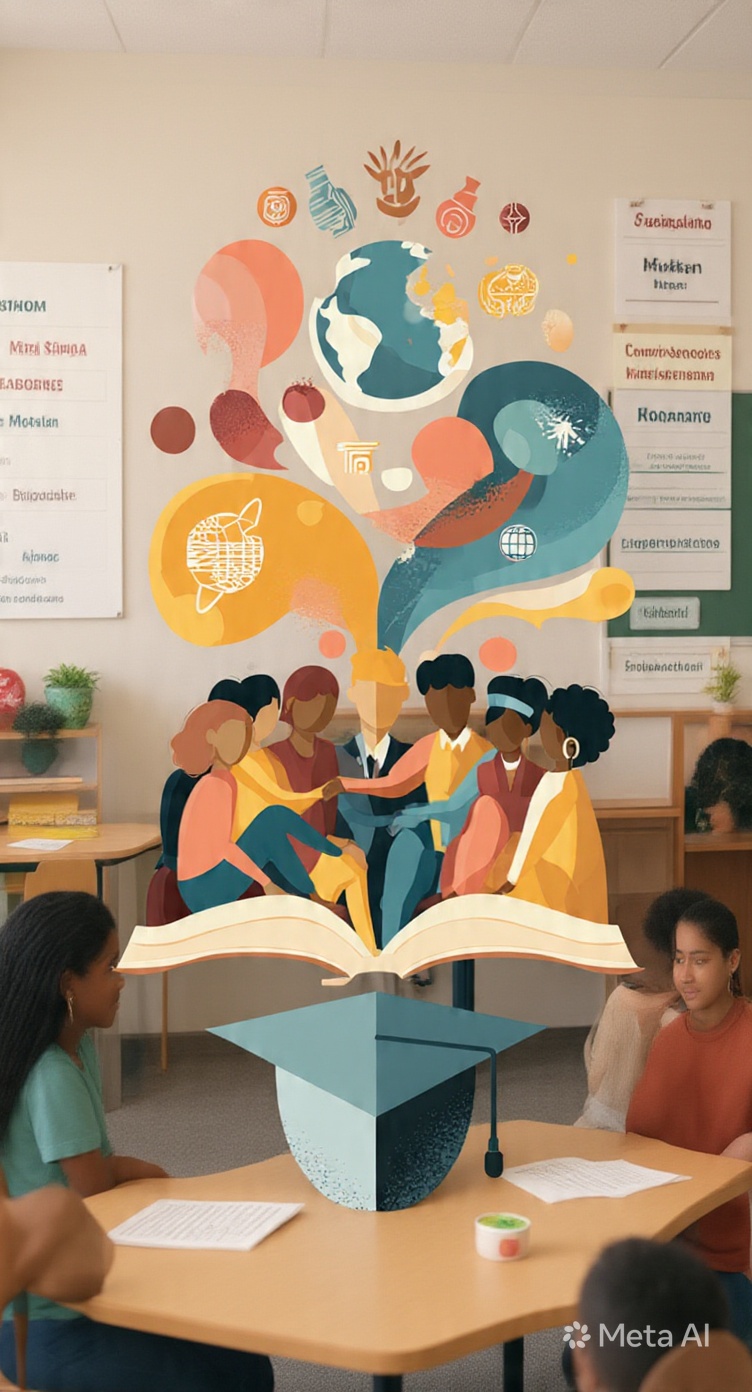
Multilingualism, Cultural Pluralism and Curriculum Development in Basic Education in Nigeria

By Noel A. Ihebuzor

Introduction

Multilingualism and cultural pluralism have received considerable scholarly and policy attention in countries such as the United States, Canada, the United Kingdom, Belgium, and France because of their implications for national integration, identity preservation, and educational development. In many African countries, however, including Nigeria, these issues have often received only superficial attention despite their enormous significance for social cohesion, equity, and curriculum development.

Nigeria is one of the most culturally and linguistically diverse countries in the world, with over 250 ethnic groups and more than 500 languages. Such diversity presents both opportunities and challenges for education policy and curriculum development. While diversity can enrich learning and strengthen cultural identity, it can also create tensions relating to language policy, representation, access, and national integration.

This paper examines the relationship between multilingualism, cultural pluralism, and curriculum development in Nigerian basic education. It explores the conceptual foundations of multiculturalism and cultural pluralism, analyses their implications for curriculum development, and discusses the advantages, disadvantages, and threats associated with multilingual and culturally plural educational systems. The paper further examines how power relations, linguistic dominance, and educational policy shape curriculum choices in Nigeria and concludes with recommendations for a more inclusive and equitable curriculum framework. The writing of this paper is informed by concerns for equity, respect for language rights and the imperative for culturally responsive pedagogy. A related motivation was the need to broaden the rhetoric on curriculum decolonisation to include recognising the dangers in the subtle colonisation of speakers of minority languages in multilingual African countries such as Nigeria by speakers of dominant languages in these same countries. Implicit in the above is the invitation to the reader that colonisation is colonisation. Denying a speaker of a minority language education in his/her language is thus a measure that could lead to exclusion. Given the vital link between language and indigenous knowledge systems, such an exclusion could also lead to major losses in indigenous knowledge systems for speakers of such languages

Keywords: Multilingualism, cultural pluralism, curriculum development, language policy, minority languages, multicultural education, Nigeria.

Conceptual Clarifications

Multiculturalism and Cultural Pluralism

Multiculturalism refers to the coexistence of multiple cultural groups within a society. It is commonly associated with policies that recognize cultural diversity and encourage the inclusion of different cultural traditions within national life. Multicultural societies may contain dominant and minority cultures of varying demographic and political strength.

Cultural pluralism, on the other hand, refers to a situation in which diverse cultural groups are not only allowed to exist but are also encouraged to preserve and develop their unique identities, languages, traditions, and values. Unlike monocultural systems that encourage assimilation into a dominant culture, cultural pluralism promotes integration without cultural absorption.

The distinction between multiculturalism and cultural pluralism is significant. Multiculturalism may simply describe the presence of multiple cultures, whereas cultural pluralism implies deliberate policies aimed at protecting minority identities and ensuring equitable representation.

Linguicism and Linguistic Imperialism

The concept of linguicism, introduced by Tove Skutnabb-Kangas, refers to discrimination based on language. It describes ideological and structural processes that privilege certain languages while marginalizing others.

Closely related is the idea of linguistic imperialism, developed by Robert Phillipson, which explains how dominant languages expand through political, educational, and economic power structures. In multilingual societies such as Nigeria, language choices in education often reflect broader struggles over power, identity, and cultural dominance.

The privileging of major languages over minority languages in schools can therefore become a mechanism for reinforcing social inequalities and weakening minority cultures.


Curriculum Development as a Political and Cultural Process

Curriculum development is often presented as a technical or pedagogical process involving the selection of learning content, teaching methods, and evaluation procedures. However, curriculum development is also deeply political and ideological because it involves decisions about:

  • what knowledge is valuable;
  • whose culture is represented;
  • which languages are promoted;
  • which histories are remembered;
  • and what kind of society education seeks to create.

Education is not culturally neutral. Beyond transmitting knowledge and skills, it also functions as a mechanism for cultural transmission, identity formation, and social reproduction.

Scholars such as Pierre Bourdieu and Michael Young argue that curriculum can become an instrument for reproducing dominant cultural values while marginalizing less powerful groups. In multicultural societies, curriculum development therefore reflects existing power relations and ideological preferences This is especially evident in subjects such as language, history, social studies, religion, literature and civic education. These subjects often privilege dominant cultural narratives while underrepresenting minority perspectives.

Multilingualism and Cultural Pluralism in Nigeria

Nigeria’s educational system operates within a highly multilingual and multicultural environment. The country’s language policy recognizes English as the official language and identifies Hausa, Igbo, and Yoruba as the three major Nigerian languages. Numerous other indigenous languages are recognized as mother tongues, although many are not adequately supported within formal education.

This arrangement has generated significant educational and sociopolitical tensions.

For example, children from minority linguistic backgrounds frequently experience what may be described as a “multiple language burden.” A child from a minority ethnic group living outside his or her ancestral community may be required to learn:

  • the local dominant language;
  • one of the three major Nigerian languages;
  • and English.

This creates unequal linguistic demands compared to children from dominant linguistic groups.

The emphasis on the three major languages also creates concerns about:

  • linguistic marginalization;
  • unequal resource allocation;
  • cultural domination;
  • and the gradual disappearance of minority languages.

The latter concern, that of a concern with the phenomenon of language disappearance, sometimes described as glottophagy, becomes when smaller languages are gradually abandoned due to pressure from dominant languages and cultures.

Models of Cultural Pluralism

The literature identifies several models of cultural pluralism:

Cooperative Model -Different cultural groups collaborate harmoniously while maintaining their identities.

Conflict Model – Cultural groups compete for recognition, influence, and resources, often generating tension.

Coercive Model – Dominant groups compel minority groups to adopt dominant cultural norms; and

Domination Model – Powerful groups impose their culture through institutions such as schools, media, and government policies (Young, 1979; Phillipson, 1997)

In reality, most societies display elements of several models simultaneously. In Nigeria, these models play out in such things as the choice of which Nigerian language should be learnt as L2 and which language should be used as mother tongue in school settings characterized by the presence of learners from different first languages. Given the close affiliation between language and culture, any language choices in such settings ultimately become a choice of which culture to advantage.

Challenges of Cultural Pluralism and Multilingualism in Nigerian Education

These are several and include Language Policy and Inequality, curriculum representation, the reality of resource constraints, the ever-present ethnic and religious sensitivities which may colour perception of educational decision taken, the problem of teacher supply and the availability of pedagogical materials. Let us now take up each of these in turn and discuss each albeit briefly

Language Policy and Inequality – One of the most difficult issues in Nigerian education concerns the language of instruction. While mother-tongue education is pedagogically desirable, implementing it across hundreds of languages is financially and administratively challenging.

Consequently, many minority languages remain excluded from instructional use, placing their speakers at educational disadvantage.

Curriculum Representation

Curriculum content in areas such as history and social studies often reflects dominant cultural narratives. National heroes, historical figures, and cultural references are frequently drawn from major ethnic groups, while minority cultures receive limited representation.

This may unintentionally create feelings of inferiority and exclusion among learners from minority backgrounds.

Resource Constraints

Developing multilingual curricula requires:

  • trained teachers;
  • instructional materials;
  • translation services;
  • orthographies for local languages;
  • and sustained financial investment.

Many developing countries struggle to provide these resources adequately.

Ethnic and Religious Sensitivities

Curriculum decisions involving religion, language, and culture are highly sensitive in Nigeria. Disagreements over religious instruction, civic education, and historical interpretation often reflect broader societal tensions.

Standardization Difficulties

Cultural diversity complicates efforts to standardize curriculum, assessment, and educational delivery nationwide. However, a basic truth that is worth asserting is that uniformity of curriculum offerings does not necessarily produce unity.

Teacher Preparedness

Many teachers lack adequate preparation in culturally responsive pedagogy. Without proper training, multicultural education may unintentionally reinforce stereotypes rather than promote inclusion.

Advantages of Cultural Pluralism and Multilingualism

Despite these challenges, cultural pluralism offers significant educational and societal benefits. These include the following:

Promotion of National Unity Through Inclusion

Inclusive curricula help learners feel recognized and valued within the national community, thereby strengthening social cohesion.

Preservation of Indigenous Cultures and Languages

Culturally responsive education contributes to the preservation of indigenous languages, histories, and knowledge systems.

Improved Learning Outcomes

Research consistently shows that children learn more effectively when instruction connects with their linguistic and cultural backgrounds.

Promotion of Tolerance and Intercultural Understanding

Exposure to multiple cultural perspectives helps reduce prejudice and promotes empathy, mutual respect, and peaceful coexistence. Specifically, the Urhobo adolescent who learns about Itsekiri culture is not only bound to become a more rounded but is also bound to display skills of empathy, acceptance and appreciation of fellow learners from other cultures.

Development of Critical Thinking

Multicultural education encourages learners to engage with diverse viewpoints and question assumptions critically.

Strengthening Learner Identity and Self-Esteem

Representation of diverse cultures in curriculum content helps learners develop confidence and pride in their heritage.

Disadvantages and Threats

These are several and include the following:

Risk of Ethnic Fragmentation

Excessive emphasis on cultural differences may deepen ethnic consciousness and weaken national identity.

Cultural Domination

Dominant groups may use education and language policy to reinforce their cultural influence over minority groups.

Linguistic Imperialism

Globalization and the increasing dominance of English create pressures that undermine indigenous languages and cultures. In the Nigerian case, the spread of Hausa language in the North of the country has become a threat to the survival of minority languages, some of which are now threatened with extinction of glottophagy. Without deliberate preservation efforts, minority languages may gradually disappear due to assimilation and globalization pressures.

Curriculum Overload

Attempting to represent all cultural groups adequately may lead to an overcrowded curriculum, but at the barest minimum, efforts must be made to ensure representativeness of the cultural practices of the various groups in society, whilst avoiding the dangers of political manipulation that may accompany such efforts as selection of  Curriculum content may become politicized by powerful stakeholders with strong interests, such dangers being especially high in areas involving history, language, and religion.

The challenge of all the foregoing is how to develop school programs that capture the major educational benefits of multilingualism and cultural pluralism whilst minimizing the downsides. The next section examines their implications for curriculum development.

Implications for Curriculum Development in Nigeria

This concluding section commences on the basic premise that Curriculum development in Nigeria must balance two competing imperatives:

  • promoting national unity;
  • preserving cultural diversity.

Such a curriculum development should also be culturally responsive. A culturally responsive curriculum should:

  • represent diverse cultures fairly;
  • avoid stereotyping;
  • promote inclusive citizenship;
  • support multilingual education;
  • and foster intercultural dialogue.

There is also a need to move away from curricula that privilege only dominant narratives and instead create space for minority histories, local heroes, indigenous knowledge systems, and community experiences. The solutions proposed below are based on these foundational principles

Proposed Solutions and Recommendations

Promote Multilingual Education

Nigeria should strengthen mother-tongue instruction, especially at the early childhood and lower basic education levels.

Develop Inclusive Curricula

Curriculum content should reflect the histories, cultures, and experiences of diverse Nigerian communities.

Strengthen Teacher Training

Teachers should receive professional preparation in:

  • culturally responsive pedagogy;
  • multilingual education;
  • conflict-sensitive teaching;
  • and inclusive curriculum delivery.

Encourage Community Participation

Curriculum development should involve stakeholders from different cultural and linguistic groups as this is one sure way to ensure relevance and critical stakeholder engagement with school curricula.

Support Minority Languages

Government should invest in:

  • orthography development;
  • local language publishing;
  • translation;
  • teacher recruitment;
  • and indigenous language media.

All the suggested policy interventions above come under the scope of language engineering and planned language expansion. These are well discussed in Rubin and Jernudd (1971). At the Nigerian level, these issues mentioned above are well examined in Bamgbose, Akere, and Ihebuzor (1992) and in Ihebuzor and Junaidu (1994).

There is also the need to balance Diversity with National Cohesion whilst making efforts to integrate Indigenous Knowledge Systems in curricula offerings

Furthermore, educational policy should promote shared civic values while respecting cultural diversity. At the same time, and this is the challenging part, efforts must be made to ensure that curriculum content incorporates local knowledge, environmental practices, conflict-resolution traditions, and cultural heritage.

Finally, there is a need for regular and continuous curriculum review to ensure inclusiveness, relevance, and responsiveness of curricula to Nigeria’s evolving sociocultural realities.

Conclusion

Multilingualism and cultural pluralism remain central issues in curriculum development within Nigeria’s basic education system. While cultural diversity enriches education and strengthens democratic inclusion, it also presents significant challenges relating to language policy, equity, representation, and national cohesion.

Curriculum development in multicultural societies cannot be viewed as a neutral process. It reflects broader struggles over identity, power, ideology, and cultural representation. Consequently, educational policy must carefully balance the demands of national integration with the imperative of protecting minority cultures and languages.

For Nigeria, the challenge is not whether cultural pluralism should exist, but how it should be managed in ways that promote inclusion, educational equity, social cohesion, and sustainable national development. Finally, the way that Nigeria manages its cultural pluralism and multilingualism must be such that would advance her pursuit of SDGs 4 and 11.


Selected References

  • Bamgbose, A. (1992). Speaking in Tongues: Implications of Multilingualism for Language Policy in Nigeria.
  • Bamgbose, A,  Akere F and Noel Ihebuzor (eds) (1992), Implementing the language provisions of the National Policy on Education, NERDC. Abuja, NERDC/FME
  • Barrow, R. (1976). Common Sense and the Curriculum. London: George Allen and Unwin.
  • Brent, A. (1978). Philosophical Foundations for the Curriculum. London: George Allen and Unwin.
  • Federal Government of Nigeria (1981). National Policy on Education. Lagos: NERDC Press
  • Fishman, J. (1993). “Ethnolinguistic Democracy: Varieties, Degrees and Limits.” Language International, 5(1), 11–14.
  • Ihebuzor, Noel& Ismail Junaidu (eds) (1994), Proceedings of the seminar on language survey planning, Lagos, NERDC
  • Phillipson, R. (1997). “Realities and Myths of Linguistic Imperialism.” Journal of Multilingual and Multicultural Development, 18(3), 238–248.
  • Rubin, J., & Jernudd, B. H. (1971). Can Language Be Planned? University of Hawaii Press.
  • Skutnabb-Kangas, T. (1988). “Multilingualism and the Education of Minority Children.” In Minority Education: From Shame to Struggle.
  • Young, C. (1979). The Politics of Cultural Pluralism. University of Wisconsin Press.
Posted in Prose

Femi Fani-Kayode as the servant of truth

By

Noel A. Ihebuzor

I read Femi Fani-Kayode’s article and I am responding to the claims in the excerpts below. (I prefer to leave responses to other sections in his very revealing write up to persons with about the same skill sets and mindsets as he has).

“The igbo had little to do with the extraordinary development of Lagos between 1880 right up until today. That is a fact. Other than Ajegunle, Computer Town, Alaba and buying up numerous market stalls in Isale Eko where is their input”?

“for Chinua Achebe records in his book, and we can roughly confirm that there were not more than a few thousand Igbos in Lagos before the civil war”.

The excerpts are amazing and reveal a lot. One thing they reveal for sure is how much economics and history Mr Femi Fani Kayode actually knows. For one thing, he appears to ignore the fact that contributions to economic development can take several forms – hard and soft. Some soft contributions, in the form ideas and the projection of certain work ethics can and do catalyze development even more than the building of infrastructure. Secondly he does not recognize the facts of multiplier effects. Thirdly the claim that there were not more than a few thousand Igbos in Lagos before the war would be more meaningful if the reader was informed of the population of Lagos and the distribution according to ethnic groups during the same period. Were the other ethnic units in their millions in a geographical space where the total population was in its thousands? (The total population of Lagos was 272, 200 in 1952 and 665,000 in 1963 according to the Federal Office of Statistics). Fourthly, concerning the ethnic supremacist claim that one ethnic group’s efforts were largely responsible for what Lagos is today, were the industries in Lagos established in the industrial estates in Apapa, Mushin and Ikeja the work of one ethnic group alone? What of the Federal Government infrastructure that helped facilitate growth and development in Lagos – The Port, the Airport and the Railway – were these the work of one ethnic group alone? Fifthly and coming to the present, there are quite a number of institutions with Headquarters in Lagos which are either fully owned by persons from the South East or which have strong South East ownership. These include quite a number of successful high street banks and financial institutions. One can easily list a number of insurance, oil marketing and several South East owned SMEs companies operating in Lagos and making invaluable contributions to the development of Lagos State. These institutions pay taxes, provide employment and their presence creates secondary employment and a number of other ripple effects with net positive development impacts on Lagos State. Mr Femi Fani Kayode either failed to take such contributions into consideration when making his dismissive and sweeping statement or he was simply not aware of them.

I could go on and on citing such non-indigent contributions to the development of their host states inspired by the need to present commentators on public issues with information which could help them to push back the frontiers of bias and inaccuracies. Inaccuracies (half-truths and untruths) and bias in articles arise from a number of sources – one of these is the tendency to want to rush to be the first to publish, a tendency which causes quite a number of persons to leap before they look and to talk before they think. Sometimes too, they result from the fact, that over time,  some people have become impervious to facts and truths and become resistant to the time tested methods of searching for them. There might not be any malice in such people. Such people deserve prayers and compassion, not condemnation.

Incidentally, Mr. Femi Fani Kayode is always at pains to inform his readers and listeners that he is a historian. He tells us so in this article as he also did in his comments on late Chinua’s Achebe’s TWAC.  I am sure he also aspires to be a good historian. Good historians are “slaves”, not just servants, of truth and facts. Good historians are never servants or slaves to emotions. True, there is a role for emotions in life, but in contributions to discussions on important and sensitive matters of national importance, emotions should always be reined in and disciplined by facts and truths. To do otherwise would be to court folly.

Noel

@naitwt