Beyond the Macroeconomic Numbers: How Should We Assess President Tinubu’s 2026 Independence Day Speech?
By Noel Ihebuzor (Onyenkuzi)
President Bola Ahmed Tinubu’s Independence Day address of 1 October 2026 came at an important moment in Nigeria’s economic and social history. Sixty-six years after independence, the country continues to confront severe economic pressures, widespread insecurity of livelihoods, rising living costs and deep public anxiety about the future.
The President’s speech was, in large part, an attempt both to defend the economic reforms undertaken by his administration and to persuade Nigerians that the most painful phase of those reforms is ending. It presented evidence of macroeconomic recovery, reiterated the government’s rejection of a return to the previous fuel-subsidy regime, and outlined measures intended to address agriculture, employment, industrialisation, education, credit, healthcare and social protection.
But how should such a speech be assessed?
My concern here is not simply whether the economic statistics cited by the President are correct. Nor is it sufficient to ask whether the reforms make sense within conventional macroeconomic theory. The more important question, in my view, is whether the reforms are producing—or are credibly capable of producing—improvements in the lives of ordinary Nigerians.
I therefore propose to assess the speech through a deliberately people-centred framework built around precarity, fragility, vulnerability, social shocks, inclusion and exclusion, social safety nets, agency, measurability, adequacy and relevance.
These concepts allow us to move from the macroeconomic level to the household level—from GDP growth to the price of garri; from increased government revenue to the ability to pay school fees; from improved foreign reserves to whether a pensioner can afford medication.
The ultimate test of reform is not simply whether the numbers improve. It is whether lives improve.
What the President Said
Several themes stand out in the address.
First was a strong defence of the administration’s economic reforms. The President employed striking metaphors to describe Nigeria’s previous economic trajectory and the necessity for painful corrective action. References to morphine, cancer and crossing the Red Sea were apparently intended to communicate the severity of Nigeria’s predicament and the difficulty of reform.
Such metaphors can be rhetorically powerful. But they also carry risks. When citizens are already experiencing severe hardship, metaphors of disease and extreme suffering can sound insensitive, particularly if they appear to explain away present hardship as an unavoidable stage on the road to recovery.
Religious metaphors require similar care. The imagery of crossing the Red Sea presents reform as a difficult but ultimately redemptive journey. Yet political leadership cannot ask citizens simply to believe. The language of faith cannot substitute for demonstrable policy results.
The President also firmly rejected a return to fuel subsidies and warned against what he characterised as regressive calls for their restoration.
But the more important question is not simply whether the subsidy should return. It is: what has happened to the fiscal gains arising from its removal?
Where are those gains being invested? How much has been saved? How much has reached agriculture, transport, healthcare, education, infrastructure and social protection? And, most importantly, how have these savings translated into measurable benefits for ordinary households?
For many Nigerians, the most immediately visible consequence of subsidy removal has not been greater prosperity but increased transport costs, higher production costs and declining household purchasing power.
That gap between macroeconomic reform and household experience lies at the heart of my assessment.
Precarity: How Secure Is Everyday Life?
Precarity describes a condition in which people live without reliable economic security. Income may be uncertain, employment unstable and access to food, healthcare, transport, housing and education increasingly difficult.
By this measure, the first question we should ask of the President’s reforms is straightforward:
Have they reduced or increased the precariousness of everyday Nigerian life?
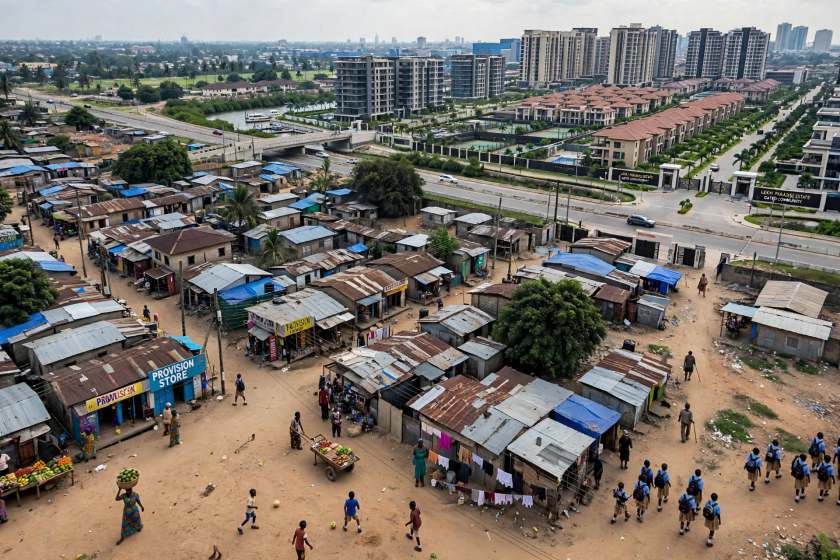
For many households, food expenditure now consumes an increasingly large proportion of income. Families struggle with school fees. Illness can become a financial catastrophe. Transport costs in cities such as Abuja and Lagos can erode a substantial portion of workers’ earnings.
Consider something as mundane as filling a car with fuel. If this costs about ₦70,000 a week, the monthly expenditure approaches ₦280,000. For many households, transportation alone therefore becomes a major threat to disposable income.
This is why macroeconomic recovery cannot be assessed independently of household purchasing power.
If GDP grows while families eat fewer meals, postpone medical treatment and withdraw children from better schools, we must ask what that growth means socially.
Fragility: Can Households Absorb the Next Shock?
Fragility is closely related to precarity but is not identical to it.
A fragile household is one with limited capacity to absorb shocks. A sudden illness, job loss, increase in transport fares, rise in food prices or school-fee demand can push such a family into crisis.
Nigeria’s economic reforms must therefore be assessed not only by whether they eventually promise growth but also by whether households retain enough resilience to survive the transition.
This raises an important policy question:
How much pain can households absorb before reform itself destroys their capacity to benefit from the eventual recovery?
Economic reform cannot be considered successful if the process of achieving macroeconomic stability simultaneously strips millions of citizens of their resilience.
Vulnerability and Social Shocks
Precarity and fragility create vulnerability.
A household repeatedly exposed to inflation, unemployment, food-price increases, transport-cost escalation and inadequate public services experiences these pressures as cumulative social shocks.
One shock may be manageable. Repeated shocks are different.
When families continually spend down savings, sell assets, borrow for consumption, reduce meals, postpone healthcare or withdraw children from educational opportunities, their capacity for long-term recovery declines.
This is why the President’s acknowledgement of the hardships experienced by families is important. It recognises, at least implicitly, that reform has imposed significant adjustment costs.
But recognition must lead to protection.
Social Safety Nets: A Bridge, But for Whom?
The President described social support as a bridge to recovery rather than a permanent destination. Conceptually, this is sound. Social protection should help vulnerable citizens survive periods of transition while creating pathways towards greater economic independence.
The speech referenced mechanisms including the National Social Register, the Nigeria Education Loan Fund and consumer-credit initiatives.
These are potentially important instruments.
But Nigeria’s problem has rarely been the absence of programmes on paper. The deeper problems concern targeting, data integrity, transparency, accessibility and elite capture.
Who is on the Social Register?
How many households does it cover?
How current is the information?
How are beneficiaries selected?
How do citizens appeal wrongful exclusion?
How do we prevent political intermediaries and other benefit captors from diverting resources towards themselves, their supporters or their networks?
Without credible answers to these questions, a safety net can itself reproduce exclusion.
Inclusion, Exclusion and Agency
This brings us to perhaps the most important issue: who participates in recovery?
An inclusive recovery cannot merely be something government does to Nigerians. Citizens must possess sufficient economic agency to participate in it.
That means increasing purchasing power, expanding access to productive credit, supporting small businesses, lowering barriers to production and creating conditions in which ordinary citizens can make meaningful economic choices.
Recovery must therefore be not merely government-led but increasingly citizen-enabled and market-activated.
Otherwise, the danger is that the benefits of reform will be captured by those who already possess capital, connections and access, while those who bore the heaviest costs of adjustment remain excluded from its rewards.
The relevant question is therefore not merely whether prosperity is increasing but:
Who is participating in that prosperity?
Agriculture and the Problem of Time
The President’s emphasis on agriculture—irrigation, mechanisation, improved seeds, fertiliser access, storage and transportation—is welcome.
The attention to storage is particularly important because post-harvest losses continue to undermine the benefits of agricultural production.
But agriculture also illustrates a weakness in the speech.
Agricultural interventions take time. Seeds must be distributed, farms cultivated, crops harvested, produce transported and markets supplied.
If meaningful increases in food production require several months, what happens to vulnerable households between now and harvest?
A credible reform programme therefore requires two simultaneous strategies: medium-term measures to expand production and immediate measures to protect households from intolerable food-price shocks.
From Macroeconomic Recovery to Household Recovery
The President cited indicators suggesting economic improvement, including economic growth, increased non-oil exports and improvements in oil-sector performance.
Such indicators matter.
But they do not tell the whole story.
GDP growth is not the same thing as household recovery. Lower inflation does not necessarily mean that prices have fallen; it may simply mean that they are rising more slowly. Increased government revenue does not automatically translate into improved household welfare.
The critical issue is transmission.
How does improvement at the macroeconomic level travel through the economy until it reaches Mama Yemisi, Mama Alabi, Papa Okeke, Iya Yejide and millions of other Nigerians?
That transmission mechanism is insufficiently explained in the speech.
Measurability: Where Are the Targets?
This leads to what I regard as one of the biggest weaknesses of the address.
The speech contains numerous intentions, programmes and desired outcomes. But reforms should be judged not simply by intentions but by measurable commitments.
If food prices are to fall, by how much and by when?
If jobs are to be created, how many?
If electricity supply is to improve, what additional generation and distribution capacity should Nigerians expect?
If agricultural productivity is to rise, what production targets have been established?
If social safety nets are to protect vulnerable citizens, how many households will be covered, at what cost and according to what eligibility criteria?
If government inputs resources into agriculture, energy, healthcare and education, what outputs should citizens expect from those inputs?
And beyond outputs, what outcomes should follow?
This distinction is crucial.
Government spending is an input.
A new clinic, classroom, irrigation facility or megawatt of electricity is an output.
Reduced maternal mortality, improved learning, lower food prices and increased household purchasing power are outcomes.
Ultimately, improvements in people’s dignity, security, opportunity and quality of life constitute the impact.
A credible reform narrative should allow citizens to follow that chain:
Inputs → Outputs → Outcomes → Impact.
Without such measurable pathways, reform risks remaining a catalogue of aspirations.
Adequacy and Relevance: Are the Measures Equal to the Problem?
Two final tests are adequacy and relevance.
A programme can be well designed but inadequate in scale. A social-transfer programme reaching a small fraction of vulnerable households may be useful without being adequate.
Likewise, a programme can be impressive but insufficiently relevant to the immediate problems people face.
The proper questions are therefore:
Are the interventions large enough?
Are they reaching enough people?
Are they arriving quickly enough?
Are they addressing the problems households actually experience?
And are they geographically and socially distributed in ways that prevent some regions or groups from being systematically left behind?
These are the tests by which claims of inclusive recovery should be judged.
The Missing Ingredient: A Credible Results Framework
President Tinubu’s speech contains an identifiable theory of change: painful reforms stabilise the economy; stability attracts investment and encourages production; increased production generates jobs and growth; growth eventually improves household welfare.
The problem is not necessarily with the logic.
The problem is that too many links in the chain remain asserted rather than demonstrated.
What Nigerians need now is a credible, public and time-bound results framework.
Tell citizens what government will invest.
Tell them where it will invest it.
Tell them what outputs will be produced.
Tell them when those outputs will appear.
Tell them what outcomes are expected.
Tell them how progress will be independently measured.
And, crucially, tell them what corrective action will follow when targets are missed.
That would transform economic reform from a matter of political faith into a matter of public accountability.
Conclusion: From Promises to Proof
The 2026 Independence Day address attempts to persuade Nigerians that the hardest stage of economic reform is ending and that prosperity lies ahead.
One hopes this is correct.
But hope cannot be the principal instrument of economic policy.
The proper test of the administration’s reforms is whether they reduce precarity, strengthen household resilience, reduce fragility and vulnerability, protect citizens against social shocks, create effective social safety nets, promote inclusion, reduce exclusion, and expand citizens’ agency and choices.
And all these must be subjected to the disciplines of measurability, adequacy and relevance.
The real measure of Nigerian economic recovery will therefore not be found solely in GDP figures, export earnings or government revenues.
It will be found in the market basket.
It will be found in the bus fare.
It will be found in the school-fee bill.
It will be found in whether a pension buys more or less food and medicine.
It will be found in whether a family can experience illness without falling into destitution.
And it will be found in whether ordinary Nigerians possess greater economic security, greater agency and greater hope for tomorrow than they possessed yesterday.
The President says the hardest phase is over.
The question Nigerians are entitled to ask is simpler:
What measurable evidence will show us that we are actually coming out of it—and how soon will that evidence reach the household?
That, ultimately, is the test.
Noel Ihebuzor (Onyenkuzi)
President Bola Ahmed Tinubu’s Independence Day address of 1 October 2026 came at an important moment in Nigeria’s economic and social history. Sixty-six years after independence, the country continues to confront severe economic pressures, widespread insecurity of livelihoods, rising living costs and deep public anxiety about the future.
The President’s speech was, in large part, an attempt both to defend the economic reforms undertaken by his administration and to persuade Nigerians that the most painful phase of those reforms is ending. It presented evidence of macroeconomic recovery, reiterated the government’s rejection of a return to the previous fuel-subsidy regime, and outlined measures intended to address agriculture, employment, industrialisation, education, credit, healthcare and social protection.
But how should such a speech be assessed?
My concern here is not simply whether the economic statistics cited by the President are correct. Nor is it sufficient to ask whether the reforms make sense within conventional macroeconomic theory. The more important question, in my view, is whether the reforms are producing—or are credibly capable of producing—improvements in the lives of ordinary Nigerians.
I therefore propose to assess the speech through a deliberately people-centred framework built around precarity, fragility, vulnerability, social shocks, inclusion and exclusion, social safety nets, agency, measurability, adequacy and relevance.
These concepts allow us to move from the macroeconomic level to the household level—from GDP growth to the price of garri; from increased government revenue to the ability to pay school fees; from improved foreign reserves to whether a pensioner can afford medication.
The ultimate test of reform is not simply whether the numbers improve. It is whether lives improve.
What the President Said
Several themes stand out in the address.
First was a strong defence of the administration’s economic reforms. The President employed striking metaphors to describe Nigeria’s previous economic trajectory and the necessity for painful corrective action. References to morphine, cancer and crossing the Red Sea were apparently intended to communicate the severity of Nigeria’s predicament and the difficulty of reform.
Such metaphors can be rhetorically powerful. But they also carry risks. When citizens are already experiencing severe hardship, metaphors of disease and extreme suffering can sound insensitive, particularly if they appear to explain away present hardship as an unavoidable stage on the road to recovery.
Religious metaphors require similar care. The imagery of crossing the Red Sea presents reform as a difficult but ultimately redemptive journey. Yet political leadership cannot ask citizens simply to believe. The language of faith cannot substitute for demonstrable policy results.
The President also firmly rejected a return to fuel subsidies and warned against what he characterised as regressive calls for their restoration.
But the more important question is not simply whether the subsidy should return. It is: what has happened to the fiscal gains arising from its removal?
Where are those gains being invested? How much has been saved? How much has reached agriculture, transport, healthcare, education, infrastructure and social protection? And, most importantly, how have these savings translated into measurable benefits for ordinary households?
For many Nigerians, the most immediately visible consequence of subsidy removal has not been greater prosperity but increased transport costs, higher production costs and declining household purchasing power.
That gap between macroeconomic reform and household experience lies at the heart of my assessment.
Precarity: How Secure Is Everyday Life?
Precarity describes a condition in which people live without reliable economic security. Income may be uncertain, employment unstable and access to food, healthcare, transport, housing and education increasingly difficult.
By this measure, the first question we should ask of the President’s reforms is straightforward:
Have they reduced or increased the precariousness of everyday Nigerian life?
For many households, food expenditure now consumes an increasingly large proportion of income. Families struggle with school fees. Illness can become a financial catastrophe. Transport costs in cities such as Abuja and Lagos can erode a substantial portion of workers’ earnings.
Consider something as mundane as filling a car with fuel. If this costs about ₦70,000 a week, the monthly expenditure approaches ₦280,000. For many households, transportation alone therefore becomes a major threat to disposable income.
This is why macroeconomic recovery cannot be assessed independently of household purchasing power.
If GDP grows while families eat fewer meals, postpone medical treatment and withdraw children from better schools, we must ask what that growth means socially.
Fragility: Can Households Absorb the Next Shock?
Fragility is closely related to precarity but is not identical to it.
A fragile household is one with limited capacity to absorb shocks. A sudden illness, job loss, increase in transport fares, rise in food prices or school-fee demand can push such a family into crisis.
Nigeria’s economic reforms must therefore be assessed not only by whether they eventually promise growth but also by whether households retain enough resilience to survive the transition.
This raises an important policy question:
How much pain can households absorb before reform itself destroys their capacity to benefit from the eventual recovery?
Economic reform cannot be considered successful if the process of achieving macroeconomic stability simultaneously strips millions of citizens of their resilience.
Vulnerability and Social Shocks
Precarity and fragility create vulnerability.
A household repeatedly exposed to inflation, unemployment, food-price increases, transport-cost escalation and inadequate public services experiences these pressures as cumulative social shocks.
One shock may be manageable. Repeated shocks are different.
When families continually spend down savings, sell assets, borrow for consumption, reduce meals, postpone healthcare or withdraw children from educational opportunities, their capacity for long-term recovery declines.
This is why the President’s acknowledgement of the hardships experienced by families is important. It recognises, at least implicitly, that reform has imposed significant adjustment costs.
But recognition must lead to protection.
Social Safety Nets: A Bridge, But for Whom?
The President described social support as a bridge to recovery rather than a permanent destination. Conceptually, this is sound. Social protection should help vulnerable citizens survive periods of transition while creating pathways towards greater economic independence.
The speech referenced mechanisms including the National Social Register, the Nigeria Education Loan Fund and consumer-credit initiatives.
These are potentially important instruments.
But Nigeria’s problem has rarely been the absence of programmes on paper. The deeper problems concern targeting, data integrity, transparency, accessibility and elite capture.
Who is on the Social Register?
How many households does it cover?
How current is the information?
How are beneficiaries selected?
How do citizens appeal wrongful exclusion?
How do we prevent political intermediaries and other benefit captors from diverting resources towards themselves, their supporters or their networks?
Without credible answers to these questions, a safety net can itself reproduce exclusion.
Inclusion, Exclusion and Agency
This brings us to perhaps the most important issue: who participates in recovery?
An inclusive recovery cannot merely be something government does to Nigerians. Citizens must possess sufficient economic agency to participate in it.
That means increasing purchasing power, expanding access to productive credit, supporting small businesses, lowering barriers to production and creating conditions in which ordinary citizens can make meaningful economic choices.
Recovery must therefore be not merely government-led but increasingly citizen-enabled and market-activated.
Otherwise, the danger is that the benefits of reform will be captured by those who already possess capital, connections and access, while those who bore the heaviest costs of adjustment remain excluded from its rewards.
The relevant question is therefore not merely whether prosperity is increasing but:
Who is participating in that prosperity?
Agriculture and the Problem of Time
The President’s emphasis on agriculture—irrigation, mechanisation, improved seeds, fertiliser access, storage and transportation—is welcome.
The attention to storage is particularly important because post-harvest losses continue to undermine the benefits of agricultural production.
But agriculture also illustrates a weakness in the speech.
Agricultural interventions take time. Seeds must be distributed, farms cultivated, crops harvested, produce transported and markets supplied.
If meaningful increases in food production require several months, what happens to vulnerable households between now and harvest?
A credible reform programme therefore requires two simultaneous strategies: medium-term measures to expand production and immediate measures to protect households from intolerable food-price shocks.
From Macroeconomic Recovery to Household Recovery
The President cited indicators suggesting economic improvement, including economic growth, increased non-oil exports and improvements in oil-sector performance.
Such indicators matter.
But they do not tell the whole story.
GDP growth is not the same thing as household recovery. Lower inflation does not necessarily mean that prices have fallen; it may simply mean that they are rising more slowly. Increased government revenue does not automatically translate into improved household welfare.
The critical issue is transmission.
How does improvement at the macroeconomic level travel through the economy until it reaches Mama Yemisi, Mama Alabi, Papa Okeke, Iya Yejide and millions of other Nigerians?
That transmission mechanism is insufficiently explained in the speech.
Measurability: Where Are the Targets?
This leads to what I regard as one of the biggest weaknesses of the address.
The speech contains numerous intentions, programmes and desired outcomes. But reforms should be judged not simply by intentions but by measurable commitments.
If food prices are to fall, by how much and by when?
If jobs are to be created, how many?
If electricity supply is to improve, what additional generation and distribution capacity should Nigerians expect?
If agricultural productivity is to rise, what production targets have been established?
If social safety nets are to protect vulnerable citizens, how many households will be covered, at what cost and according to what eligibility criteria?
If government inputs resources into agriculture, energy, healthcare and education, what outputs should citizens expect from those inputs?
And beyond outputs, what outcomes should follow?
This distinction is crucial.
Government spending is an input.
A new clinic, classroom, irrigation facility or megawatt of electricity is an output.
Reduced maternal mortality, improved learning, lower food prices and increased household purchasing power are outcomes.
Ultimately, improvements in people’s dignity, security, opportunity and quality of life constitute the impact.
A credible reform narrative should allow citizens to follow that chain:
Inputs → Outputs → Outcomes → Impact.
Without such measurable pathways, reform risks remaining a catalogue of aspirations.
Adequacy and Relevance: Are the Measures Equal to the Problem?
Two final tests are adequacy and relevance.
A programme can be well designed but inadequate in scale. A social-transfer programme reaching a small fraction of vulnerable households may be useful without being adequate.
Likewise, a programme can be impressive but insufficiently relevant to the immediate problems people face.
The proper questions are therefore:
Are the interventions large enough?
Are they reaching enough people?
Are they arriving quickly enough?
Are they addressing the problems households actually experience?
And are they geographically and socially distributed in ways that prevent some regions or groups from being systematically left behind?
These are the tests by which claims of inclusive recovery should be judged.
The Missing Ingredient: A Credible Results Framework
President Tinubu’s speech contains an identifiable theory of change: painful reforms stabilise the economy; stability attracts investment and encourages production; increased production generates jobs and growth; growth eventually improves household welfare.
The problem is not necessarily with the logic.
The problem is that too many links in the chain remain asserted rather than demonstrated.
What Nigerians need now is a credible, public and time-bound results framework.
Tell citizens what government will invest.
Tell them where it will invest it.
Tell them what outputs will be produced.
Tell them when those outputs will appear.
Tell them what outcomes are expected.
Tell them how progress will be independently measured.
And, crucially, tell them what corrective action will follow when targets are missed.
That would transform economic reform from a matter of political faith into a matter of public accountability.
Conclusion: From Promises to Proof
The 2026 Independence Day address attempts to persuade Nigerians that the hardest stage of economic reform is ending and that prosperity lies ahead.
One hopes this is correct.
But hope cannot be the principal instrument of economic policy.
The proper test of the administration’s reforms is whether they reduce precarity, strengthen household resilience, reduce fragility and vulnerability, protect citizens against social shocks, create effective social safety nets, promote inclusion, reduce exclusion, and expand citizens’ agency and choices.
And all these must be subjected to the disciplines of measurability, adequacy and relevance.
The real measure of Nigerian economic recovery will therefore not be found solely in GDP figures, export earnings or government revenues.
It will be found in the market basket.
It will be found in the bus fare.
It will be found in the school-fee bill.
It will be found in whether a pension buys more or less food and medicine.
It will be found in whether a family can experience illness without falling into destitution.
And it will be found in whether ordinary Nigerians possess greater economic security, greater agency and greater hope for tomorrow than they possessed yesterday.
The President says the hardest phase is over.
The question Nigerians are entitled to ask is simpler:
What measurable evidence will show us that we are actually coming out of it—and how soon will that evidence reach the household?
That, ultimately, is the test.
Noel Ihebuzor (Onyenkuzi)