Posted in Uncategorized, Politics, governance, Basic Education, Language in education

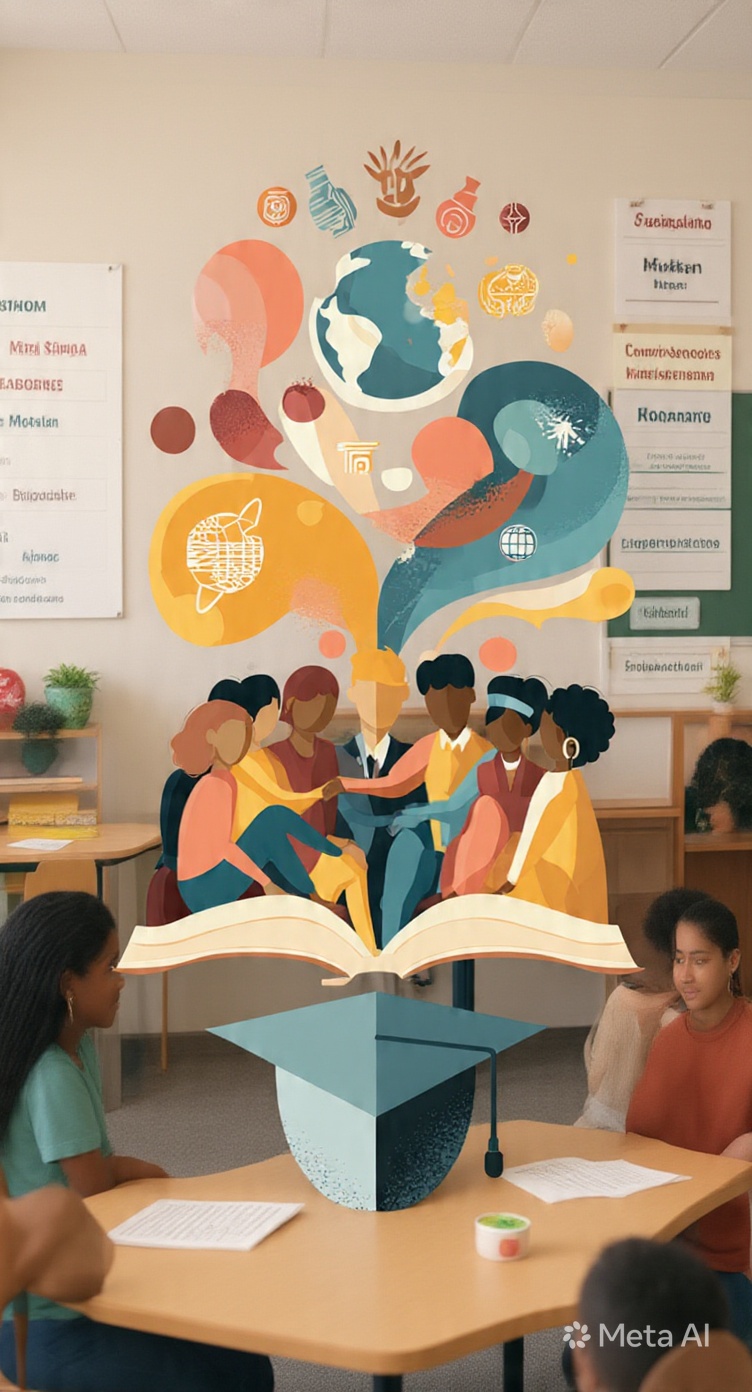
Multilingualism, Cultural Pluralism and Curriculum Development in Basic Education in Nigeria

By Noel A. Ihebuzor

Introduction

Multilingualism and cultural pluralism have received considerable scholarly and policy attention in countries such as the United States, Canada, the United Kingdom, Belgium, and France because of their implications for national integration, identity preservation, and educational development. In many African countries, however, including Nigeria, these issues have often received only superficial attention despite their enormous significance for social cohesion, equity, and curriculum development.

Nigeria is one of the most culturally and linguistically diverse countries in the world, with over 250 ethnic groups and more than 500 languages. Such diversity presents both opportunities and challenges for education policy and curriculum development. While diversity can enrich learning and strengthen cultural identity, it can also create tensions relating to language policy, representation, access, and national integration.

This paper examines the relationship between multilingualism, cultural pluralism, and curriculum development in Nigerian basic education. It explores the conceptual foundations of multiculturalism and cultural pluralism, analyses their implications for curriculum development, and discusses the advantages, disadvantages, and threats associated with multilingual and culturally plural educational systems. The paper further examines how power relations, linguistic dominance, and educational policy shape curriculum choices in Nigeria and concludes with recommendations for a more inclusive and equitable curriculum framework. The writing of this paper is informed by concerns for equity, respect for language rights and the imperative for culturally responsive pedagogy. A related motivation was the need to broaden the rhetoric on curriculum decolonisation to include recognising the dangers in the subtle colonisation of speakers of minority languages in multilingual African countries such as Nigeria by speakers of dominant languages in these same countries. Implicit in the above is the invitation to the reader that colonisation is colonisation. Denying a speaker of a minority language education in his/her language is thus a measure that could lead to exclusion. Given the vital link between language and indigenous knowledge systems, such an exclusion could also lead to major losses in indigenous knowledge systems for speakers of such languages

Keywords: Multilingualism, cultural pluralism, curriculum development, language policy, minority languages, multicultural education, Nigeria.

Conceptual Clarifications

Multiculturalism and Cultural Pluralism

Multiculturalism refers to the coexistence of multiple cultural groups within a society. It is commonly associated with policies that recognize cultural diversity and encourage the inclusion of different cultural traditions within national life. Multicultural societies may contain dominant and minority cultures of varying demographic and political strength.

Cultural pluralism, on the other hand, refers to a situation in which diverse cultural groups are not only allowed to exist but are also encouraged to preserve and develop their unique identities, languages, traditions, and values. Unlike monocultural systems that encourage assimilation into a dominant culture, cultural pluralism promotes integration without cultural absorption.

The distinction between multiculturalism and cultural pluralism is significant. Multiculturalism may simply describe the presence of multiple cultures, whereas cultural pluralism implies deliberate policies aimed at protecting minority identities and ensuring equitable representation.

Linguicism and Linguistic Imperialism

The concept of linguicism, introduced by Tove Skutnabb-Kangas, refers to discrimination based on language. It describes ideological and structural processes that privilege certain languages while marginalizing others.

Closely related is the idea of linguistic imperialism, developed by Robert Phillipson, which explains how dominant languages expand through political, educational, and economic power structures. In multilingual societies such as Nigeria, language choices in education often reflect broader struggles over power, identity, and cultural dominance.

The privileging of major languages over minority languages in schools can therefore become a mechanism for reinforcing social inequalities and weakening minority cultures.


Curriculum Development as a Political and Cultural Process

Curriculum development is often presented as a technical or pedagogical process involving the selection of learning content, teaching methods, and evaluation procedures. However, curriculum development is also deeply political and ideological because it involves decisions about:

  • what knowledge is valuable;
  • whose culture is represented;
  • which languages are promoted;
  • which histories are remembered;
  • and what kind of society education seeks to create.

Education is not culturally neutral. Beyond transmitting knowledge and skills, it also functions as a mechanism for cultural transmission, identity formation, and social reproduction.

Scholars such as Pierre Bourdieu and Michael Young argue that curriculum can become an instrument for reproducing dominant cultural values while marginalizing less powerful groups. In multicultural societies, curriculum development therefore reflects existing power relations and ideological preferences This is especially evident in subjects such as language, history, social studies, religion, literature and civic education. These subjects often privilege dominant cultural narratives while underrepresenting minority perspectives.

Multilingualism and Cultural Pluralism in Nigeria

Nigeria’s educational system operates within a highly multilingual and multicultural environment. The country’s language policy recognizes English as the official language and identifies Hausa, Igbo, and Yoruba as the three major Nigerian languages. Numerous other indigenous languages are recognized as mother tongues, although many are not adequately supported within formal education.

This arrangement has generated significant educational and sociopolitical tensions.

For example, children from minority linguistic backgrounds frequently experience what may be described as a “multiple language burden.” A child from a minority ethnic group living outside his or her ancestral community may be required to learn:

  • the local dominant language;
  • one of the three major Nigerian languages;
  • and English.

This creates unequal linguistic demands compared to children from dominant linguistic groups.

The emphasis on the three major languages also creates concerns about:

  • linguistic marginalization;
  • unequal resource allocation;
  • cultural domination;
  • and the gradual disappearance of minority languages.

The latter concern, that of a concern with the phenomenon of language disappearance, sometimes described as glottophagy, becomes when smaller languages are gradually abandoned due to pressure from dominant languages and cultures.

Models of Cultural Pluralism

The literature identifies several models of cultural pluralism:

Cooperative Model -Different cultural groups collaborate harmoniously while maintaining their identities.

Conflict Model – Cultural groups compete for recognition, influence, and resources, often generating tension.

Coercive Model – Dominant groups compel minority groups to adopt dominant cultural norms; and

Domination Model – Powerful groups impose their culture through institutions such as schools, media, and government policies (Young, 1979; Phillipson, 1997)

In reality, most societies display elements of several models simultaneously. In Nigeria, these models play out in such things as the choice of which Nigerian language should be learnt as L2 and which language should be used as mother tongue in school settings characterized by the presence of learners from different first languages. Given the close affiliation between language and culture, any language choices in such settings ultimately become a choice of which culture to advantage.

Challenges of Cultural Pluralism and Multilingualism in Nigerian Education

These are several and include Language Policy and Inequality, curriculum representation, the reality of resource constraints, the ever-present ethnic and religious sensitivities which may colour perception of educational decision taken, the problem of teacher supply and the availability of pedagogical materials. Let us now take up each of these in turn and discuss each albeit briefly

Language Policy and Inequality – One of the most difficult issues in Nigerian education concerns the language of instruction. While mother-tongue education is pedagogically desirable, implementing it across hundreds of languages is financially and administratively challenging.

Consequently, many minority languages remain excluded from instructional use, placing their speakers at educational disadvantage.

Curriculum Representation

Curriculum content in areas such as history and social studies often reflects dominant cultural narratives. National heroes, historical figures, and cultural references are frequently drawn from major ethnic groups, while minority cultures receive limited representation.

This may unintentionally create feelings of inferiority and exclusion among learners from minority backgrounds.

Resource Constraints

Developing multilingual curricula requires:

  • trained teachers;
  • instructional materials;
  • translation services;
  • orthographies for local languages;
  • and sustained financial investment.

Many developing countries struggle to provide these resources adequately.

Ethnic and Religious Sensitivities

Curriculum decisions involving religion, language, and culture are highly sensitive in Nigeria. Disagreements over religious instruction, civic education, and historical interpretation often reflect broader societal tensions.

Standardization Difficulties

Cultural diversity complicates efforts to standardize curriculum, assessment, and educational delivery nationwide. However, a basic truth that is worth asserting is that uniformity of curriculum offerings does not necessarily produce unity.

Teacher Preparedness

Many teachers lack adequate preparation in culturally responsive pedagogy. Without proper training, multicultural education may unintentionally reinforce stereotypes rather than promote inclusion.

Advantages of Cultural Pluralism and Multilingualism

Despite these challenges, cultural pluralism offers significant educational and societal benefits. These include the following:

Promotion of National Unity Through Inclusion

Inclusive curricula help learners feel recognized and valued within the national community, thereby strengthening social cohesion.

Preservation of Indigenous Cultures and Languages

Culturally responsive education contributes to the preservation of indigenous languages, histories, and knowledge systems.

Improved Learning Outcomes

Research consistently shows that children learn more effectively when instruction connects with their linguistic and cultural backgrounds.

Promotion of Tolerance and Intercultural Understanding

Exposure to multiple cultural perspectives helps reduce prejudice and promotes empathy, mutual respect, and peaceful coexistence. Specifically, the Urhobo adolescent who learns about Itsekiri culture is not only bound to become a more rounded but is also bound to display skills of empathy, acceptance and appreciation of fellow learners from other cultures.

Development of Critical Thinking

Multicultural education encourages learners to engage with diverse viewpoints and question assumptions critically.

Strengthening Learner Identity and Self-Esteem

Representation of diverse cultures in curriculum content helps learners develop confidence and pride in their heritage.

Disadvantages and Threats

These are several and include the following:

Risk of Ethnic Fragmentation

Excessive emphasis on cultural differences may deepen ethnic consciousness and weaken national identity.

Cultural Domination

Dominant groups may use education and language policy to reinforce their cultural influence over minority groups.

Linguistic Imperialism

Globalization and the increasing dominance of English create pressures that undermine indigenous languages and cultures. In the Nigerian case, the spread of Hausa language in the North of the country has become a threat to the survival of minority languages, some of which are now threatened with extinction of glottophagy. Without deliberate preservation efforts, minority languages may gradually disappear due to assimilation and globalization pressures.

Curriculum Overload

Attempting to represent all cultural groups adequately may lead to an overcrowded curriculum, but at the barest minimum, efforts must be made to ensure representativeness of the cultural practices of the various groups in society, whilst avoiding the dangers of political manipulation that may accompany such efforts as selection of  Curriculum content may become politicized by powerful stakeholders with strong interests, such dangers being especially high in areas involving history, language, and religion.

The challenge of all the foregoing is how to develop school programs that capture the major educational benefits of multilingualism and cultural pluralism whilst minimizing the downsides. The next section examines their implications for curriculum development.

Implications for Curriculum Development in Nigeria

This concluding section commences on the basic premise that Curriculum development in Nigeria must balance two competing imperatives:

  • promoting national unity;
  • preserving cultural diversity.

Such a curriculum development should also be culturally responsive. A culturally responsive curriculum should:

  • represent diverse cultures fairly;
  • avoid stereotyping;
  • promote inclusive citizenship;
  • support multilingual education;
  • and foster intercultural dialogue.

There is also a need to move away from curricula that privilege only dominant narratives and instead create space for minority histories, local heroes, indigenous knowledge systems, and community experiences. The solutions proposed below are based on these foundational principles

Proposed Solutions and Recommendations

Promote Multilingual Education

Nigeria should strengthen mother-tongue instruction, especially at the early childhood and lower basic education levels.

Develop Inclusive Curricula

Curriculum content should reflect the histories, cultures, and experiences of diverse Nigerian communities.

Strengthen Teacher Training

Teachers should receive professional preparation in:

  • culturally responsive pedagogy;
  • multilingual education;
  • conflict-sensitive teaching;
  • and inclusive curriculum delivery.

Encourage Community Participation

Curriculum development should involve stakeholders from different cultural and linguistic groups as this is one sure way to ensure relevance and critical stakeholder engagement with school curricula.

Support Minority Languages

Government should invest in:

  • orthography development;
  • local language publishing;
  • translation;
  • teacher recruitment;
  • and indigenous language media.

All the suggested policy interventions above come under the scope of language engineering and planned language expansion. These are well discussed in Rubin and Jernudd (1971). At the Nigerian level, these issues mentioned above are well examined in Bamgbose, Akere, and Ihebuzor (1992) and in Ihebuzor and Junaidu (1994).

There is also the need to balance Diversity with National Cohesion whilst making efforts to integrate Indigenous Knowledge Systems in curricula offerings

Furthermore, educational policy should promote shared civic values while respecting cultural diversity. At the same time, and this is the challenging part, efforts must be made to ensure that curriculum content incorporates local knowledge, environmental practices, conflict-resolution traditions, and cultural heritage.

Finally, there is a need for regular and continuous curriculum review to ensure inclusiveness, relevance, and responsiveness of curricula to Nigeria’s evolving sociocultural realities.

Conclusion

Multilingualism and cultural pluralism remain central issues in curriculum development within Nigeria’s basic education system. While cultural diversity enriches education and strengthens democratic inclusion, it also presents significant challenges relating to language policy, equity, representation, and national cohesion.

Curriculum development in multicultural societies cannot be viewed as a neutral process. It reflects broader struggles over identity, power, ideology, and cultural representation. Consequently, educational policy must carefully balance the demands of national integration with the imperative of protecting minority cultures and languages.

For Nigeria, the challenge is not whether cultural pluralism should exist, but how it should be managed in ways that promote inclusion, educational equity, social cohesion, and sustainable national development. Finally, the way that Nigeria manages its cultural pluralism and multilingualism must be such that would advance her pursuit of SDGs 4 and 11.


Selected References

  • Bamgbose, A. (1992). Speaking in Tongues: Implications of Multilingualism for Language Policy in Nigeria.
  • Bamgbose, A,  Akere F and Noel Ihebuzor (eds) (1992), Implementing the language provisions of the National Policy on Education, NERDC. Abuja, NERDC/FME
  • Barrow, R. (1976). Common Sense and the Curriculum. London: George Allen and Unwin.
  • Brent, A. (1978). Philosophical Foundations for the Curriculum. London: George Allen and Unwin.
  • Federal Government of Nigeria (1981). National Policy on Education. Lagos: NERDC Press
  • Fishman, J. (1993). “Ethnolinguistic Democracy: Varieties, Degrees and Limits.” Language International, 5(1), 11–14.
  • Ihebuzor, Noel& Ismail Junaidu (eds) (1994), Proceedings of the seminar on language survey planning, Lagos, NERDC
  • Phillipson, R. (1997). “Realities and Myths of Linguistic Imperialism.” Journal of Multilingual and Multicultural Development, 18(3), 238–248.
  • Rubin, J., & Jernudd, B. H. (1971). Can Language Be Planned? University of Hawaii Press.
  • Skutnabb-Kangas, T. (1988). “Multilingualism and the Education of Minority Children.” In Minority Education: From Shame to Struggle.
  • Young, C. (1979). The Politics of Cultural Pluralism. University of Wisconsin Press.

Posted in Basic Education, Poetry, Prose

Towards a Risk-Informed and Sensitive-Interpretative Approach to Literature Pedagogy at the Secondary School level in Nigeria

By Noel A. Ihebuzor

Abstract

The teaching of literature has long occupied a central place in secondary education because of its perceived contributions to language development, critical thinking, moral formation, emotional growth, and cultural understanding. In Nigeria, Literature-in-English remains a significant component of the secondary school curriculum and an important subject in public examinations. Much of the scholarly literature emphasizes these benefits and generally presents literature as an unqualified educational good. This article argues that such a perspective is incomplete. While literature offers substantial cognitive, linguistic, social, and ethical benefits, it may also expose learners to a range of pedagogical and ideological risks. Drawing on examples from African and Nigerian literary texts, the article examines concerns relating to age-inappropriate sexuality, violence, ideological influence, authorial bias, historical inaccuracies, racism, sexism, and gender-based violence. It argues for a shift from a purely celebratory understanding of literature teaching towards a risk-aware pedagogical framework that incorporates risk identification, mitigation strategies, and cost-benefit analysis. The article concludes that literature remains indispensable to holistic education but that its educational benefits can only be fully realized when teachers, curriculum developers, and policymakers consciously manage its potential risks.

Introduction

Literature occupies a distinctive position within secondary education because it combines linguistic, cultural, emotional, and intellectual learning in ways that few other school subjects can achieve. In Nigeria, Literature-in-English has traditionally been regarded as an important instrument for developing language proficiency, cultural awareness, creativity, and critical thinking. Through prescribed texts, students encounter diverse cultures, historical experiences, moral dilemmas, and social realities that contribute to their intellectual and personal development.

The educational value of literature has therefore been widely acknowledged by curriculum developers, teachers, examination bodies, and researchers. Literature is frequently presented as a means of nurturing empathy, promoting ethical reflection, enriching language skills, and fostering civic consciousness. Yet despite this broad consensus regarding its benefits, comparatively little attention has been paid to the risks and challenges associated with teaching literature to adolescents, particularly within developing-country contexts.

This omission is significant because literature is not merely a neutral repository of stories. Literary texts convey values, ideologies, historical interpretations, cultural assumptions, and models of human behaviour. Their influence may be positive, but it may also be problematic. Texts can normalize violence, reinforce stereotypes, present controversial ideological positions, or expose learners to themes for which they may not be developmentally prepared. Consequently, the teaching of literature should be approached not only as an educational opportunity but also as a pedagogical responsibility requiring careful management.

This article seeks to balance the dominant discourse on the benefits of literature with a critical examination of its risks. It argues that literature teaching should incorporate systematic processes of risk identification, risk mitigation, and cost-benefit analysis in order to maximize educational gains while minimizing potential harms.

The Educational Value of Literature

The case for literature teaching remains compelling. One of its most widely recognized contributions lies in the development of cognitive and linguistic abilities. Literary texts challenge students to interpret meanings, draw inferences, evaluate perspectives, and engage in imaginative thinking. Through exposure to rich and varied language, learners expand their vocabulary, improve reading comprehension, and develop sophisticated communication skills.

Beyond cognitive development, literature serves as an important vehicle for moral and ethical reflection. Literary narratives frequently present complex situations involving justice, responsibility, loyalty, courage, and integrity. Such encounters provide opportunities for learners to reflect on ethical questions and examine competing value systems.

Literature also contributes significantly to emotional and social development. Through engagement with fictional characters and situations, learners are exposed to diverse human experiences and perspectives. This process can cultivate empathy, emotional intelligence, and greater understanding of social relationships. Related concepts such as bibliotherapy and socio-emotional learning further highlight the capacity of literature to support personal growth and psychological development.

The cultural dimension of literature is equally important. Literary texts provide insights into societies, traditions, histories, and worldviews that may differ from those of the reader. In multicultural and postcolonial societies such as Nigeria, literature can strengthen cultural identity while simultaneously fostering intercultural understanding and tolerance.

Taken together, these contributions position literature as a valuable component of holistic education and as an important contributor to the development of creativity, critical citizenship, and twenty-first-century competencies.

From Educational Benefits to Pedagogical Responsibilities

The very qualities that make literature educationally powerful also make it potentially risky. Because literature engages emotions, shapes perceptions, and influences values, it possesses the capacity to affect learners in profound ways. Consequently, literature teaching should be regarded as a high-stakes pedagogical practice requiring careful planning and professional judgment.

Insights from reader-response theory, critical literacy, developmental psychology, and media-effects research suggest that readers do not encounter texts passively. Students actively construct meanings from what they read, yet those meanings are influenced by their developmental stage, social environment, prior experiences, and classroom context. These considerations underscore the need for a pedagogical framework that acknowledges both the benefits and the risks of literary engagement.

A useful way of conceptualizing this challenge is through the language of risk assessment and cost-benefit analysis. Such approaches are widely used in educational policy and curriculum development but have rarely been applied systematically to literature teaching. A risk-aware approach does not seek to censor literature; rather, it seeks to ensure that potentially problematic content is identified, contextualized, and addressed responsibly.

Risks in the Teaching of Literature

One important concern relates to age-inappropriate content and precocious sexuality. Adolescents are at a critical stage of psychological and social development, and exposure to explicit sexual themes may present challenges depending on learners’ age, maturity, and context. Texts such as “Mission to Kala” and some contemporary African fiction contain representations of sexuality and adult relationships that require careful mediation. There is a rich harvest of such in Chimamanda Ngozi Adichie’s creative writings. Texts as “The Thing Around Your Neck” (– especially stories in it like the shivering, and The Arrangers of marriage,) “Americanah”, and “Dream Count” are replete with narratives of sexual encounters and content.  Without appropriate pedagogical guidance, such content may contribute to confusion, normalization of precocious sexual behaviour, or emotional discomfort among vulnerable learners.

Another concern involves the representation of violence and the ways in which literary texts sometimes present simplistic solutions to complex social problems. Works depicting revenge, vigilantism, or violent conflict may unintentionally reinforce problematic behavioural scripts if learners are not encouraged to interrogate the ethical dimensions of such actions. In some narratives, the handling of the problem of revenge can be very problematic. “The Passport of Mallam Ilia” by Cyprian Ekwnsi illustrates this amply, as the protagonist exacts physical revenge but suffers both physical and moral loss in the end. In some cases, social injustices appear to be resolved by eliminating an oppressor (as in the case of a very aggressive and overbearing father in “The Purple Hibiscus”) rather than through dialogue, institutional reform, or restorative processes. Such portrayals require critical classroom discussion to prevent simplistic moral conclusions.

Literature may also function as a carrier of ideology. Every literary text embodies particular assumptions about society, power, economics, religion, or politics. While exposure to diverse viewpoints is educationally valuable, there is a risk that students may uncritically internalize ideological positions if alternative perspectives are not presented. Texts that strongly reflect Marxist (see Sembene Ousmane’s God’s Bits of Wood” for example), nationalist, capitalist, or religious worldviews should therefore be taught within frameworks that encourage critical pluralism rather than ideological conformity.

Related concerns arise from authorial bias. Literary works, memoirs, and autobiographical narratives often reflect the experiences and perspectives of their authors. Achebe’s There was a Country” and Adichie’s “Half of a Yellow Sun” are good illustrations of such texts. While such perspectives can provide valuable insights, they may also present partial or contested interpretations of historical events. Learners who encounter only one narrative may develop incomplete understandings of complex social realities.

Historical fiction presents a further challenge because it occupies the boundary between imagination and historical representation. Powerful novels may shape students’ understanding of national history more effectively than history textbooks. Yet literary narratives often simplify, dramatize, or reinterpret historical events. Unless teachers explicitly distinguish between historical fact and artistic interpretation, learners may develop inaccurate understandings of important historical episodes.

The persistence of racism, sexism, patriarchy, and gender-based violence in some literary texts also warrants attention. Literary representations may reproduce stereotypes, normalize discrimination, or reinforce harmful social assumptions. Okot B’Tek’s “Song of Lawino” and Mariama Bah’s “So long a letter” are interesting to read, but these two texts can be said to contain ideologically motivated simplifications. While such texts can provide valuable opportunities for critical discussion, their educational value depends largely on the teacher’s ability to facilitate thoughtful analysis rather than passive acceptance.

Towards a Risk-Aware and Sensitive-Interpretative Literature Pedagogy

Recognizing these risks does not diminish the value of literature. Rather, it highlights the need for more sophisticated approaches to teaching. A risk-aware literature pedagogy begins with careful text selection and curriculum design. Texts should be evaluated not only for their literary merit but also for their developmental appropriateness, ideological complexity, representations of violence, and ethical implications.

Within the classroom, critical literacy approaches provide an effective means of managing risk. Students should be encouraged to question texts, identify assumptions, examine biases, and consider alternative interpretations. Literature teaching should move beyond admiration of authors and texts towards critical engagement with ideas and representations.

Sensitive topics such as sexuality, violence, and ideological conflict require careful framing before reading and thoughtful debriefing afterwards. Guided discussions, reflective writing activities, and structured classroom dialogue can help learners process difficult content constructively.

Multi-perspectival teaching offers another valuable strategy. Historical novels can be paired with historical documents; ideological texts can be complemented by alternative viewpoints; literary representations can be compared with empirical evidence. Such approaches help learners appreciate complexity and avoid simplistic conclusions.

Teacher preparation is equally important. Literature teachers require training not only in literary analysis but also in adolescent psychology, ethics of representation, critical literacy, and the facilitation of controversial issues. Professional development programmes should therefore equip teachers with the knowledge and skills needed to manage sensitive content responsibly.

A broader support system involving parents, counsellors, examination bodies, and policymakers can further strengthen risk management efforts. Clear guidelines concerning sensitive content and appropriate pedagogical responses would enhance both accountability and educational effectiveness.

Conclusion

The teaching of literature remains one of the most valuable components of secondary education. Its contributions to language development, critical thinking, moral reflection, emotional growth, and cultural understanding are substantial and well established. Nevertheless, literature is not inherently benign. Because it shapes perceptions, values, and identities, it can also expose learners to a range of pedagogical and ethical risks.

This article has argued that concerns relating to age-inappropriate sexuality, violence, ideological influence, authorial bias, historical representation, racism, sexism, and gender-based violence deserve greater attention within literature pedagogy. Rather than abandoning literature or restricting intellectual freedom, educators should adopt a risk-aware framework that integrates risk identification, mitigation strategies, critical literacy, and cost-benefit analysis.

The future of literature teaching in Nigeria and other developing countries lies not in choosing between celebration and criticism but in combining both. Literature should continue to challenge, inspire, and educate young people, but it should do so within pedagogical frameworks that consciously maximize its benefits while minimizing its potential harms.

References

Alexander, R. (2008). Essays on pedagogy. Routledge.

Dewey, J. (1938). Experience and education. Macmillan.

Fish, S. (1980). Is there a text in this class? The authority of interpretive communities. Harvard University Press.

Freire, P. (2000). Pedagogy of the oppressed (Original work published 1970). Continuum.

Iser, W. (1978). The act of reading: A theory of aesthetic response. Johns Hopkins University Press.

Janks, H. (2010). Literacy and power. Routledge.

Luke, A. (2000). Critical literacy in Australia: A matter of context and standpoint. Journal of Adolescent & Adult Literacy, 43(5), 448–461.

Miall, D. S., & Kuiken, D. (1994). Foregrounding, defamiliarization, and affect: Response to literary stories. Poetics, 22(5), 389–407. https://doi.org/10.1016/0304-422X(94)90022-1 (doi.org in Bing)

Pandya, J. Z., Mora, R. A., Alford, J. H., Golden, N. A., & de Roock, R. S. (Eds.). (2021). The handbook of critical literacies. Routledge.

Piper, B., & Dubeck, M. M. (2024). Responding to the learning crisis: Structured pedagogy in sub-Saharan Africa. International Journal of Educational Development, 109, 103095. https://doi.org/10.1016/j.ijedudev.2024.103095 (doi.org in Bing)

Rosenblatt, L. M. (1978). The reader, the text, the poem. Southern Illinois University Press.

Rosenblatt, L. M. (1995). Literature as exploration (Original work published 1938). Modern Language Association.

Shulman, L. S. (1987). Knowledge and teaching: Foundations of the new reform. Harvard Educational Review, 57(1), 1–22. https://doi.org/10.17763/haer.57.1.j463w79r56455411 (doi.org in Bing)

Tompkins, J. P. (Ed.). (1980). Reader-response criticism: From formalism to post-structuralism. Johns Hopkins University Press.

Vygotsky, L. S. (1978). Mind in society: The development of higher psychological processes. Harvard University Press.

Texts cited

Achebe, C. (2012). There was a country: A personal history of Biafra. Penguin.

Adichie, C.N. (2003) Purple Hibiscus. Chapel Hill, Algonquin Books of Chapel Hill

Adichie, C. N. (2006). Half of a yellow sun. Alfred A. Knopf.

Adichie, C. N (2009). The thing around your neck, Alfred A. Knopf.

Adichie, C. N. (2013). Americanah. Alfred A. Knopf.

Adichie, C. N (2025).  Dream Count, Alfred A. Knopf.

Ba M (1981) So long a letter, Heinemann

Beti, M. (1958/2005). Mission to Kala. Heinemann.

Ekwensi, C (1960) The Passport of Mallam Ilia, Cambridge University Press

Ousmane, S. (1960). God’s bits of wood. Heinemann.

P’Bitek Okot (1966) Song of Lawino: A Lament. East African Publishing House

Posted in Transparency International

Transparency International Report 2025

The 2025 Corruption Perceptions Index (CPI) paints a sobering picture of global governance. Transparency International measured perceived public-sector corruption in 182 countries, and the global average fell to 42/100, the lowest in more than a decade. Most countries are struggling: 122 out of 180 scored below 50, showing widespread corruption challenges. Only five countries scored above 80, compared to 12 a decade ago. Denmark leads again with 89, while Somalia and South Sudan sit at the bottom with 9 each.

Key Highlights

  • Top performers: Denmark (89), Finland (88), Singapore (84), New Zealand (81), Norway (81).
  • Major democracies slipping: United States (64), Canada (75), United Kingdom (70), France (66), Sweden (80), New Zealand (81).
  • Lowest scorers: Venezuela (10), Somalia (9), South Sudan (9).

Global Trends

  • Democracy matters: Full democracies average 71, flawed democracies 47, authoritarian regimes 32.
  • Civic space is critical: Countries with open civic space average 68, while those with closed civic space average just 30.
  • Declines since 2012: 50 countries worsened, including Venezuela, Syria, Hungary, and South Sudan, where corruption has become systemic.

Consequences

The report links corruption to weakened institutions, poor public services, and rising inequality. It notes that restrictions on civic freedoms often coincide with declining CPI scores. For example, Georgia (50), Indonesia (34), Peru (30), and Tunisia (39) have seen governments limit NGO activity and intimidate journalists, worsening corruption risks.

Recommendations

Transparency International urges governments to:

  • Protect independent justice systems.
  • Ensure transparency in political finance and lobbying.
  • Safeguard civic space and media freedom.
  • Strengthen oversight of public spending.
  • Cooperate internationally to combat illicit financial flows.

One striking line from the report captures the urgency: “At a time of climate crisis, instability and polarisation, the world needs accountable leaders and independent institutions to protect the public interest more than ever – yet, too often, they are falling short.”

Would you like me to create a regional comparison table (e.g., Americas vs. Europe vs. Africa) so you can see how different parts of the world stack up against each other?

Excerpted from AI

Posted in Prose

Thoughts on PPP and Federal Government Unity Schools

By

Noel A. Ihebuzor

Discussions on public sector reform, the merits or otherwise of privatisation in general and of the PPP as the missed panacea to the problems of the Federal Government Unity Schools were on social media a few weeks ago.

I kept away from the discussions for very private reasons. I simply made notes of my thoughts and now wish to share these.

  1. Public sector management and reform are multi-disciplinary in nature and not all about economics.
  2. The domain of public policy is about economics, the social, the political, the cultural and the emotional. Reforms that focus on one of these areas to the exclusion of others invariably fail.
  3. Public reform agents who fail to factor these diverse domains in their reform efforts and who then fail should be held accountable for loss and waste of public assets.
  4. The saying that Governments have no business in business has now become part of conventional wisdom and popular folklore.
  5. Governments are simply expected to create the right policy environment and realistic regulatory frameworks, step aside and let the invisible hands of markets drive things to perfection.
  6. For some good and services however, the allocative efficiency of markets is not optimal.
  7. We now know that markets may not always be efficient and when markets, through their operations, create negative net losses on transactions, we talk of market failure.
  8. When this happens, governments then initiate policy interventions designed to provide services which markets may have failed to deliver. Governments do this to serve the overall interest of society and to deliver certain desired outcomes.
  9. Governments may not achieve the same cost efficiencies as markets in certain areas in the delivery of services. This is because their foci are less on profits and more on social benefits.
  10. In decisions as to which route of service delivery is preferable, we must be alive to the reality of trade-offs.
  11. When Government interventions result in outcomes that are sub-optimal, we talk of government failure.
  12. Public sector reform advocates/champions should recognise the realities of both government and market failures.
  13. Confronted with the reality of government failure, the temptation is often to forget the notion of trade-offs and to immediately want to call in private service providers.
  14. But private service providers may not be best suited to provide certain goods and services.
  15. In the public realm, we can identify two main types of goods – private and public goods.
  16. Private goods have two key qualities – their consumption is rival (the consumption by one person decreases its overall availability and secondly persons can be excluded from consuming them by virtue of the fact that some money is needed to consume them.
  17. Public goods on the other hand are non-rival in their consumption. They are also non-excludable. Their consumption results in net benefits to society.
  18. Markets are not very effective in allocating some public goods
  19. This is particularly so because of three of their qualities of public goods earlier referred to – Their consumption is non-rival, their consumption is non-excludable and their consumption results in externalities.
  20. The social costs of market driven policy reforms can outweigh their economic benefits as a result of negative externalities.
  21. The invisible hand of market can also result in social exclusion and social cleavages. When such threats are perceived as real, governments intervene to reduce these negative side effects that markets can produce.
  22. Some public services are set up with objectives that go beyond the logic of penny packaging economics.
  23. I consider basic education to be a public good, though it is perhaps better to see to see it as merit good. Public and merit goods like education have huge externalities.
  24. The social rates of return of basic education are huge but private markets may defeat these by using price to exclude. Social protection interventions such as safety nets and cash transfer schemes which are then put in place to check such exclusion and mitigate their negative impacts involve – financial and transaction costs.
  25. Nearly every nation in the world has committed to Nine years free and compulsory basic education.
  26. Would privatising that component of basic education that government provided it make its delivery more effective – both in terms of costs and social benefit analysis? Would privatisation, through PPP, not impose new transaction costs?
  27. Would the argued efficiency gains cancel out such costs?
  28. Proponents of privatisation of basic services will need to answer questions such as these clearly and convincingly and with enough evidence to carry all stakeholders along. Some of the arguments and presentations I have seen provide fuzzy answers to these questions.
  29. In the provision of some public services, inefficiencies and wastes do occur. But the solution is not to unleash the market as the ultimate solution. That would be a knee jerk reaction
  30. Unprincipled privatisation can lead to disastrous outcomes.
  31. Not all goods and services can or should be privatised.
  32. We should note the realities of economies of scale in the provision of such basic services as education.
  33. Education production usually involves high production costs. Private providers in PPP ventures are only coming in because government has already met a major proportion of these high set up costs. The suggestion that government will remain the primary funder under a PPP scheme is another attraction for these investors.
  34. When fixed cost in education production is very high and the potential number of students is very low, no private firm would like to enter such a market since it’s not profitable to provide such a service. Private firms can only enter if they think they will make gains. Notice how very few private providers of education get into the education of children with visual, hearing or mental challenges!
  35. One conclusion from such observation above is that the interest of most private providers is profit!
  36. The cost of checking the perverse effects of the profit motive in a PPP initiative is huge. We should also note the dangers of gaming, multi-tasking and creaming
  37. Though public provision may end up with less accountability and more inefficiency, yet sponsors of PPP will need to prove beyond reasonable doubt that private production will result in more efficiency and more accountability and that the costs of achieving these two are not hidden, will not involve huge transaction costs and will not result in negative externalities and other social costs.
  38. We must recognise that private markets are inefficient in the sense that they place their profit ahead of concerns for social equity and appropriateness. Ensuring these two are reflected in private markets usually means additional costs and quasi government in markets.
  39. The Unity Schools are not working as efficiently as they ought to but the solution to the problem does not lie in PPP. Indeed time is right now to look critically at these schools with regard to their size, numbers, spread and the degree to which they have achieved their initial objectives.
  40. Luckily, our constitution recognises private provision of education. Those who want to improve quality of education should ask such private investors to establish their own schools, provide quality services. Their schools would then become models that would challenge and inspire others to excellence.
  41. The inheriting of /taking over of/running of Federal Government assets majorly by private providers is not the way to go. Building their own schools, striving and thriving in such schools by such well-meaning private providers appear to be the most sensible route to go.
  42. These are my thoughts. I have written #42 because I hate to end a presentation on an odd numbered item. Lol!

Glad to have your considered reactions.

Noel

@naitwt

Readers may also want to read my reflections here on leading and managing change in the public service.

Posted in Poetry

Close encounters with education of the bad type

By Noel Ihebuzor

A song on bad education

Anxious open minds, eyes ablaze and shining

all gaiety and laughter at entry

to an environment, structured, neat, calibrated and ordered


most exit, heads crammed with knowledge, morose, twinkle gone

minds closed, vision dimmed , imagination dulled and diluted


a perceived empty vessel, trapped

and held hostage in an unequal dialogue

with a pedagogue

who suffers no dialogue

outside the book log

austere professional who decants chunks of assured unquestionable knowledge

in unmeasured torrents to be imbibed and returned


the death of the imagination in minds once so active

learning to learning suspended, dangling knowledge

with no anchor nor roots

dampening spirits, sad, sore and dour

the emergence of one dimensional thinking

fostered by methods that shackle rather than free the mind


and a mind that was once so free to roam

and loved to run, roll and tumble

 now stalls, staggers in tatters, strutless

and a  flicker that was lit at birth,

slowly dims, dims and dies…..