Posted in Uncategorized, Politics, governance, Basic Education, Language in education

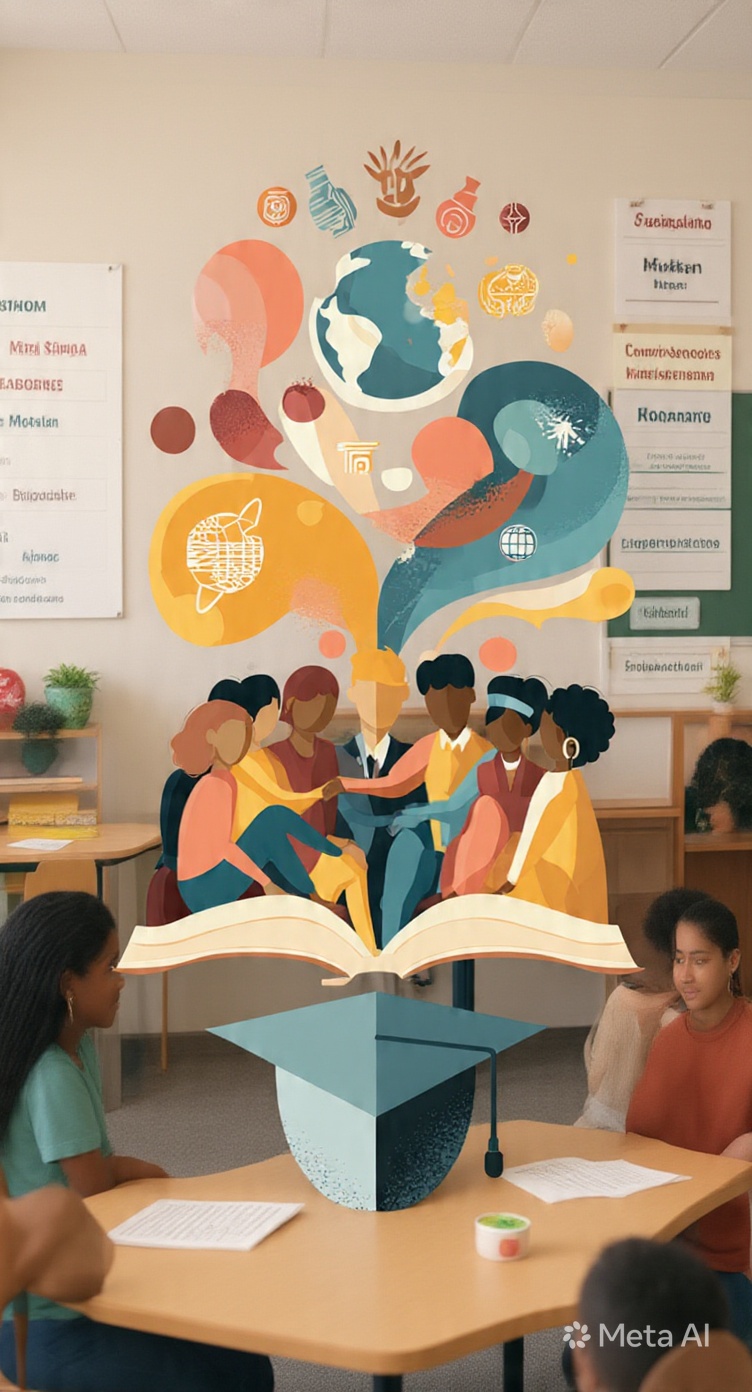
Multilingualism, Cultural Pluralism and Curriculum Development in Basic Education in Nigeria

By Noel A. Ihebuzor

Introduction

Multilingualism and cultural pluralism have received considerable scholarly and policy attention in countries such as the United States, Canada, the United Kingdom, Belgium, and France because of their implications for national integration, identity preservation, and educational development. In many African countries, however, including Nigeria, these issues have often received only superficial attention despite their enormous significance for social cohesion, equity, and curriculum development.

Nigeria is one of the most culturally and linguistically diverse countries in the world, with over 250 ethnic groups and more than 500 languages. Such diversity presents both opportunities and challenges for education policy and curriculum development. While diversity can enrich learning and strengthen cultural identity, it can also create tensions relating to language policy, representation, access, and national integration.

This paper examines the relationship between multilingualism, cultural pluralism, and curriculum development in Nigerian basic education. It explores the conceptual foundations of multiculturalism and cultural pluralism, analyses their implications for curriculum development, and discusses the advantages, disadvantages, and threats associated with multilingual and culturally plural educational systems. The paper further examines how power relations, linguistic dominance, and educational policy shape curriculum choices in Nigeria and concludes with recommendations for a more inclusive and equitable curriculum framework. The writing of this paper is informed by concerns for equity, respect for language rights and the imperative for culturally responsive pedagogy. A related motivation was the need to broaden the rhetoric on curriculum decolonisation to include recognising the dangers in the subtle colonisation of speakers of minority languages in multilingual African countries such as Nigeria by speakers of dominant languages in these same countries. Implicit in the above is the invitation to the reader that colonisation is colonisation. Denying a speaker of a minority language education in his/her language is thus a measure that could lead to exclusion. Given the vital link between language and indigenous knowledge systems, such an exclusion could also lead to major losses in indigenous knowledge systems for speakers of such languages

Keywords: Multilingualism, cultural pluralism, curriculum development, language policy, minority languages, multicultural education, Nigeria.

Conceptual Clarifications

Multiculturalism and Cultural Pluralism

Multiculturalism refers to the coexistence of multiple cultural groups within a society. It is commonly associated with policies that recognize cultural diversity and encourage the inclusion of different cultural traditions within national life. Multicultural societies may contain dominant and minority cultures of varying demographic and political strength.

Cultural pluralism, on the other hand, refers to a situation in which diverse cultural groups are not only allowed to exist but are also encouraged to preserve and develop their unique identities, languages, traditions, and values. Unlike monocultural systems that encourage assimilation into a dominant culture, cultural pluralism promotes integration without cultural absorption.

The distinction between multiculturalism and cultural pluralism is significant. Multiculturalism may simply describe the presence of multiple cultures, whereas cultural pluralism implies deliberate policies aimed at protecting minority identities and ensuring equitable representation.

Linguicism and Linguistic Imperialism

The concept of linguicism, introduced by Tove Skutnabb-Kangas, refers to discrimination based on language. It describes ideological and structural processes that privilege certain languages while marginalizing others.

Closely related is the idea of linguistic imperialism, developed by Robert Phillipson, which explains how dominant languages expand through political, educational, and economic power structures. In multilingual societies such as Nigeria, language choices in education often reflect broader struggles over power, identity, and cultural dominance.

The privileging of major languages over minority languages in schools can therefore become a mechanism for reinforcing social inequalities and weakening minority cultures.


Curriculum Development as a Political and Cultural Process

Curriculum development is often presented as a technical or pedagogical process involving the selection of learning content, teaching methods, and evaluation procedures. However, curriculum development is also deeply political and ideological because it involves decisions about:

  • what knowledge is valuable;
  • whose culture is represented;
  • which languages are promoted;
  • which histories are remembered;
  • and what kind of society education seeks to create.

Education is not culturally neutral. Beyond transmitting knowledge and skills, it also functions as a mechanism for cultural transmission, identity formation, and social reproduction.

Scholars such as Pierre Bourdieu and Michael Young argue that curriculum can become an instrument for reproducing dominant cultural values while marginalizing less powerful groups. In multicultural societies, curriculum development therefore reflects existing power relations and ideological preferences This is especially evident in subjects such as language, history, social studies, religion, literature and civic education. These subjects often privilege dominant cultural narratives while underrepresenting minority perspectives.

Multilingualism and Cultural Pluralism in Nigeria

Nigeria’s educational system operates within a highly multilingual and multicultural environment. The country’s language policy recognizes English as the official language and identifies Hausa, Igbo, and Yoruba as the three major Nigerian languages. Numerous other indigenous languages are recognized as mother tongues, although many are not adequately supported within formal education.

This arrangement has generated significant educational and sociopolitical tensions.

For example, children from minority linguistic backgrounds frequently experience what may be described as a “multiple language burden.” A child from a minority ethnic group living outside his or her ancestral community may be required to learn:

  • the local dominant language;
  • one of the three major Nigerian languages;
  • and English.

This creates unequal linguistic demands compared to children from dominant linguistic groups.

The emphasis on the three major languages also creates concerns about:

  • linguistic marginalization;
  • unequal resource allocation;
  • cultural domination;
  • and the gradual disappearance of minority languages.

The latter concern, that of a concern with the phenomenon of language disappearance, sometimes described as glottophagy, becomes when smaller languages are gradually abandoned due to pressure from dominant languages and cultures.

Models of Cultural Pluralism

The literature identifies several models of cultural pluralism:

Cooperative Model -Different cultural groups collaborate harmoniously while maintaining their identities.

Conflict Model – Cultural groups compete for recognition, influence, and resources, often generating tension.

Coercive Model – Dominant groups compel minority groups to adopt dominant cultural norms; and

Domination Model – Powerful groups impose their culture through institutions such as schools, media, and government policies (Young, 1979; Phillipson, 1997)

In reality, most societies display elements of several models simultaneously. In Nigeria, these models play out in such things as the choice of which Nigerian language should be learnt as L2 and which language should be used as mother tongue in school settings characterized by the presence of learners from different first languages. Given the close affiliation between language and culture, any language choices in such settings ultimately become a choice of which culture to advantage.

Challenges of Cultural Pluralism and Multilingualism in Nigerian Education

These are several and include Language Policy and Inequality, curriculum representation, the reality of resource constraints, the ever-present ethnic and religious sensitivities which may colour perception of educational decision taken, the problem of teacher supply and the availability of pedagogical materials. Let us now take up each of these in turn and discuss each albeit briefly

Language Policy and Inequality – One of the most difficult issues in Nigerian education concerns the language of instruction. While mother-tongue education is pedagogically desirable, implementing it across hundreds of languages is financially and administratively challenging.

Consequently, many minority languages remain excluded from instructional use, placing their speakers at educational disadvantage.

Curriculum Representation

Curriculum content in areas such as history and social studies often reflects dominant cultural narratives. National heroes, historical figures, and cultural references are frequently drawn from major ethnic groups, while minority cultures receive limited representation.

This may unintentionally create feelings of inferiority and exclusion among learners from minority backgrounds.

Resource Constraints

Developing multilingual curricula requires:

  • trained teachers;
  • instructional materials;
  • translation services;
  • orthographies for local languages;
  • and sustained financial investment.

Many developing countries struggle to provide these resources adequately.

Ethnic and Religious Sensitivities

Curriculum decisions involving religion, language, and culture are highly sensitive in Nigeria. Disagreements over religious instruction, civic education, and historical interpretation often reflect broader societal tensions.

Standardization Difficulties

Cultural diversity complicates efforts to standardize curriculum, assessment, and educational delivery nationwide. However, a basic truth that is worth asserting is that uniformity of curriculum offerings does not necessarily produce unity.

Teacher Preparedness

Many teachers lack adequate preparation in culturally responsive pedagogy. Without proper training, multicultural education may unintentionally reinforce stereotypes rather than promote inclusion.

Advantages of Cultural Pluralism and Multilingualism

Despite these challenges, cultural pluralism offers significant educational and societal benefits. These include the following:

Promotion of National Unity Through Inclusion

Inclusive curricula help learners feel recognized and valued within the national community, thereby strengthening social cohesion.

Preservation of Indigenous Cultures and Languages

Culturally responsive education contributes to the preservation of indigenous languages, histories, and knowledge systems.

Improved Learning Outcomes

Research consistently shows that children learn more effectively when instruction connects with their linguistic and cultural backgrounds.

Promotion of Tolerance and Intercultural Understanding

Exposure to multiple cultural perspectives helps reduce prejudice and promotes empathy, mutual respect, and peaceful coexistence. Specifically, the Urhobo adolescent who learns about Itsekiri culture is not only bound to become a more rounded but is also bound to display skills of empathy, acceptance and appreciation of fellow learners from other cultures.

Development of Critical Thinking

Multicultural education encourages learners to engage with diverse viewpoints and question assumptions critically.

Strengthening Learner Identity and Self-Esteem

Representation of diverse cultures in curriculum content helps learners develop confidence and pride in their heritage.

Disadvantages and Threats

These are several and include the following:

Risk of Ethnic Fragmentation

Excessive emphasis on cultural differences may deepen ethnic consciousness and weaken national identity.

Cultural Domination

Dominant groups may use education and language policy to reinforce their cultural influence over minority groups.

Linguistic Imperialism

Globalization and the increasing dominance of English create pressures that undermine indigenous languages and cultures. In the Nigerian case, the spread of Hausa language in the North of the country has become a threat to the survival of minority languages, some of which are now threatened with extinction of glottophagy. Without deliberate preservation efforts, minority languages may gradually disappear due to assimilation and globalization pressures.

Curriculum Overload

Attempting to represent all cultural groups adequately may lead to an overcrowded curriculum, but at the barest minimum, efforts must be made to ensure representativeness of the cultural practices of the various groups in society, whilst avoiding the dangers of political manipulation that may accompany such efforts as selection of  Curriculum content may become politicized by powerful stakeholders with strong interests, such dangers being especially high in areas involving history, language, and religion.

The challenge of all the foregoing is how to develop school programs that capture the major educational benefits of multilingualism and cultural pluralism whilst minimizing the downsides. The next section examines their implications for curriculum development.

Implications for Curriculum Development in Nigeria

This concluding section commences on the basic premise that Curriculum development in Nigeria must balance two competing imperatives:

  • promoting national unity;
  • preserving cultural diversity.

Such a curriculum development should also be culturally responsive. A culturally responsive curriculum should:

  • represent diverse cultures fairly;
  • avoid stereotyping;
  • promote inclusive citizenship;
  • support multilingual education;
  • and foster intercultural dialogue.

There is also a need to move away from curricula that privilege only dominant narratives and instead create space for minority histories, local heroes, indigenous knowledge systems, and community experiences. The solutions proposed below are based on these foundational principles

Proposed Solutions and Recommendations

Promote Multilingual Education

Nigeria should strengthen mother-tongue instruction, especially at the early childhood and lower basic education levels.

Develop Inclusive Curricula

Curriculum content should reflect the histories, cultures, and experiences of diverse Nigerian communities.

Strengthen Teacher Training

Teachers should receive professional preparation in:

  • culturally responsive pedagogy;
  • multilingual education;
  • conflict-sensitive teaching;
  • and inclusive curriculum delivery.

Encourage Community Participation

Curriculum development should involve stakeholders from different cultural and linguistic groups as this is one sure way to ensure relevance and critical stakeholder engagement with school curricula.

Support Minority Languages

Government should invest in:

  • orthography development;
  • local language publishing;
  • translation;
  • teacher recruitment;
  • and indigenous language media.

All the suggested policy interventions above come under the scope of language engineering and planned language expansion. These are well discussed in Rubin and Jernudd (1971). At the Nigerian level, these issues mentioned above are well examined in Bamgbose, Akere, and Ihebuzor (1992) and in Ihebuzor and Junaidu (1994).

There is also the need to balance Diversity with National Cohesion whilst making efforts to integrate Indigenous Knowledge Systems in curricula offerings

Furthermore, educational policy should promote shared civic values while respecting cultural diversity. At the same time, and this is the challenging part, efforts must be made to ensure that curriculum content incorporates local knowledge, environmental practices, conflict-resolution traditions, and cultural heritage.

Finally, there is a need for regular and continuous curriculum review to ensure inclusiveness, relevance, and responsiveness of curricula to Nigeria’s evolving sociocultural realities.

Conclusion

Multilingualism and cultural pluralism remain central issues in curriculum development within Nigeria’s basic education system. While cultural diversity enriches education and strengthens democratic inclusion, it also presents significant challenges relating to language policy, equity, representation, and national cohesion.

Curriculum development in multicultural societies cannot be viewed as a neutral process. It reflects broader struggles over identity, power, ideology, and cultural representation. Consequently, educational policy must carefully balance the demands of national integration with the imperative of protecting minority cultures and languages.

For Nigeria, the challenge is not whether cultural pluralism should exist, but how it should be managed in ways that promote inclusion, educational equity, social cohesion, and sustainable national development. Finally, the way that Nigeria manages its cultural pluralism and multilingualism must be such that would advance her pursuit of SDGs 4 and 11.


Selected References

  • Bamgbose, A. (1992). Speaking in Tongues: Implications of Multilingualism for Language Policy in Nigeria.
  • Bamgbose, A,  Akere F and Noel Ihebuzor (eds) (1992), Implementing the language provisions of the National Policy on Education, NERDC. Abuja, NERDC/FME
  • Barrow, R. (1976). Common Sense and the Curriculum. London: George Allen and Unwin.
  • Brent, A. (1978). Philosophical Foundations for the Curriculum. London: George Allen and Unwin.
  • Federal Government of Nigeria (1981). National Policy on Education. Lagos: NERDC Press
  • Fishman, J. (1993). “Ethnolinguistic Democracy: Varieties, Degrees and Limits.” Language International, 5(1), 11–14.
  • Ihebuzor, Noel& Ismail Junaidu (eds) (1994), Proceedings of the seminar on language survey planning, Lagos, NERDC
  • Phillipson, R. (1997). “Realities and Myths of Linguistic Imperialism.” Journal of Multilingual and Multicultural Development, 18(3), 238–248.
  • Rubin, J., & Jernudd, B. H. (1971). Can Language Be Planned? University of Hawaii Press.
  • Skutnabb-Kangas, T. (1988). “Multilingualism and the Education of Minority Children.” In Minority Education: From Shame to Struggle.
  • Young, C. (1979). The Politics of Cultural Pluralism. University of Wisconsin Press.
Posted in Basic Education, Poetry, Prose

Towards a Risk-Informed and Sensitive-Interpretative Approach to Literature Pedagogy at the Secondary School level in Nigeria

By Noel A. Ihebuzor

Abstract

The teaching of literature has long occupied a central place in secondary education because of its perceived contributions to language development, critical thinking, moral formation, emotional growth, and cultural understanding. In Nigeria, Literature-in-English remains a significant component of the secondary school curriculum and an important subject in public examinations. Much of the scholarly literature emphasizes these benefits and generally presents literature as an unqualified educational good. This article argues that such a perspective is incomplete. While literature offers substantial cognitive, linguistic, social, and ethical benefits, it may also expose learners to a range of pedagogical and ideological risks. Drawing on examples from African and Nigerian literary texts, the article examines concerns relating to age-inappropriate sexuality, violence, ideological influence, authorial bias, historical inaccuracies, racism, sexism, and gender-based violence. It argues for a shift from a purely celebratory understanding of literature teaching towards a risk-aware pedagogical framework that incorporates risk identification, mitigation strategies, and cost-benefit analysis. The article concludes that literature remains indispensable to holistic education but that its educational benefits can only be fully realized when teachers, curriculum developers, and policymakers consciously manage its potential risks.

Introduction

Literature occupies a distinctive position within secondary education because it combines linguistic, cultural, emotional, and intellectual learning in ways that few other school subjects can achieve. In Nigeria, Literature-in-English has traditionally been regarded as an important instrument for developing language proficiency, cultural awareness, creativity, and critical thinking. Through prescribed texts, students encounter diverse cultures, historical experiences, moral dilemmas, and social realities that contribute to their intellectual and personal development.

The educational value of literature has therefore been widely acknowledged by curriculum developers, teachers, examination bodies, and researchers. Literature is frequently presented as a means of nurturing empathy, promoting ethical reflection, enriching language skills, and fostering civic consciousness. Yet despite this broad consensus regarding its benefits, comparatively little attention has been paid to the risks and challenges associated with teaching literature to adolescents, particularly within developing-country contexts.

This omission is significant because literature is not merely a neutral repository of stories. Literary texts convey values, ideologies, historical interpretations, cultural assumptions, and models of human behaviour. Their influence may be positive, but it may also be problematic. Texts can normalize violence, reinforce stereotypes, present controversial ideological positions, or expose learners to themes for which they may not be developmentally prepared. Consequently, the teaching of literature should be approached not only as an educational opportunity but also as a pedagogical responsibility requiring careful management.

This article seeks to balance the dominant discourse on the benefits of literature with a critical examination of its risks. It argues that literature teaching should incorporate systematic processes of risk identification, risk mitigation, and cost-benefit analysis in order to maximize educational gains while minimizing potential harms.

The Educational Value of Literature

The case for literature teaching remains compelling. One of its most widely recognized contributions lies in the development of cognitive and linguistic abilities. Literary texts challenge students to interpret meanings, draw inferences, evaluate perspectives, and engage in imaginative thinking. Through exposure to rich and varied language, learners expand their vocabulary, improve reading comprehension, and develop sophisticated communication skills.

Beyond cognitive development, literature serves as an important vehicle for moral and ethical reflection. Literary narratives frequently present complex situations involving justice, responsibility, loyalty, courage, and integrity. Such encounters provide opportunities for learners to reflect on ethical questions and examine competing value systems.

Literature also contributes significantly to emotional and social development. Through engagement with fictional characters and situations, learners are exposed to diverse human experiences and perspectives. This process can cultivate empathy, emotional intelligence, and greater understanding of social relationships. Related concepts such as bibliotherapy and socio-emotional learning further highlight the capacity of literature to support personal growth and psychological development.

The cultural dimension of literature is equally important. Literary texts provide insights into societies, traditions, histories, and worldviews that may differ from those of the reader. In multicultural and postcolonial societies such as Nigeria, literature can strengthen cultural identity while simultaneously fostering intercultural understanding and tolerance.

Taken together, these contributions position literature as a valuable component of holistic education and as an important contributor to the development of creativity, critical citizenship, and twenty-first-century competencies.

From Educational Benefits to Pedagogical Responsibilities

The very qualities that make literature educationally powerful also make it potentially risky. Because literature engages emotions, shapes perceptions, and influences values, it possesses the capacity to affect learners in profound ways. Consequently, literature teaching should be regarded as a high-stakes pedagogical practice requiring careful planning and professional judgment.

Insights from reader-response theory, critical literacy, developmental psychology, and media-effects research suggest that readers do not encounter texts passively. Students actively construct meanings from what they read, yet those meanings are influenced by their developmental stage, social environment, prior experiences, and classroom context. These considerations underscore the need for a pedagogical framework that acknowledges both the benefits and the risks of literary engagement.

A useful way of conceptualizing this challenge is through the language of risk assessment and cost-benefit analysis. Such approaches are widely used in educational policy and curriculum development but have rarely been applied systematically to literature teaching. A risk-aware approach does not seek to censor literature; rather, it seeks to ensure that potentially problematic content is identified, contextualized, and addressed responsibly.

Risks in the Teaching of Literature

One important concern relates to age-inappropriate content and precocious sexuality. Adolescents are at a critical stage of psychological and social development, and exposure to explicit sexual themes may present challenges depending on learners’ age, maturity, and context. Texts such as “Mission to Kala” and some contemporary African fiction contain representations of sexuality and adult relationships that require careful mediation. There is a rich harvest of such in Chimamanda Ngozi Adichie’s creative writings. Texts as “The Thing Around Your Neck” (– especially stories in it like the shivering, and The Arrangers of marriage,) “Americanah”, and “Dream Count” are replete with narratives of sexual encounters and content.  Without appropriate pedagogical guidance, such content may contribute to confusion, normalization of precocious sexual behaviour, or emotional discomfort among vulnerable learners.

Another concern involves the representation of violence and the ways in which literary texts sometimes present simplistic solutions to complex social problems. Works depicting revenge, vigilantism, or violent conflict may unintentionally reinforce problematic behavioural scripts if learners are not encouraged to interrogate the ethical dimensions of such actions. In some narratives, the handling of the problem of revenge can be very problematic. “The Passport of Mallam Ilia” by Cyprian Ekwnsi illustrates this amply, as the protagonist exacts physical revenge but suffers both physical and moral loss in the end. In some cases, social injustices appear to be resolved by eliminating an oppressor (as in the case of a very aggressive and overbearing father in “The Purple Hibiscus”) rather than through dialogue, institutional reform, or restorative processes. Such portrayals require critical classroom discussion to prevent simplistic moral conclusions.

Literature may also function as a carrier of ideology. Every literary text embodies particular assumptions about society, power, economics, religion, or politics. While exposure to diverse viewpoints is educationally valuable, there is a risk that students may uncritically internalize ideological positions if alternative perspectives are not presented. Texts that strongly reflect Marxist (see Sembene Ousmane’s God’s Bits of Wood” for example), nationalist, capitalist, or religious worldviews should therefore be taught within frameworks that encourage critical pluralism rather than ideological conformity.

Related concerns arise from authorial bias. Literary works, memoirs, and autobiographical narratives often reflect the experiences and perspectives of their authors. Achebe’s There was a Country” and Adichie’s “Half of a Yellow Sun” are good illustrations of such texts. While such perspectives can provide valuable insights, they may also present partial or contested interpretations of historical events. Learners who encounter only one narrative may develop incomplete understandings of complex social realities.

Historical fiction presents a further challenge because it occupies the boundary between imagination and historical representation. Powerful novels may shape students’ understanding of national history more effectively than history textbooks. Yet literary narratives often simplify, dramatize, or reinterpret historical events. Unless teachers explicitly distinguish between historical fact and artistic interpretation, learners may develop inaccurate understandings of important historical episodes.

The persistence of racism, sexism, patriarchy, and gender-based violence in some literary texts also warrants attention. Literary representations may reproduce stereotypes, normalize discrimination, or reinforce harmful social assumptions. Okot B’Tek’s “Song of Lawino” and Mariama Bah’s “So long a letter” are interesting to read, but these two texts can be said to contain ideologically motivated simplifications. While such texts can provide valuable opportunities for critical discussion, their educational value depends largely on the teacher’s ability to facilitate thoughtful analysis rather than passive acceptance.

Towards a Risk-Aware and Sensitive-Interpretative Literature Pedagogy

Recognizing these risks does not diminish the value of literature. Rather, it highlights the need for more sophisticated approaches to teaching. A risk-aware literature pedagogy begins with careful text selection and curriculum design. Texts should be evaluated not only for their literary merit but also for their developmental appropriateness, ideological complexity, representations of violence, and ethical implications.

Within the classroom, critical literacy approaches provide an effective means of managing risk. Students should be encouraged to question texts, identify assumptions, examine biases, and consider alternative interpretations. Literature teaching should move beyond admiration of authors and texts towards critical engagement with ideas and representations.

Sensitive topics such as sexuality, violence, and ideological conflict require careful framing before reading and thoughtful debriefing afterwards. Guided discussions, reflective writing activities, and structured classroom dialogue can help learners process difficult content constructively.

Multi-perspectival teaching offers another valuable strategy. Historical novels can be paired with historical documents; ideological texts can be complemented by alternative viewpoints; literary representations can be compared with empirical evidence. Such approaches help learners appreciate complexity and avoid simplistic conclusions.

Teacher preparation is equally important. Literature teachers require training not only in literary analysis but also in adolescent psychology, ethics of representation, critical literacy, and the facilitation of controversial issues. Professional development programmes should therefore equip teachers with the knowledge and skills needed to manage sensitive content responsibly.

A broader support system involving parents, counsellors, examination bodies, and policymakers can further strengthen risk management efforts. Clear guidelines concerning sensitive content and appropriate pedagogical responses would enhance both accountability and educational effectiveness.

Conclusion

The teaching of literature remains one of the most valuable components of secondary education. Its contributions to language development, critical thinking, moral reflection, emotional growth, and cultural understanding are substantial and well established. Nevertheless, literature is not inherently benign. Because it shapes perceptions, values, and identities, it can also expose learners to a range of pedagogical and ethical risks.

This article has argued that concerns relating to age-inappropriate sexuality, violence, ideological influence, authorial bias, historical representation, racism, sexism, and gender-based violence deserve greater attention within literature pedagogy. Rather than abandoning literature or restricting intellectual freedom, educators should adopt a risk-aware framework that integrates risk identification, mitigation strategies, critical literacy, and cost-benefit analysis.

The future of literature teaching in Nigeria and other developing countries lies not in choosing between celebration and criticism but in combining both. Literature should continue to challenge, inspire, and educate young people, but it should do so within pedagogical frameworks that consciously maximize its benefits while minimizing its potential harms.

References

Alexander, R. (2008). Essays on pedagogy. Routledge.

Dewey, J. (1938). Experience and education. Macmillan.

Fish, S. (1980). Is there a text in this class? The authority of interpretive communities. Harvard University Press.

Freire, P. (2000). Pedagogy of the oppressed (Original work published 1970). Continuum.

Iser, W. (1978). The act of reading: A theory of aesthetic response. Johns Hopkins University Press.

Janks, H. (2010). Literacy and power. Routledge.

Luke, A. (2000). Critical literacy in Australia: A matter of context and standpoint. Journal of Adolescent & Adult Literacy, 43(5), 448–461.

Miall, D. S., & Kuiken, D. (1994). Foregrounding, defamiliarization, and affect: Response to literary stories. Poetics, 22(5), 389–407. https://doi.org/10.1016/0304-422X(94)90022-1 (doi.org in Bing)

Pandya, J. Z., Mora, R. A., Alford, J. H., Golden, N. A., & de Roock, R. S. (Eds.). (2021). The handbook of critical literacies. Routledge.

Piper, B., & Dubeck, M. M. (2024). Responding to the learning crisis: Structured pedagogy in sub-Saharan Africa. International Journal of Educational Development, 109, 103095. https://doi.org/10.1016/j.ijedudev.2024.103095 (doi.org in Bing)

Rosenblatt, L. M. (1978). The reader, the text, the poem. Southern Illinois University Press.

Rosenblatt, L. M. (1995). Literature as exploration (Original work published 1938). Modern Language Association.

Shulman, L. S. (1987). Knowledge and teaching: Foundations of the new reform. Harvard Educational Review, 57(1), 1–22. https://doi.org/10.17763/haer.57.1.j463w79r56455411 (doi.org in Bing)

Tompkins, J. P. (Ed.). (1980). Reader-response criticism: From formalism to post-structuralism. Johns Hopkins University Press.

Vygotsky, L. S. (1978). Mind in society: The development of higher psychological processes. Harvard University Press.

Texts cited

Achebe, C. (2012). There was a country: A personal history of Biafra. Penguin.

Adichie, C.N. (2003) Purple Hibiscus. Chapel Hill, Algonquin Books of Chapel Hill

Adichie, C. N. (2006). Half of a yellow sun. Alfred A. Knopf.

Adichie, C. N (2009). The thing around your neck, Alfred A. Knopf.

Adichie, C. N. (2013). Americanah. Alfred A. Knopf.

Adichie, C. N (2025).  Dream Count, Alfred A. Knopf.

Ba M (1981) So long a letter, Heinemann

Beti, M. (1958/2005). Mission to Kala. Heinemann.

Ekwensi, C (1960) The Passport of Mallam Ilia, Cambridge University Press

Ousmane, S. (1960). God’s bits of wood. Heinemann.

P’Bitek Okot (1966) Song of Lawino: A Lament. East African Publishing House

Posted in Uncategorized

New meanings of political sophistication

by Noel Ihebuzor

Recent events in Nigeria are increasingly making me to believe that our politicians are now beginning, by their acts and omissions, to broaden the meaning of the term “political sophistication”  to mean any or all of the following  –

  • the ability to hold/live divergent political loyalties at the same time with no visible show of cognitive dissonance.
  • the effecting of political somersaults and display of inconsistencies not accompanied by any sense of remorse or shame.
  • the ability to step-down considerations and respect for your political icon for immediate short-term gains!
  • the ability to be consistently inconsistent and undependable!
  • the death of morality, honor, principles and decency in dealings on all matters political

we all are all the poorer because of these unfortunate semantic shifts and extensions because they signify fundamental erosions of values and a society is a robust as its values..


Posted in Poetry, Uncategorized

A song for Susan

Noel Ihebuzor

Something touches a key.

The touched key comes alive and moves,

humming stroking and caressing,


Soon, it blends notes and nuances,

nudges other senses to move and dance,

like alija, like nubile hips stirrred by ngelenge,


suddenly the soft shadows of a new song emerge,

fleeting inchoate,

some gentle touch by the potter,

and the new song explodes,


reason, rhythm and rhyme join hands

skipping along, spraying flowers,

red roses sing along

softliest and are heard most,


purple hibiscus, furl and unfurl,

hum shyly and wave

Rosemaries, Queens of the night

Explode and lather the awakened day


The aroused frame

whetted ears and noses aflame

with message laden bouquets


dripping deep messages,carousing

that caress our aroused eyes and ears –

with the beauty of Susan’s Poetry,

coated in the dazzling polysemy of an engaged voice.


****This is a piece I scribbled for Susan Daniels, my duet partner on Feb 15, 2013. Saw it in my archives this morning. Long may she live. Long may her poetry flourish!

Posted in Poetry

Fizzy feelings and Fuzzy physics – a series of duets with the poet Susan Daniels.

by

Susan Daniels @susan_daniels and Noel Ihebuzor @naitwt

Fizzy feelings and Fuzzy physics: # 9 Friction

June 27, 2012

By Noel A. Ihebuzor and Susan L. Daniels

In every straight and curving path of life
the interaction of opposites flows, friction,

its opposition
a delicate assurance of traction,
resistance and grip, always present
allows us to stand and move

same resistance slows and stops us
allowing motion, yet retarding it

the rasp of surface against surface,
smooth against rough, rough to rough,
smooth to smooth; each raises heat,
awakens a force
moved into being by edge scraping edge

the gliding plane
our movement through air as friction

the soaring heart,
the pounding heart, ventricle and atrium
pumping, pulsating and pushing life blood,
in never stopping motion,
constantly overcoming friction and resistance,

harp strings tremble, plucked and stroked by knowing
fingers, the wailing saxophone,
the streaking trumpet,
the tickling tinkling piano strokes,
slides, glides, and breaks its chords
all raising hammers to strings
and frictioned strings to sound
the whispered violin

all engineered friction fusing with air,
music born of friction, peaks and troughs of sound
throb in our ears

the ship slicing through waves,
opening and parting them in bowed surge
the wetted measured friction
has the waters parting, gushing, rushing round
singing in joyous roars that fill, fulfill, and enflame
basking mermaids slithering and lulling in the waves
of plunging passion

our fingertips, too, on skin, are friction
we call pleasure, touches we arch under
the language of groans and sighs also moaned friction
of heated air rasping vibrating cords
in the throat, just so

and then tensing to yes.

the pleasure of the plough plunging deep,
digging deep into gripping soil
gratefully opening up to tilling, for seeds of life
to be planted, so that in season, a rich harvest would birth

and how our voices rejoice, secret yielded as fruit
the shared complicity in
friction and pulling,
plowing, plunging and planting

the stone grinder, the blunt edge,
engage in perfect frictional resistance,
sharpening, short lived stars shooting and flying dazzle,
heat rising to combustion points,
sparks flying with each roll, the spinning grind

the resistance of the pool
the waiting surface tension
the perfect contours of its ribbed surface
pierced by the perfect dive,
the ripples and return heave of frictional resistance
the suckling suctioning into parted spaces, bubbling,
warming and enfolding heat, in the cool dive defeating friction, thawing,
how resistance melts down
into dissolving softness,
like a warm bread knife,
pressed deep into yielding butter,
soon bathed in golden cream….

the touch as fingers run through skin tense,
the kissing caress, lips slowly rubbing singing skin
bodies locking, unlocking, interlocking,
passions painted in colors of friendly wrestlers
locked in a tussle of mutual entanglement and enlargement,

grasping, clutching, gripping
skins toned, glistening, unchaining and liberating
expanding voices, accelerating motions of
perpetual ebbs and flows, surges and suctions
hurrying to a waiting harbor, destroying energy in liberating bliss

and incomprehensible scribbles
on the resisting vibrating surface of the bewitched air

all need your collaboration
demanding energy to overcome
though energy would be felt,
drowned in flowing pleasures

without friction there can be no pleasure
stuttered, stalled, sullen and static
journeys without boundaries

life a languid limp limbo
resistance and restrainer
you increase work and heat
liberating positive energy in seasons of amity
but when time and pride corrode the good
and anomie sets in
and thorn weeds sprout and spike in polluted hearts
painful friction, spawn and install in stubborn hearts
spout-spawning spiraling masses of negative energy,
spurning joy, acerbic simmer, toxic swelters, choking
as corrosive friction multiplies and you deepen your roots
the good begins to dissolve, the ugly enlarges

our edges dry and wear down;
stripped tongues heavy and cracked like warped wood,
hearts unmoved,
and our communications collapse

as enlarging frictions fetters and freezes the feet of amity
to resist and retard the swelling of heart
and bodies that once vibrated and throbbed as one

***And here we are, at our last piece in the fizzy feelings/fuzzy physics series and Susan and I close it here with a flourish. The theme friction is one that lends itself to diverse explorations and exploitations and we have not stinted in any way here in these

:)

and we hope you will like what we have tried to make of it!

Thanks again to Susan, my partner in poetry and co-creator, for challenge, co-inspiration and for such gorgeous use of the language!

Fizzy feelings and Fuzzy physics: #8 Particles

June 26, 2012

By Noel Ihebuzor and Susan Daniels

Lately, conversations,
learned or elementary
about quantum entanglements
resonate & bring to mind
you

rich in kinks and curves
to the eyes straight
mirrors of us imperfect in perfection
reluctantly splitting in medium dense
elegance bending in fine angles

And tonight I lose sleep
to deep speculation

wondering at which point
and how

particles of pure energy
roaming space free, opening places
penetrating spaces and crevices

the flowing and roaming particles of
our matter collided

breaking barriers
upper and lower limit
vibrating stream of energy

yes, streams that crashed
and colluded
to synthesize
this synchronized turn
& counter-turn
between us

how across distances
the color of angel robes
the bow of the sky
this awareness continues
bundles of colors at different energy levels
streaming to lighten, to loosen
a delight

past an elemental level

indefinite until measured

** As usual, It was such wonderful fun doing this duet with Susan where we explore the relevance of aspects of particle theory in physics to communication and bonding across space, place and cultures. Susan says it better in her usual eoquence in the words below. Noel

***Quantum entanglements, or the theory of, was the inspiration for this duet between my bolded friend and I (italicized). I believe it describes nicely a friendship and affinity that stretches across the globe

:)

As always, hope you enjoy our fuzzy, fizzy exploration between particles and people — I know I had fun writing it with Noel, hope you enjoy reading it.

Fizzy feelings and fuzzy physics: #7 Energy

June 25, 2012

By Susan Daniels and Noel Ihebuzor

Raw or refined,
Raging or reclining,

Coiled, uncoiling, recoiled
force and power, taming and untamed , kinetic and potential
constant in final summation
never lost

Eternal borrowed magic
forged once and never destroyed;
only shifting form,
released or recaptured
in new attachments

Transmuting, changing, converting
fields always present
in us, force field, flooding
all life is you, dancing

Whether rolling, roaming, roaring or lulling, tangible proofs
of your occasional intangible presence
we sense the voice singing you
sketching or announcing your passage
either as silent footfalls or thumping poundings
reminding us to be, that we are,
we are beings because of you,
primal mover at the beginning

and still being, celebrating and echoing the command
to be, and you are and remain
being in your bounding, binding,
pounding, driving, falling,
tumbling, stumbling, climbing

the invisible hands drawing the earth’s pull taut,
the rise in slopes, hunger also rising;
rivers rush, stream, and sing your name

and here, we pull together in equal force,
meeting and blending these shifting fields
other disciplines call spirit
but I name simply us;

a measurable magic
weighed in breath
and silent singing of neural nets
taking in and releasing

perfection enacted, beauty embodied
tumbles joyfully to waiting limbs of estuaries,
your torrents delighting, passion swirling

and in the heart pumping blood,
necessary and rhythmic expression of muscle
exalting, exulting, and moving

pure life energy

beating and pushing
the energy of the heart

and this energy can push, also,
the pulse of hate, the politics of rage
the power to heat up, hurt, harm
and strengthen the impulse to heal, help

raw and caged in dams, you exist, taut, waiting
leaving us free, agents with choice
to channel you for good or for bad or for bland

We draw from you the means for
tearing down or building
and weeping as our hands itch for and grasp the former

and you weep in fits at our failure and our fate.

***My co-creator Susan’s voice is in italics – mine is bolded. Again, we had so much fun with this when we created it–hope you enjoy reading it. As always, a treat to write with Susan whose energy and creativity added life and flow to what is difficult concept in physics !

Fizzy feelings and Fuzzy physics: #6 – Time

June 24, 2012

By Noel Ihebuzor and Susan Daniels

Monosyllable rich in polysemy
endless, stretching fabric enfolding layers
of meanings, deeper than the infinite
finite, endless, far and near
seamless unity, past, present, future merged
was, is and will, history and hope
defiant of human labels

Eternity the endless is;
neither forward nor back,
but everything now, old and new
the cry of creation echoed
by foothills wrapped in morning mist
reflecting the hum underneath sound,
an ageless shout

Stretched out in space
travelling and rolling
never straight, never monotone, velocity varying
in your kinks and loops,
you dance backwards to lace and trap the minds
of the traveler looking backwards from the present
reaching backwards to embellish images and events
with generous sweet strokes and paintbrushes, dripping nostalgia

We can only chart your path,
a journey from now to the less-now
colored by memory–beautiful,
instructive, instinctive;
more art than accuracy
in the retelling. Still, we rise
from what we think shapes us
to this moment, the moment now past

The beat of the pounding heart
the chimes of throbbing bodies
measure of rhythmic flows
the pulsing vibrating instruments
ogene, piano, ekwe, flute all sing and hum
with you, imperfect mirrors of your rhythm and soul

Yes, we keep time,
counting in fours and swings
and steps, our imposed order
an accompaniment
to your dance through and with us

Measure of intensity, streaming shooting jet
fast as light, often twice as swift
for those in present passion
crawling slow overweight snail for those who wait
rhythm ancient undying
constant motion, flowing streams
defying all our puny efforts
to trap, define and fix your roaming endless stroll
numberless, units without limits, objective
us subjective
the time traveler’s delight, mind shuttles between epochs
gone to relive, coming to feel and anticipate and feel
through frosty crystal balls,
shady mind prisms and tired eyes permitting
astral and mind travels
mind dragging body

Our error
the attempt to capture
or predict your movements,
when we should simply
play within your loops
that wrap us loosely
and then tighten; you are truly
Ouroboros,
constantly swallowing your own tail

the measure of seasons, defying seasons
ebbing and flowing
value and value, always subjective, never same,
the marriage of intensity, attitude ,
people, person and place parade and prance in your amber
producing passion, patience and pleasure
thundering and thumping

Like you, we should
open these mouths to swallow the past
in endless loops of hunger,
taste what has been
on the way, strengthening us
for the race to what will be

your rolling boundless presence
a glimpse into eternity
no boundaries, binding, bonding
all who live, breathe
feeling raptures and ruptures
departures, returns, beginnings and endless endings without end

the eternal dance and mystery of you

** Susan has wonderfully summarised the genesis of this duet on Time in her post below! Need I say more? Except the obvious – that it is always a pleasure to sing with Susan. My voice is in bold, Susan’s is italicized!

***My duet partner caught inspiration for this jogging on the beach in Dar es Salaam; sent me his lines, and I answered from Eden. The actual time it took to write this piece together was under an hour, I believe, and I love its spontaneity and movement! Hope you do too. (Susan)

Fizzy feelings and fuzzy physics: # 5 – Heat

June 14, 2012

By Noel Ihebuzor and Susan Daniels

Dense with entropy, warm interplay
life’s strumming is thermal,
made in heat and made with heat
beginning in fusion and fission of stars
heat riots everywhere, all ways
stored in bonds and energy fields and folds

Heat, energy, pure warming
source and inspirer of life
your touch sparks us and enflamed, we glow

the slow movement to love is fever, seething
body temperatures rising
(Like cold blooded creatures
Basking on sun teased stone, slowly warming)
and thickening blood like magma;
forest fires on skin

our flowing emotions awakened too;
relationships are about heat energy and transfers
warm glowing when souls converse and caress
when bodies melt, flow and fuse,
the scorching joy song of molten gold passion

yes, the constant shifts within us and without us
in traded heat;
radiations, convections and conductions
we conduct, we conduce the flow
nodding to the first law,
nothing made or lost, only changed
from one form to another

high energy charged points to lower points,

seeking release
we free and burn slowly
and with caution

Rising beyond limits, you transform to scorch,
burn, melt all matter past form and shaping;
shuddering volcanoes, molten heat as rage reigns

everything in its path ashes
and twisted metal;
what took years to frame consumed by flames
and past all salvage

Heat energy change
throwing sparks, breath of TOR,
blazing like thunder, causing conflagrations, blazing and burning

Hot burning scorching when hurt installs hate
and envy, spears, poisoned arrows fly, flames burn down

Better flash fires than maximum entropy;
where, lifeless, immobile
we drift further, with no sparking between us
in slow, heavy heat death;

ice cold and indifferent when separated lovers, love burnt out,
now strangers co-habit the same space
invade their naked bodies and feel nothing,

no warmth, no flow, no energy
save ice particles on bodies seeping from the cracks of frozen hearts

***another in our series from physics, hope you enjoy the warmth of this one! We certainly did! Susan’s voice is italicized, mind is in bold! Enjoy the heat!

Fizzy Feelings and Fuzzy Physics #4: Motion II

June 10, 2012

By Susan Daniels and Noel Ihebuzor

All life is motion compelled to move;
you and I, we must move too

even in apparent stillness
our atoms vibrate

past vision and all senses, rearranging with
the simple harmonic motion of elements,
the inner rotation of the subatomic
like mirrored, miniature solar systems
the shift of season into season,
the pulls tides answer, and strokes of waves

all singing life
every motion has brought us
closer to this motion today
where we move in unison

your voice in mine and
mine in yours

your tongue vibrates, feels
and feeds my throat motion;
fluttering, trembling, all kinetic and stirring
and we move, the rhythm of us a motion

born of force and attraction

by polarities that pull
create this swirl, tremulous gyrations, vibrating, oscillating
where merging in vertical and horizontal flows
we reach forward and beyond
with hastening speed

and now, with vectors charting
direction, force and magnitude
this joined velocity singing and ringing
still accelerating, celebrating
the influx and efflux of creativity,
its season of release

** Our second duet on Motion! Susan and I hope you will enjoy reading this duet as much as we did writing it. Susan is italicized and Noel is bolded.

Fizzy Feelings and Fuzzy Physics #3: Motion (1) – By Noel Ihebuzor and Susan Daniels

June 9, 2012

Three balls dancing in space
in place lace us to the larger cosmic circles
of perpetual motion

The blue pearl spins on its toes
in never stopping rolls like a top
held in space in distant but constant hug
by the sun radiating
surges of magnetic and force fields

Locked in predictable patterns
but always surprising us;
the times of sunset known
but not its colors,
the exact flush and spectrum flash of sky
as the axis spins and shifts it to night colors

Rotating and revolving
centrifugal and centripetal discourses
neatly balanced as ordained though slightly inching
imperceptible

Our mother an eye, soft and smiling
a constant blue gaze unblinking,
but kind, a glowing awareness
logical in her turning;
her light beguiles and seduces
in its soft sparkling
as the moon, her hills, and blue seas
use their pulls in equations
to twirl, whirl, and swirl

Caressing and awakening the sleeping ocean
stirring, causes waves, tides, and surges
three balls hanging apart in space, moving
yet linked by invisible forces flowing from them
and causing motions and emotions to rise and ebb

And you and I, also
feel the pull, the irresistible forces
that draw our blood beneath skin,
that grasp our hands to lift and turn us
so we also spin and dance like these,
hoping that our weaker movement too
will birth waves
and pools

***Once again I thoroughly enjoyed braiding lines and interlacing voices with my duet partner, Susan, whose beautiful voice shines here and who succeeds to breathe life and plenty of movement into a difficult topics in physics – motion! Susan’s voice in italics and mine in bold!

Fizzy Feelings and Fuzzy Physics #2: Inertia – By Noel Ihebuzor and Susan Daniels

June 8, 2012

We drift in habitual wobbling circles
hobbling like feet poorly cobbled, feeling
neither earth nor one another, stranded
arid motion free stretch of ever elongating slippery
quicksand highway, without grip or traction

Smiles stiff and still
not sparking eyes, sparkleless
exhausted, shambling, soulless routines once so fresh
now stale, sour, and old
constant motion long past dancing

Radius, diameter and circumference in grating logic
circling each other in yawning cycles

We roll unresisting into a heavy, unpiloted slide
remaining in these present states easier
as with each change comes resistance
which must be swept across
or persuaded into action

what is held still craves flow,
though frozen and powerless
to break old bindings
and change direction

We shuffle limp on a limping highway
limp unable to rise nor flow, trudging on a treadmill
threadbare, going nowhere

The mournful sky wraps above and around us
mourning our uninspired mornings
soggy flat in colorless monochrome
borderless without hope, our soulless soles
burdened, weighty and weighed down
at the border of the deadening present and a feared future

Eager to depart, move on and move apart
and resist its own yearning,
and though we have breath and pulse, we lie inert

The half-life of what lived long past
in search of direction,
going nowhere, unable to live
unwilling to leave

Habit a tripwire trapping our feet,
a seething past that teemed,
boiling over, over-run with energy heaves,
now idles
empty of steam and wind

With no wand to wave to will us forward
we live as hollow shells
in endless cycles of repetitions
that weep and
wait for that external force to move us
either backwards or forward,
to push us on or push us over Inertia

**While a pleasure, as always, to write with Noel, I can’t wait to move on to more dynamic physical concepts in this series we are working on

Again, Noel’s voice is not italicized, mine is. (Susan)

****Susan and I explore in this duet a concept in physics that dates back to Newton’s seminal work. Inertia is essentially about the inability of an entity for internally generated change and movement in the absence of external impetus. It is a great joy to feel how in this duet we have been able discover some life and truths about life in Inertia! Always a pleasure to sing with Susan and to feel her voice, soft and delicate, blend with mine, gruff and often strident! (Noel)

Fizzy Feelings and Fuzzy Physics #1, Waves: A Duet

June 7, 2012

By Susan Daniels and Noel Ihebuzor

I want to ride this wave
suspended in stroking flow, the way a child
rocks to sleep at night, body remembering
the forward shove, the dragging back

The mind surveys, questions the source
the ends, the purpose and where they end
this timeless travel, unceasing pulling
Constant pushing and tugging

Your mind brushes infinity, reflected
In a wave with no beginning
that never breaks, but meets invisible resistance
and release in reactive crests and peaks;
The raw push forward, still with softness,
Rocking and wrapping everything that swims
within light, inside water, coiled inside sound;
all the patterned peaks and troughs that invite and incite
with throb and force, always present within a wave–
should we resist or should we swim inside its logic

There is a logic to its heaves
the pull of the moon
stirring tides, stirring blood surges and longings
in its genteel stare bewitching

Let it come, let us call it forth–
summon it to strike and shape
the substance of song and sighs;
the drag of magnets siphoning bitterness,
drawing pure substance to pure substance,
energy flowing forward without resistance.

The waves moving, endless motion,
the to and fro of each wave,
each wave inching deeper and closer
moving us and the world with it

If waves are change, let this one birth a tsunami to crush
and carry away the proud
the assured who stand opposed
but a wave that can with tenderness lift up,
splash and cleanse those
who gently cling at her rolling hems, hide their faces
in her soft skirts

Let us then ride and roll on her foaming wings
as the world rolls and spins
and advances in its waves of ether
moving always and the world forward

***Trying a little something different here with Susan, my duet partner, in a series where we explore the possible applications and implications of concepts from physics to life, living and feelings. Susan’svoice is the one italicized, and Mine is the one not. As always, it was a pleasure to co-create with Susan and to blend my voice with hers!