Posted in Prose

Needed – fast but fair prosecution of persons with corruption charges.

By Noel A. Ihebuzor Crimes 1_Tough on crime crimes 4   Most Nigerians are unhappy with both the pace of criminal prosecution and rate of conviction of persons  with corruption charges in Nigeria.  They are also unhappy with the punishments that have meted out by the courts in the few cases of completed prosections  with convictions. The impression gaining ground is that all three of arms of government are not walking their talk of being tough with corruption. Yet corruption has been rightly identified by all and sundry as being one of the key retardants of our development as nation. I am sharing my reflections on this sad state of things in what follows below. I end with a few suggestions on the problems identified could be solved. The aim is to encourage reflection which lead to badly needed positive changes in this area.   Crimes 3

  1. Our criminal justice system is annoyingly slow. Even snails crawl faster than it.
  2. The rate of criminal convictions especially for corruption cases is notoriously low.
  3. Examples are there all around us for all to see.
  4. Since the oil subsidy scam scandal broke out, only very few persons have been successfully prosecuted.
  5. There are persons on trial for well over one year for money laundering who are still walking free and making noises.
  6. There are persons with accusations of abuse of office and corruption  (land grabbing and conflict of interest, for example) in the disposal of public assets who are still walking free
  7. Only very few persons implicated in the pensions funds scam have been convicted.
  8. Some of the reported convictions have left the public with a sour taste in the mouth because the severity of punishment has not matched the enormity of the crime committed.
  9. The public now feels that there is some disconnect between crimes committed and the puny sentences that have been handed out to convicted persons.
  10. This disconnect between crime and punishment is fuelling a genuine sense of moral outrage
  11. Our justice system should reflect our morals
  12. Morality should be the basis of laws, but alas most times it takes back seat and allows arid technicalities to hijack the driver’s seat and to drive the process.
  13. The application of such arid technicalities and the exploitation of loopholes have meant that in a number of cases, offenders have gotten away free.
  14. When arid technicalities dominate, legal procedures become more like sterile debates and logic and less about morals.
  15. Judicial systems must achieve the blend of blend morality and legality. This is one way to ensure that the public’s expectation that the guilty should be punished and swiftly too is met..
  16. The public is right in expecting punishment. Punishment is not an end in itself but a means to an end.
  17. The purpose of punishment is to correct, reform and deter offenders and thus protect society.
  18. Punishment purifies the offender
  19. Punishment also provides some consolation to victims or their relations and thus enables some closure.
  20. All the foregoing notwithstanding, judicial processes still remain painfully slow and inefficient.
  21. There are several reasons for this – incompetent prosecutors, poor evidence, corrupt justice system
  22. Other reasons include exploitation of technical loopholes by the defence lawyers, time wasting gimmicks, inadequately staffed judiciary and collusion between defence and prosecution teams.
  23. Remember that guilty defendants have an interest in delay and use a number of processes to achieve this.
  24. One popular delay tactic is the repeated requests for adjournment.
  25. Another delay tactic is dilatory or diversionary moves
  26. All the above is sad and the result is that criminal and corrupt persons roam free and wide.
  27. All of this is sad and puts a big question mark on the seriousness of our anti-corruption campaigns.
  28. Is there a danger in snail pace trials and poor conviction rates?  Yes, there are several
  29. Is there a compelling case for speeding up trials and improving conviction rates? Yes, there are several
  30. In our specific context, the society demands such speedy and fair and are right in demanding such.
  31. Though the public is aware of the doctrine of separation of powers, it will blame the executive for the failure and lapses of the judiciary.
  32. The over-riding public interest in these matters of prosecution of corrupt officials is in speedy but fair trials leading to an early closure.
  33. In the prosecution of corrupt public servants, delay is dangerous, and for several reasons
  34. With delays, the passage of time softens feelings and affects memory and recall
  35. Time wasted has a potential to erode vital evidence
  36. In many ways, justice delayed is justice denied.
  37. Closeness between crime date and conviction is a strong deterrent to future offenders
  38. Speedy trials convey seriousness and drum the fear of the law into the hearts of criminals and corrupt officials.
  39. Speedy trials are fair to all as they lessen the period of any pre-conviction incarceration
  40. Conviction rate is a good measure of the effectiveness of the criminal justice system
  41. Speedy trials lessen worry, anxiety and costs caused by the judicial system.
  42. Speedy trials lessen disruptions to personal life.
  43. Delays in trials could lead to non-availability of witnesses
  44. Delays in trials could lead to disappearance of evidence
  45. Delay in trial could lead to key witnesses being threatened.
  46. Delay could lead to witnesses retracting their evidence.
  47. Delays in trials lead to unrepentant offenders becoming cocky.
  48. Delays in trials could lead to politicization of trials especially when the accused persons during the wait period sign up to an opposition political party!
  49. Speedy and fair trials are sound indicators of a sound judicial system
  50. High conviction rates of the guilty indicate thoroughness, dedication, effective and methodical investigation and prosecution.
  51. High conviction rates of the guilty are indications of a judiciary worthy of its name
  52. Are there solutions? Yes, I believe so and here are a few from the perspective on a layperson:
  53. Set up special courts – this has been done in India with positive impacts
  54. Increase the number of courts – this has been done in the UK and in India
  55. Set and enforce time frames and time limits for completion of prosecution from charge to verdict. This has been done in India and the UK.
  56. Only in exceptional cases requiring complex investigations should any elongation be allowed
  57. Establish minimum conditions and requirements for acceptable prosecutions. Share these with public prosecutors. Severely punish public prosecutors who fail to meet these conditions and requirement.
  58. Establish the essential evidence needed for conviction ensuring however that the principles of justice and fairness are not sacrificed at the altar of speed.
  59. Judges must stand up against time wasting gimmicks and imprison defence lawyers who try to do this.
  60. Last words?
  61. Our sanity as a nation and perceptions of us in the international arena are at stake because of our failures so far to deal in a fast, fair, credible and robust manner with criminal prosecutions.
  62. It is time, we reversed this sad trend, and if these lay rambles by a non-learned citizen can provoke a movement in redeeming our image and in restoring honour and credibility to our judicial system, then I would not have written these in vain.

Noel @naitwt   crimes 5 crimes 8

Posted in Prose

The precursors of Boko Haram

The article here by Professor Wole Soyinka

Prof Wole Soyinka


see link was written in 2009 but the contents are still very relevant to the challenges we face today. The article is long but it is worth reading in its entirety.

Here is a very revealing excerpt from the paper –

Boko Haram is not really about a detestation of Western or other forms of education, but the expression of a malignant outcrop of fanaticism, intolerance. It is, above all, the will to dominate, to control, to enforce conformity – in this instance, conformity of the most sterile, uncreative kind.

Enjoy the rest of the article.

Noel

Posted in Prose

“Things Fall Apart” and we are “No Longer At Ease”, an Unworthy tribute to the Iroko of African Literature

By Noel Ihebuzor


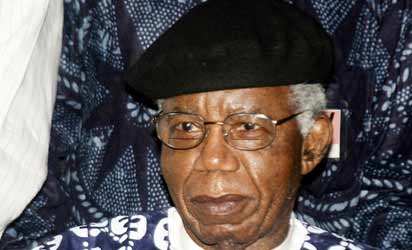
Chinua-Achebe1


The titles of Chinua Achebe’s early works “Things Fall Apart” and “No Longer At Ease” (borrowed from the works of WB Yeats and TS Eliot respectively) aptly describe the condition of things in our dear country. I try to play with these titles in my observations on why things are the way they are as my unworthy tribute to this literary giant. I have also proposed a few initial suggestions as to how we can begin to move forward and beyond our present morass.

Please read and let me have the benefits of your comments.

  1. Things fall apart when…corruption overruns the land and the souls of men are at the soles of their feet.
  2. Things fall apart when…chaos and anarchy become normal
  3. Things fall apart when alienation and a sense of anomie invade and overpower the land
  4. Things fall apart when…expediency and opportunism become elevated to state religions.
  5. Things fall apart ….when “agbero” culture and violence install and become the determinants of social engagement.
  6. Things fall apart …when thugs become agenda setters for political discourse.
  7. Things fall apart …when the noisiest and the rowdiest struggle to seize the centre stage and set the agenda.
  8. Things fall apart …the voices of moderation and balance are dimmed and drowned in the angry howls of the crowd.
  9. Things fall apart when destructive tension replace creative tension and wreak havoc on the polity.
  10. Things fall apart when ambitions bind us and blind us to the truths.
  11. Things fall apart when ambitions make us inflexible.
  12. Things fall apart …the best have lost all their conviction and found solace in silence
  13. Things fall apart…ethnic considerations have displaced professional ethics in choices and decision making.
  14. Things fall into place for good when all pull together.
  15. Things fall into place for good when a culture of positive and constructive engagement replaces our predilection for destructive discourse.
  16. Things fall into place for good when an ethos of deeds replaces our compulsive greed and grab mentality.
  17. Things fall into place for good when personal pride and loyalty to tribe cede places to love of others and nation.
  18. Things fall into place for good when we renounce and defeat alienation from our nation.
  19. No longer at ease in a country marred by corruption, nepotism, graft and “egunje”.
  20. No longer at ease in a country that celebrates mediocrity and eviscerates excellence.
  21. No longer at ease in a country that spawns mediocrity and spurns excellence.
  22. No longer at ease in a country where religious bigotry and extremism are described by some as crusades for social justice!
  23. No longer at ease in a country where violence and insecurity cripple the economy
  24. No longer at ease in a country where fear stifles and chokes the population
  25. No longer at ease when “black is white and white is black” depending on who is looking.
  26. No longer at ease…when all political parties share a common ethos of exploitation and people expropriation.
  27. Ease and contentment will return when we say “No” to greed.
  28. Ease and comfort will return when we enthrone virtue and renounce vice.
  29. Ease and comfort will return when we create incentives to reward virtue and punish vice.
  30. Ease and comfort will return when we embrace positive values.
  31. Ease and contentment will return when we all come together to foster cohesion and rebuild social capital.
  32. Ease and comfort will return when we replace destructive with creative tension
  33. Ease and comfort will return when we abandon hate and discord and seek courses that advance our common cause.
  34. Ease and comfort will return when we live as people of conscience.

Noel @naitwt

Posted in Prose

Leading and managing change in the public service – some personal reflections

By

Noel A. Ihebuzor

Two types of change – planned and unplanned – are discernable in life. In the public service, planned change is delivered and comes about through successful reforms. Pursuant of such planned change, governments regularlylaunch reform initiatives at varying scales of complexity.  However, we know that not all such reform initiatives succeed.  Indeed the public sphere is littered with the bones of quite a number of failed reform initiatives. The reasons for these failures are diverse.  They include policy inadequacies, poor planning, size, complexity, poor management, socio-cultural incompatibility, limited beneficiary buy-in, stakeholder resistance and tissue rejection, among others. Failed reform efforts represent a huge waste of public time and assets. They erode goodwill and confidence. They can also create bad blood and suspicion between governments and the governed.  As such, every effort should be made to keep them  to a minimum.   In the lines below, I share my reflections on the issue and on how change and reform can be best managed in the public service for the benefit of all.

  1. Good public management hinges on the existence of certain “virtues”. Some of these are Capacity, Efficiency, Effectiveness, Communication, Commitment, Confidence, Integrity, Internal Controls, Transparency and Accountability.
  2. The first four “virtues” are technical, the next three are psycho-affective, and the last three are moral-institutional/environmental.
  3. An effective chief executive is one who knows how to mix these “virtues” to achieve desired outcomes, knowing that every situation would demand a different  mix of these virtues.
  4. Good public management is about a leadership style that brings out the best in followership.
  5. Good public management is about exercising influence. Influence is best when done in a subtle non-authoritarian manner!
  6. Leadership without followership is ineffective. Reform success is leaders + followers.
  7. A good chief executive recognises hierarchies of leadership within followership and empowers these levels of leadership.
  8. An effective chief executive in the public service is a good communicator. Communication and talking down to people are two different things.
  9. Communication is  NOT the same thing as one directional information passing and order barking by a chief executive enamoured of his/her own voice or sense of infallibility.
  10. Chief executives must learn to keep their egos at home when they want to lead change. They should be open to learning and modest/mature enough to accept errors.
  11. The style of a chief executive could alienate a number of persons whose support is critical for the success of the reform package.
  12. Good public management is about doing the right things and doing them right.
  13. Good public management is about value for money. Value here could be people benefit focused or resources to results focused.
  14. Reform interventions and policy changes should be informed by a carefully executed causality analysis and problem tree.
  15. Use a causality analysis and a problem tree to try to understand the situation you want to change before starting to change it. Fast tracking on this important step could spell disaster in the future.
  16. If your causality analysis is poorly or hastily done, the identified interventions are usually wrong and activities based on such result in avoidable wastes.
  17. If a chief executive expends 200 units of resources and effort but gets 20 units of results, then there has been a case of waste of public assets and resources.
  18. To waste public assets and resources is a failure. Actions and reforms that end in failure demonstrate either culpable negligence, poor planning, implementation inadequacies, gross indiscretion in resource management or major personality flaws on the part of the chief executive and his team.
  19. A chief executive can be honest and transparent but still be wasteful.
  20. To be wasteful with public resources is bad. The Igbos say “akpata awunye na ohia anaghi ebute ogaranya” (The person who earns but throws what is earned into the bush will never be wealthy)
  21. If a chief executive plans change and is unable to deliver it, then there are grounds to question that chief executive’s capacity to plan, to lead and manage change.
  22. Change in public management is a blend of continuity and discontinuity. A chief executive who ignores this betrays naivety, and naivety can be a fatal flaw in public management, especially if it is combined with arrogance.
  23. Successful change is the one that builds on the positives of the present as a launch pad for the envisioned future. To ignore present positives, to rubbish them or to be dismissive of them is to invite resistance. It is also to seek to reinvent the wheel.
  24. Change is more successful when the promised benefits of the reform package are so easy to demonstrate.
  25. For every change, even for the best intentioned of changes and reforms, there will be change resistors.
  26. People resist change for several reasons – fear, uncertainty, inertia, reluctance to move away from a comfort zone, self-interest etc.
  27. Change planners must recognise and carry on board the reality of change resistors and come up with proactive and adaptive strategies to manage these.
  28. You need a convergence of interests to move change. Change happens when the ranks of resistors deplete through persuasion and buy-in and when the ranks of adopters and supporters slowly swell. Such a movement requires patience and investment in consensus building.
  29. Failure to recognise the reality and roles of change resistors is to prepare the grounds for failure of any innovation in government.
  30. A good chief executive would undertake a detailed institutional capacity assessment recognise institutional gaps and map out actions to address these before embarking on any change or reform programme.
  31. Chief executive’s will, power and enthusiasm are vital for change but are not enough nor sufficient to see any innovation in government through. .Other important ingredients include building strong constituency support and stakeholder buy-in.
  32. Constituency support and stakeholder buy-in cannot be obtained by a strategy of bullying, verbal abuse, arrogance and or detachment by the chief executive. Constituency support and stakeholder buy-in have to be negotiated.
  33. “I stoop to conquer” should be the mantra of any newly appointed chief executive in government.
  34. A chief executive may need a change management team to push through the change/reform package.
  35. If the change management team is imported, internal stakeholders will feel threatened and use informal power structures and networks to kill/slow down the reform
  36. An effective chief executive uses a change team drawn largely from the inside with a few external persons as change champions.
  37. A chief executive who fails to realise the fact above is naïve.
  38. Change is slow. Government business is slower. To think you can change it in six months or in one year is naïve.
  39. Size is the killer for all change managers. Trying to change everything in one fell swoop is courting failure! The world was created in six days, not one!
  40. Trying to move changes on multiple fronts at the same time can be very exhausting. It conduces at best to partial successes on each front but to failure at the larger impact level because of dispersed and non-focused energies.
  41. The larger the size of the change, the greater will be the tension and confusion in the system. The larger the tension and confusion, the faster your ship of change will hit the rock of failure.
  42. Keep the envisioned change short, simple, manageable and measurable. Succeed with it and then use that success as the stepping stone for the next change.
  43. Successful change is incremental. Chief executives ignore this fact at their own peril.
  44. In governance as in life, incremental small fixes and changes are better and more effective than big bang changes.
  45. Managing a reform/change package in real life involves a series of continuous adjustments, compromises and trade-offs. Rigidity may be fanciful but it can be fatal
  46. When you plan change, think also of the sustainability of the change after you have left office.
  47. Reform initiatives fail for a number of reasons. Unrealistic targets are one of them.
  48. Two other reasons why reforms fail are inadequate environmental scanning and badly done SWOT analysis.
  49. One of the conditions for reform failure is when reforms are politics-based and driven rather than evidence-based and driven.
  50. Blaming institutional resistance and others for the failure of a reform programme and exculpating themselves from any blame whatsoever is a hobby of most ex-chief executives.

Noel Ihebuzor

@naitwt

*** These reflections assume that all necessary resources (especially financial) are available, adequate and timely***

Posted in Prose

Idle rambles – echoes from the past, voices of the present, whispers from the future

By Noel Ihebuzor

I hear echoes of my future playing in the present on scripts lip read by this me hewn from a crusty past that now reaches forward to embrace me smiling on a surprised morning

The me I see you see now is not me but visions of me mingled with snippets of your retina, aching stories heard on a tympanum tremulous, this me singing, in another voice, another’s voice, this me that you hear hears you echoing dimly lofty notes of me, singing of roads I walk on dew drunk dreams, nudging sluggish limbs to where I began, to where I want to go to unearth the buried umbilical cord that ties me, my present, my past and my future. And the vision is misty and my voice mushy.

I hear and feel the turning of time. I feel I sense myself also turning in that fine running sand of time, finding my present and rediscovering my past, reliving it and becoming, reaching out to embrace a future that runs from me, slightly ahead even as the distances narrow.

I see the familiar smiles of the new and reach out to feel and wrest it whilst still trying to anchor to the present I know and think I own. I am aware of  the changed yet unchanging times, the turning times, time returning and reappearing, the changing of the seasons, the trees that weep and mourn, the trees that announce new beginnings as green leaves sprout, unfurl and unfold and wave to  a smiling sun, lovely greening days, swaying in the cycling circle of time.

And I think I hear the voice that reaches from eternity to say – nothing really changes, save the way humanity looks at unchanging times, and me saying – “even knowing that change in a unchanging change is good enough for me”.

Posted in Prose

The Good Shepherd

We celebrated the good shepherd Sunday in church today. Permit to share some quick, rough and not too well coordinated thoughts on the significance of this Sunday’s gospel reading for me. I have attached the gospel reading for easy reference.

Gospel Jn 10:11-18

Jesus said:
“I am the good shepherd.
A good shepherd lays down his life for the sheep.
A hired man, who is not a shepherd
and whose sheep are not his own,
sees a wolf coming and leaves the sheep and runs away,
and the wolf catches and scatters them.
This is because he works for pay and has no concern for the sheep.
I am the good shepherd,
and I know mine and mine know me,
just as the Father knows me and I know the Father;
and I will lay down my life for the sheep.
I have other sheep that do not belong to this fold.
These also I must lead, and they will hear my voice,
and there will be one flock, one shepherd.
This is why the Father loves me,
because I lay down my life in order to take it up again.
No one takes it from me, but I lay it down on my own.
I have power to lay it down, and power to take it up again.
This command I have received from my Father.”

The mention of the shepherd brings to mind easily one of the most popular psalms in the Christian scriptures – Psalm 23, a psalm which we all love so much! I will therefore use this psalm as a convenient launch pad to approach today’s gospel reading. Yes, psalm 23 is great. Its assurances are immense! Our cups run over; our heads are anointed with fine oil; goodness and mercy follow us; and God leads us to green pastures…and all of this in the presence of our enemies who we are happy to imagine, with considerable glee, must be gnashing their teeth at our good fortune! Well perfumed oil, abundance of fresh wine, a table running over with the best of dishes, green pastures! Read green pastures as a metaphor for the good, the abundant, the flourishing and you begin to see why this psalm has so much appeal to us all. Why not? Who no like better thing? A colleague whose name is Mercy got so taken by it that she named her daughter “Goodness”! Psalm 23 is the good life! Indeed, so popular is this psalm in Nigeria that pidgin versions are now circulating with authors struggling to out-do themselves in creativity – lexical and syntactic, in ever newer versions!
But what the fondness for this psalm conveniently omits to consider or prefers to gloss over is the total surrender and deep obedience by the sheep that is implied in a sheep/shepherd relationship. Christ spells out this relationship very clearly in the gospel reading. He is the good shepherd and we the flock of His pasture. The sheep know, recognize and heed the voice of the shepherd when he calls. The sheep trust the shepherd completely. The sheep do not direct the shepherd! The sheep do not lead the shepherd. If they did, perhaps we would have verse like – “The Lord is my shepherd and I make HIM lead me to green pastures”! The shepherd speaks and the sheep respond.
The good shepherd lays down his or her life for his/her flock. He or she is willing to stay with the flock through thick or thin. Not so the hired hand who the scripture tells us abandons sheep and takes off at the first sign of danger. The commitment of the good shepherd is therefore total. Devotion is total and the interest of the flock is the predominant priority. He or she lives for the flock, does not exploit them, does not betray them, does not steal from them.

The good shepherd is therefore the model of the perfect service and one which commends itself to our preachers, pastors and politicians of today. How many of these act in manners that are suggestive of the devotion of this good shepherd? Very few! For the truth is that most have come to steal and to loot and devour the sheep they are supposed to look after! Their lives, their preachings and actions have all the marks of crass materialism and an obsession with prosperity often built on the egregious exploitation of their flock. Is it any wonder then that the sheep now desert their shepherds in such relationships marked by such follies and flawed teachings? Any wonder that the sheep no longer respond to the call of the shepherd?

The type of relationship described above is a far cry from the ideal bonding relationship between a good shepherd and his/her flock. In such a relationship, the sheep flock around their shepherd. They hear his voice and he/she feels their needs.
In such a relationship characterized by trust, honest service, predictability and security, the sheep do not respond to the voice of a stranger, nor do they follow the stranger no matter how appealing the call or flute of that stranger is. The call of the stranger is to the false attractions and ephemeral comforts of this world. It is an invitation to the fake things of this world, to transient pleasures but slippery slopes and to things that could lead us in the long term to moral and spiritual death. It is a call that could promise at the beginning the lushness of wealth but which soon traps us in an arid wasteland of hopelessness and despair, something I call the Judas phenomenon where for the immediacy of cheap gain, you sell your soul to the tempter! Bad decisions have huge opportunity costs, and despite our claims and aspirations to rationality, we do show a particular tendency or such bad decisions, and this tendency is worse the more we are cut of from our good shepherd. The shepherd/sheep imagery thus assumes a heightened significance for an error prone and frail humanity, a humanity whose choice capacities are often vitiated by excessive focus on the here and now, yes with short-termism and also by a tendency towards hedonism.
But not so, the good shepherd! He leads and guides his flock. He instructs them to be good in good times and in bad times. The good sheep know that life will not always be green, that life will not always be on the upswing. Valley and the shadow of death signify difficult times, but in these periods, the sheep are sure of the constancy of the good shepherd. The metaphor of the obedient sheep thus provides us with a model of obedience and faith driven responding when we pass through our own valleys, when we walk through our dark moments and when life throws rough tackles at us. And such moments are never in short supply – those moments exactly when we feel we should abandon our shepherd and search for a new one, usually a merchant of honey coated platitudes and utopia who would promise us quick fixes and wonder cures!
The good sheep would not do such a thing – they have an alliance marked by solidity, constancy and complete trust with their shepherd. They know that the words of their shepherd in John 10:10 that He has come so that they may have life in abundance is true – they know a price has been paid to secure and insure this promise and prize. They also know that the price to pay to win this prize at the end our race is obedience and complete and undoubting faith.
May God renew us, may He renew our faith, and may He open our eyes and ears to the signs and voice of the good shepherd. May we learn to sing the famous words of John Cardinal Newman – Lead, kindly light
May we surrender to be led by the good shepherd.
May worthy servants and faithful models of the good shepherd emerge to lead the ever growing flock.
May we also have the Graces to reach out and invite others to join this flock and may goodness and mercy surround us as we do. And I am sorry this has turned out to be longer than I had wanted and I feeling too lazy to consider any pruning exercise!
Happy Sunday

@naitwt