
By Noel Ihebuzor and Susan Daniels

You return always to your ritual
of force, your battering fists hammering away in freed up fits of fury, harkening only to the assured impulses of your
heart of steel, ferrying you to stages of stone, long assumed gone,
dormant but dominant
clenched fists of metal rusting
behind its lustre of polished calm
Simmering tension running subterranean
ever willing, trigger happy, happy pugilist,
It is a lottery won by 7 out of 10 women,
With prizes of broken bones, torn souls;
Whose mouths swallow knocked-out teeth
And bitten tongues. She says
She ran into a door, and a door
Fell on me once, but how many doors
Can one woman run into
Before she says she ran
Into a fist?
You pound the rib
You gave into shapeless broken fragments
the call of the residual is strong
damming and diverting rivers uphill
to flow in impossible unceasing eddies
and in tiring sterile circles
He does not always hide
In bushes or haunt alleys
Like a cat hunting mice:
We know our attackers
Two-thirds of the time.
Numbers do not lie.
The strangers we were warned off
Are not as dangerous as friends
38% of the time, or men
We think we know, 73%
Of them our rapists without masks.
And behind the smile, the polish
the beast lurks, ready to
pounce and pound flesh to prove the power
of the mighty proud to a lamb
We ask for it, old women
Dressed in housecoats
And young ones in sweatpants
Who jog bike paths,
Or women who look
At their husbands
Without the right balance of fear.
We are always asking for it,
Simply by breathing.
And we breathe the fear of the brawn breed
trapped in culture’s cages,
bent, stooped, stopped and stumped by glass ceilings
and your febrile insecure masculinity
It is your fear that chokes you
as you choke me, break me and break us,
Your false potency creates tsunamis of true impotency
and you forget that the truly strong
are not afraid of being weak
and that only the weak
embrace violence to prove power.
***As always, a pleasure to collaborate with my friend and duet partner Susan especially for International Women’s Day. Susan’s words pierce and her statistics call attention to the disturbing pattern and spread of gender based violence. They challenge us to act, to act fast and NOW. My words are in regular typeface. Susan’s are italicized.


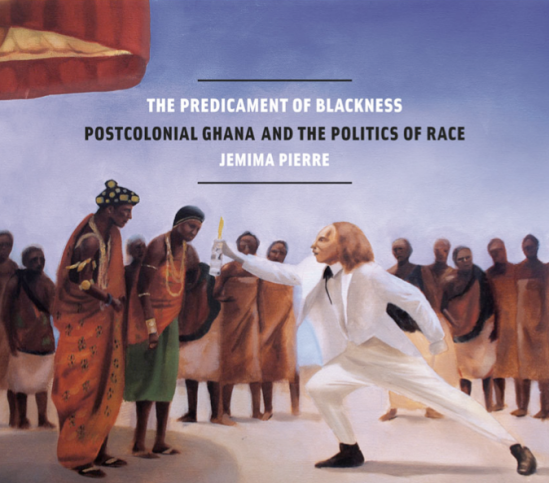 Jemima Pierre, professor of anthropology at Vanderbilt University, has written an ambitious book in The Predicament of Blackness: Postcolonial Ghana and the Politics of Race (University of Chicago Press 2012). She engages Ghanaian and African diasporan constructions, perceptions, and performances of Blackness and Whiteness in contemporary Ghana. By doing so, she brings anthropology into an ongoing conversation on race within African studies dominated largely by historians and South Africanists from a variety of specializations. The book, she says in her preface, is an “ethnography of racialization that insists on shifting the ways we think about Africa and the history of modern identity” (xv). She argues that the process of racialization within the framework of global white supremacy links continental Africans and people of African descent in the diaspora. Race matters, to Pierre, and she culls ethnographic material from her two decades of research in Ghana that belies its irrelevance in…
 Reflections