


Guest Post by Mukoma Wa Ngugi
In 1982, as the air force-led coup attempt in Kenya unfolded, we sat glued to our transistor radio listening to the BBC and Voice of America (VOA). In fact, the more the oppressive the Moi regime censored Kenyan media, the more Western media became the lifeline through which we learned what has happening in our own country. But in 2013, I and many other Kenyans saw the Western media coverage of the Kenya elections as a joke, a caricature. Western journalists have been left behind by an Africa moving forward: not in a straight line, but in fits and starts, elliptically, and still full of contradictions of extreme wealth and extreme poverty, but forward nevertheless.
View original post 1,990 more words


 Since Valentine’s Day everyone has been talking about the murder of Reeva Steenkamp, although rarely in those terms. We know that her boyfriend, Oscar Pistorius, shot her four times and killed her while she was behind a locked door in their bathroom in a gated estate. We know that he has a history of domestic violence, a penchant for shooting things. We know absolutely everything about his extensive sporting achievements. The main thing, however, that we know about Steenkamp is that she was a model, and that she was really hot.


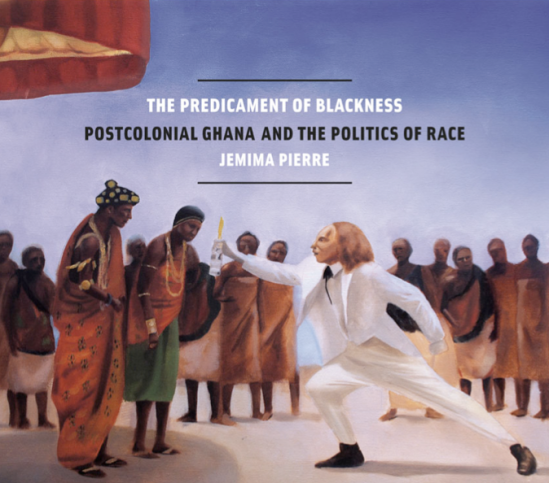 Jemima Pierre, professor of anthropology at Vanderbilt University, has written an ambitious book in The Predicament of Blackness: Postcolonial Ghana and the Politics of Race (University of Chicago Press 2012). She engages Ghanaian and African diasporan constructions, perceptions, and performances of Blackness and Whiteness in contemporary Ghana. By doing so, she brings anthropology into an ongoing conversation on race within African studies dominated largely by historians and South Africanists from a variety of specializations. The book, she says in her preface, is an “ethnography of racialization that insists on shifting the ways we think about Africa and the history of modern identity” (xv). She argues that the process of racialization within the framework of global white supremacy links continental Africans and people of African descent in the diaspora. Race matters, to Pierre, and she culls ethnographic material from her two decades of research in Ghana that belies its irrelevance in…

 Gather round children and hear “[all] Africans seem naturally networked to religion.” Bow thy heads in shame yea northern heathens for the “Catholic Church, the largest Christian denomination, is part of the fabric of all African societies.” Heaven forbid you should get on your high horse and talk of gross generalizations swathed in the tropes of noble savagery and whatnot, for the Lord hath spoken and


