Posted in Uncategorized

THE SULTAN, NIGERIAN MUSLIMS AND BOKO HARAM Letter 4 from Rome: 27 May 2014

THE SULTAN, NIGERIAN MUSLIMS AND BOKO HARAM

Letter 4 from Rome: 27 May 2014

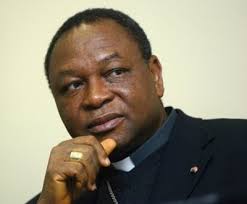
By +John Cardinal Onaiyekan, Archbishop of Abuja.
 Image

“Terrorism has no place in Islam….We must rise up as always, with one voice to condemn all acts of terrorism, condemn those terrorists wherever they are and try our best as Muslims to ensure peace reigns in our community”.


This is the core of the message of the Sultan of Sokoto, Muhammad Sa’adAbubakar III, and President of Nigerian Supreme Council for Islamic Affairs (NSCIA) during a special prayer session last weekend organised by the same NSCIA at the Abuja National Mosque, an event that was widely covered by the Nigerian media. It was also given very wide and positive media coverage here in Rome, starting from the Vatican Radio. I congratulate the Sultan for his bold statement. This has given me the courage to voice out, with all good intention, a reflection that has been going through my own mind for some time now.


            For a long time, we used to pride ourselves as Nigerians for the generally good relations between our two major religious communities. We described ourselves as “the greatest Islamo-Christian nation in the world”. This is to highlight the fact that there is no nation in the world with so many Christians and so many Muslims living together in almost equal numbers and largely peacefully.


            We saw cases of “inter-religious” conflicts with loss of life and property. But we tended to dismiss them as anomalies occurring a few days in the year. We attributed this anomaly to the actions and utterances of a small group of extremists on both ends of the religious divide. At other times, we blame the manipulation, misuse and abuse of religion by people with other aims and objectives, political, ethnic and social. Often, all these factors merge.


But we soon began to wonder at the chronic repetition of such “anomalous” incidents. The role of religion became ever more evident, whether directly or indirectly. Most of the violent religious conflicts featured Muslim extremists targeting Christian objectives. It has also been largely a Northern affair. The records on this are clear.


            All this has become drastically exacerbated with the emergence of the Boko Haram. They have raised the level of destruction and ruthlessness to inhuman dimensions. They have also been carrying out their murderous activities calling the name of “Allah” and giving Islam a bad name. We do not know how many they are, but they are enough to constitute a major danger to the entire nation. Like poison, you need only a little portion to kill many people. They have also become a cause of concern for the international community, having now acquired the dubious merit of a mention at the United Nations’ Security Council.


            How do we get out of “this very serious situation” as the Sultan rightly describes our present predicament? The abduction of the over 250 school girls is no doubt very serious, and we pray that our daughters will return home soon. But it is only a tragic symptom of the wider issue of terrorism, which needs to be addressed from the roots. The complexity of the problem calls for many sided approaches, military, yes, but also political and economic. Beyond all this, the religious dimension is what I particularly want to draw attention to in this reflection. The government must key this dimension into its strategies for a lasting solution to the problem. Government should abandon its tendency to close its eyes to the religious issues. Too little effort is being made in this direction.


            The Muslim community has come out several times in the past to condemn the Boko Haram. That is commendable but not enough. It is also certainly not helpful to maintain that the terrorists are not Muslims because they are doing things that are clearly contrary to what the majority of Muslims hold. If there is ever to be any channels of dialogue and peace-making with the group, it will necessarily involve Muslim elements with access to them, people they respect and will listen to. We see here the wisdom and importance of the call of the Sultan.

            To go beyond mere condemnation, it seems to me that there is an urgent need for an in-house dialogue within the Nigerian Muslim community. Such a dialogue would make it possible to courageously and sincerely deal with currents and movements that create the kind of religious climate and atmosphere in which Boko Haram and similar groups emerge and thrive. It is not enough to condemn market bombing, killing in villages and places of worship and abduction of innocent schoolgirls. All this is expected of any right thinking person. But it is also necessary to condemn extreme and intolerant religious positions and attitudes which make peace with others impossible. It is not enough to merely tolerate people of other faiths, considered perhaps as undesirable. It is also necessary to respect the religious convictions of everyone and accept the reality of our multi-religious nation as being in the plan of the One God whom we all worship. Our freedom of religion has to do with freedom to speak the truth of our faiths. It cannot be license to insult and denigrate others, less still to foment violence and hatred. It is surely the duty of the state to enforce and ensure good order and deal firmly with all trouble makers. But it is the greater duty of religious authorities to promote peace and harmony among God’s children in our nation.

            Every effort in this direction deserves the encouragement of the entire nation, starting with government. The Christian community too should welcome and support such efforts, with a view to “close ranks as Nigerians”, as the Sultan has wisely suggested. In this regard, we must say that this is hardly the time for the Nigerian Inter-religious Council, (NIREC) to go into a slumber. We should all wake up to salvage our nation, before it becomes too late.  

Posted in Uncategorized

THE PAINFUL DILEMMA OF DIALOGUE WITH BOKO HARAM Letter 3 from Rome: May 19th 2014

THE PAINFUL DILEMMA OF DIALOGUE WITH BOKO HARAM

Letter 3 from Rome: May 19th 2014

By +John Cardinal Onaiyekan, Archbishop of Abuja.

 Image

The world renowned Catholic prelate, His Eminence Francis Cardinal Arinze, once defined dialogue as “You talk I listen; I talk and you listen.” He certainly knew what he was talking about, because he was for many years the President of the Pontifical Council for Inter-religious Dialogue, the agency of the Holy See for dialogue with people of other faiths. There has been much talk about dialogue not only in the past few weeks with the abduction of over 250 schoolgirls by Boko Haram, but since more than three years ago. Unfortunately, there has been quite a lot of ambiguity and confusion in what we mean by dialogue, leading to inconsistency in the practical steps that have been taken. It is no wonder that little or no progress has been made in this line. It seems to me that the major short coming is that there is too much talking and not enough listening, on all sides of the discussion.


Dialogue means talking and listening across lines of differences, seeking common grounds on which to build some measure of agreement. It does not ignore nor deny differences, but rather seeks to honestly identify the point of difference and how to live with such differences in order to avoid conflict, especially violent conflict.


We have been following with grave concern the deep dilemma of government as regards whether and to what extent it can engage the Boko Haram in dialogue over the release of the abducted girls. But would like to say that what looks now to be confusion and contradiction is in the nature of dialogue. On the one hand, the government is right to reject the demand of Boko Haram to swap the girls for their imprisoned comrades. There is no parallel between innocent schoolgirls and terrorists detained for violent and heinous crimes. Besides, no government can ignore the unspeakable consequence of setting such a precedent.


But on the other hand, government cannot abandon our girls in the forest or wherever at the hands of their abductors. There must be a way of bringing them back home to their families, safe and as sound as possible. At this moment of writing, we have no news yet of their whereabouts. And even if and when we find where they are, rescuing them by force of arms would entail the kind of danger and risk that even the parents of the girls would be unlikely to sanction. The only option left therefore is some form of dialogue and hard bargain that would bring the girls back without setting a dangerous and unacceptable precedent.   


It is here that we might evoke the wisdom of Cardinal Arinze’s definition of dialogue. Boko Haram has spoken and government has listened. The government has spoken. Let us hope that Boko Haram is listening. In this game of haggling, it is possible that the last word has not yet been said by either party. Are there no other less obnoxious demands that Boko Haram can make? They may well be ruthless and wicked, but they are certainly not foolish. Are there no other options which government can offer? The dialogue has started. I would like to hope that neither side has considered the dialogue closed.


Whatever the case, to make any progress calls for great wisdom and patience. There is also need for effective and mutually trusted intermediaries, people who can listen to both sides and talk to both sides. This is obviously not a matter for publicity, least of all for scoring political points. The scarce success of the famous “dialogue committee” formally inaugurated with pomp and pageantry some time ago should teach us that this is not the best way to go. Perhaps a small group of carefully chosen wise men and women, including religious figures, especially of the Muslim faith, working quietly in the background, with deep sense of patriotism and honesty, devoid of all sectional political agenda, might be in a better position to achieve some success.  


Some days ago, the French President, Mr. Francois Hollande, called a summit of the heads of state of Nigeria and its neighbours. Also in attendance were high level representatives of the European Union, the USA and UK governments. The purpose we are told was to improve cooperation in dealing with the Boko Haram which has become a regional and even global menace. For as long as they continue killing, raping and abducting innocent people, destroying property and causing general insecurity, they should expect more intensive and coordinated military action against them by Nigeria, her neighbours, and the international community. But the loud noise of guns and bombs on and from both sides need not smolder the necessary quiet and salutary whispers of dialogue and background negotiation, which in the long run would be in the best interest of all concerned. Is there any head of state able and willing to call a summit that would provide an effective forum for serious dialogue that would include also elements of the Boko Haram? That line of action, no matter how unlikely, should not be rejected outright.


President Jonathan said in Paris that “the abduction of young innocent school girls in Chibok represents a watershed and a turning point”. The unknown plight of these girls and the anguish of their parents touch the heart of everyone. We pray for their safe return. The dialogue for their release would be only a starting point for the larger objective of convincing the terrorists, with both “stick and carrot”, in their own interest, to cease fire and embrace negotiation, for the peace and progress of our great nation. For this we should pray, even if it requires a miracle.

God bless Nigeria – and bring back our daughters.

Posted in Uncategorized

BOKO HARAM: SCOPE AND LIMITS OF FOREIGN INTERVENTION Letter 2 from Rome, May 11th 2014

BOKO HARAM: SCOPE AND LIMITS OF FOREIGN INTERVENTION

 Letter 2 from Rome, May 11th 2014

By +John Cardinal Onaiyekan, Archbishop of Abuja.

Image 

The tragic drama of the abducted secondary school girls of Chibok, Borno State at the hands of Boko Haram has shocked the whole world. This has focused very unsavory global media attention on our nation. It has in particular concentrated much publicity on BokoHHHHH Haram, a publicity which they have always reveled in but which in this case may have gone beyond what they bargained for and which may now boomerang against them. This “unconscionable crime”, to use Mrs Obama’s rather unfamiliar language, has to say the least, cast our government in very bad light. Whether this verdict is deserved or not, the government has to do something visible about the crisis on our hands.And quickly too. This perhaps explains why our government is accepting assistance from various foreign nations, from USA to China, from France to Israel. As a Nigerian, I am saddened and ashamed. But it seems clear that we have reached the stage where we have to swallow our pride and stop bragging and pretending to be what we are not.

In itself, there should be nothing wrong with seeking and accepting foreign intervention, especially since it is now clear that the Boko Haram has international connections.  It is therefore not only a question of “assisting Nigeria”. It is also in the interest of the international community to join hands with Nigeria to deal with a dangerous virus that is infecting and attacking the entire international community, starting from our nearest regional neighbours.

So far, we have been hearing much about military action. To the extent that the Boko Haram is killing, abducting and bombing, it has to be effectively and appropriately engaged. But there is a limit to how far we can go with military action alone. One only needs to imagine the awful military dilemma of rescuing 200 girls from the hands of heavily armed terrorists and bring them back to their families, safe and sound. The complexity of the Boko Haram phenomenon therefore calls for coordinated action at different levels and in various areas of attention. The political and socio-economic issues are well within our ability as a nation, if we can only summon the political will to act together across political and ethnic lines to save our nation.

But there is also the religious dimension which in my view has not been given adequate attention. This is where I believe we should welcome with deep gratitude the strong messages of solidarity with our nation and vigorous expressions of condemnation of the Boko Haram by the global Islamic community at the highest level. The Islamic Fiqh Academy, based in Saudi Arabia, has declared:

“This crime and other crimes committed by the likes of these extremist organizations contradict all humanitarian principles and moral values and violate the provisions of the Quran and Sunnah”.

The OIC, now called “The Organization of Islamic Cooperation”, a body well known to us here in Nigeria, has come out not less forcefully in its condemnation, through its “Independent Human Rights Commission” (IHRC). Their statement issued from its headquarters in Jedda merits a long quotation.

“The IHRC is extremely saddened by the misguided claim of the Boko Haram that the abduction of the girls and threat to sell them off as ‘slaves’ is in conformity with the injunctions of Islam. This is not only a violation of international law and human rights law, but also a gross misrepresentation of Islam, which enjoins its adherents to go to any extent in the pursuit of knowledge. The Commission joins the international community in unequivocally condemning the barbaric act … and urges the leadership of Boko Haram to immediately release the abducted girls to enable them join their families and continue with their education.”

With such statements at such high Islamic levels, there is no more room for any Muslim or anybody in Nigeria to suggest any kind of alibi, excuses or justification for the “unconscionable crimes” of Boko Haram.  I believe such powerful statements are also great encouragement to our many Muslims who have been speaking loudly against the terrorists, at times at great risk. We think of the imams who have been hunted down and murdered by Boko Haram for preaching against their demonic activities. It is a good sign that many Nigerian Muslims have been making similar statements. It is time for all of us to call BokoHaram by its proper name, “mindless bigots, misguided persons masquerading as adherents of Islam” – as General Buhari branded them recently.

One may suggest that these global Islamic organizations could go further than issuing statements of condemnation. They could do more to support the efforts of the Nigerian Muslims to discourage and knock out radicalization and all forms of extremism in the Nigerian Muslim community. Could they also reach out to the foreign supporters and inspirers of our terrorists to leave us in peace? What about facilitating dialogue with Boko Haram?

Finally, I believe that we Christians, despite all the hurts that we have suffered, should resist the temptation to turn a deaf ear to what the Muslim world is saying. The Pope and the Archbishop of Canterbury are singing the same song of peace as the Muslim leaders. This is significant. Muslims and Christians in Nigeria must find it in their hearts to pick up the chorus. When the girls are back home, and the Boko Haram are disarmed, (I say “when” not “if”) there will still be the tedious task of dialogue, reconciliation, mutual forgiveness and peace, for which the force of religion will be most needed. This will demand that religious communities join hands and call on the One God who takes care of us all.  It is then that it may well be that this horrible episode, as President Jonathan believes, would “be the beginning of the end of terror in Nigeria”.


May God bless Nigeria, and bring back home our daughters.


Posted in Uncategorized

Boko Haram, A true story, from one in the field

 I am sharing this from one of my younger ones who is a Reverend Father!

The Horror of BH! The Hollowness of these empty wretches who know of nothing else but how to kill, the sheer savagery of these brutes and the callousness of these blood thirsty hordes.
Pray for them and pray for the safety of people like Father Law who place themselves in harm’s way every day to preach the message of God, which is peace, love and justice!
Noel 

=========================================================================================================

Nna anyi ukwu,
Nice reading your articles and comments on the Boko Haram saga. They make very beautiful reading especially when one considers that you people are writing from your comfort zones and relying more on what is being said or written about the insurgency.
I stay in Maiduguri diocese since last year and am writing from there now. The real stories of the menace are hardly heard outside. We who live here feel d heat every second and know that you people do not get up to 40% of the real gist.
I leave about ten kilometres away from Mubi town and that is where we do our shopping, car repairs or health checks. I was there two days ago and the place was bombed last night.

Boko Haram were in my parish town here in Dec, burnt our local police station, killed everyone they could find around and shouted Allahu Akbar and sped off on their bikes. Our Junior seminary here was attacked recently and burnt down completely with the nearby parish and convent. Not in the news. Many of our parishes here are deserted and closed down. We priests are targeted and none of us sleeps up to three hours at night as we monitor every movement, even of lizards and rats.

It is nice to hear how these stories are reported from Abuja. Staying here reveals a different story all together. It is not just a good information machinery that the government needs, but a sincere effort followed by strong will. Right now what we have is Abuja describing a different issue from what we live and go through everyday. Its hot here.
Till I read from you. Feel free to share with your friends.

Fr Law

Posted in Uncategorized

Boko Haram, Chibok and our responses

By

Henry MGBEMENA

Regardless of their divergent views on several socio-political issues in the country and irrespective of their religious affiliations, most Nigerians now wish the Boko Haram saga is a bad dream which they long waking up from. It is a plague that has bedeviled them, the blame game era is obviously over and they now demand nothing but focused efforts that will lead to instantaneous demise of the group. Reechoing President Goodluck Jonathan’s Democracy Day speech, all the gains of the past 15 years of democratic governance in our country are threatened by the presence of international terrorism on our shores. It is time for all Nigerians to emulate the Americans after 9/11 and rally round the national flag, bring patriotism to the fore and ensure good prevails over evil.


The US National Consortium for the Study of Terrorism and Responses to Terrorism (START) recorded Boko Haram as the third most lethal terrorist group in the world between 2009 and 2013 with over 801 attacks and 3666 fatalities. Taliban in Afghanistan and Tehrik-e Taliban Pakistan (TTP) were the only two groups ahead of Boko Haram out of over 480 terrorists groups studied. On Nov 13, 2013, the US Department of State announced the designation of Boko Haram as a Foreign Terrorist Organization and placed a $7m bounty on its leader Abubakar Shekau. On 22 May 2014, the UN added Boko Haram to the al Qaeda sanction list—in effect confirmed it as an al Qaeda affiliate.


Regardless of the beliefs of Shekau and his infamous cohorts, their callous acts of terror contravene national and international laws and they are solely liable and will be brought to justice for every single life lost in their attacks. Similarly, the Nigerian government has the responsibility for securing the lives and properties of the entire citizenry and if they fail in that role, no doubt about it, Mr. President and everyone else in government are answerable to the populace that elected them into office. But their failures and inactions in no way exonerate the perpetrators of the act.


Nigerian security agencies are receiving a lot of criticism from within and outside the country, especially since the kidnapping of over 200 innocent school girls in Chibok by Boko Haram. In as much as one would like to sympathize with them for facing the wrath of public opinion, I think their public relations strategy is way off the mark! Every young officer in the military is taught that one of the principles of Internal Security operation is winning the heart and mind of the populace: I think the Generals may have forgotten their basic tactics and allowed the terrorists to achieve their ultimate objective of instilling fear in the population. I am convinced Shekau and his troops do not in their wildest dream believe the Nigerian government will succumb to their demands of implementing sharia law in the country, especially when a notable Islamic cleric like the Sultan of Sokoto and the Organization of Islamic Countries have termed their actions unIslamic. They have however, through their carnage succeeded in causing anger, frustration and dissention which can create chaos in the country if not properly managed. In fact, I think Nigerians have been very civil in their approach to the whole issue because there haven’t really been violent anti-government demonstrations which would have been the case in several countries in the world.


My intention is not to query the capabilities of the Nigerian security forces because terrorism is a global phenomenon that has challenged even the best militaries in the world, including the United States and their allies in Iraq and Afghanistan. Having also personally experienced the complexities of the war on terror in Afghanistan and Somalia, it will be unreasonable to belittle their efforts. Nigerian military officers are battle-tested and highly regarded for their peacekeeping roles all over the world. Nobody is expecting them to perform miracles overnight when it comes to fighting terrorism which is a global bane that requires concerted international efforts. Thanks to the fact that the government finally agreed to accept international assistance which I must confess I initially felt was not immediately necessary, but with the recent developments, I now agree it’s was a good call by Mr. President.


What is obvious however, and must be said is that Nigerian security agencies are losing the battle of words. Propaganda is a key instrument of warfare and every military outfit in this present Information Age should strive to influence and swing public opinion in their favor, but need to do it the right way, no need to lie because you will surely be exposed!. Not all Nigerians are soldiers that obey the last command— Am not even sure that still applies!. They have the constitutional right to ask questions and query the performance of every public servant paid with their taxes. Come to think of it, who says the military cannot have a civilian spokesperson? Nigeria is a country awash with seasoned public relations practitioners who see things from the point of view of the streets and not the barracks— is there a law that prohibits civilians from heading military public relations outfits? Why can’t they just fight and let the experts do the talking?


Not recounting all the previous blunders, I think it is inexcusable for the military spokesman to give a wrong figure of the number of girls that are missing and even reporting them released when that wasn’t the case. Worst of all,  I think it is a very poor tactical appreciation for a Chief of Defense Staff to address the public and say they know where the girls are because of criticism that the security agencies are not doing enough. That announcement whether true or false is a grave mistake that can cost the girls their lives, or at best retard all progress so far made in freeing them. Ok, let’s even assume it was intended to push the terrorists into a hasty decision of moving the girls, thereby exposing their position, is it a risk worth taking knowing how irrational terrorists are?  The main objective of every hostage negotiation is to buy time and gather intelligence for tactical operations. And if the hostage takers succumb to the psychological strain they are subjected to by a seasoned negotiator and decide to release the hostages in the process, all well and good. I am sorry but I think it’s either the Chief of Defense Staff was ill-advised by his public relations officers or he became too emotional and took his eyes off the ball by his statements. Criticisms will definitely come and you must learn to accept it and make corrections where necessary. Actions speak louder than words; capture or kill Shekau today and you will become a hero, before then, your statements don’t count much so save them, except when necessary and well thought through.  Essential norm in hostage incident management discourages top managers from having direct involvement in tactical negotiation strategies or making public statements. Everything should be left in the hands of the experts, especially the press releases which are supposed to be carefully crafted to reflect what you want the hostage takers to hear.  I think the ball has definitely been fumbled severally, …..but still in play. What is required now is for the military big wigs to remain focused until results are achieved.


On a bigger picture, one question that should also be asked is why Nigeria’s borders cannot be fenced. Even if it’s just the Northeastern borders so as to deny Boko Haram the freedom of movement and access to supplies in that area, why can’t we just do it? Border control is one of the most effective security mitigating measures that has been tested in countries like Israel and America that we should copy. Recognizing possible opposition from selfish individuals, since a state of emergency has been declared in the Northeastern states, is fencing the borders not akin to a tactical security measure that the Commander-in- Chief can task Nigerian Army Engineers to directly implement without any further legislative reviews? That way, we will avoid squabbles and over-inflated billions of dollars contracts by corrupt government officials. In January 2013, Israel finished building the main portion of its borders with Egypt. The 16-foot high fence, which is made of razor wire and reinforced by military surveillance, including motion sensors and cameras, aimed at keeping out both illegal African migrants and terrorists operating in the Sinai. According to the most recent quarterly figures published by the Population, Immigration and Borders Authority, only 36 people have been caught trying to enter the southern border since January as against 10,440 that were caught in 2012(Reuters, Jan 2013). This shows that insurgents and illegal migrants completely avoided the borders knowing they would not be able to penetrate the new barriers.


Military might is not enough to defeat terrorism recognizing that most terrorists long for martyrdom. I want to believe the government is still in dialogue with the right parties that have access to Boko Haram high command and can exert influence.  Concessions are sometimes inevitable in negotiations but I think it is the prerogative of Mr. President as the Commander-in-Chief to deal or not to deal.


I see the willpower in our government and security forces to free the Chibok girls and end this Boko Haram menace. What is now critical is how the situation is handled until when that happens. It took the US about a decade to track down Osama bin Laden but focus was maintained and successes and failure along the way were well communicated to rally support of the citizens. And of course there were several disparate voices along the way.  That is what every Nigerian wants from the government in general and security forces in particular. Not someone whose judgment will be beclouded by the need to defend every criticism….Keep your eyes on the ball Generals, we shall overcome!


Henry MGBEMENA

hmgbemena@gmail.com

Posted in Uncategorized

There Are No Words

this is poetry!

Susan L Daniels's avatarSusan Daniels Poetry

We should be boxed
and ribboned,
candy everyone wants,
a sweet we give
and pass around,
but say nothing
and be eaten.

There are no words
we can use, when yes
is whore language
and no becomes a knife
in the chest

or acid in the eyes
he said
were beautiful
before they looked elsewhere,

before the legs
so slim and easily broken
choose to walk
somewhere else

when they should have been
running.

View original post

Posted in Uncategorized

Wise Words by Thomas Jefferson

Compiled by

Noel Ihebuzor

(with bias “before and afterthought” and some off the mark comments on the side!)

“Our liberty depends on the freedom of the press, and that cannot be limited without being lost.” (is freedom without limits possible?)

“Where the press is free and every man able to read, all is safe”. (state governments that fail to provide for literacy sow the seeds of “unsafety and chaos”. Look around you)

“No government ought to be without censors; and where the press is free no one ever will”. (Censor and enemy no be the same thing-o)

“An enemy generally says and believes what he wishes”. (And She/he often insists on the truth values of propositions that she/he knows to be false.)

“Bigotry is the disease of ignorance, of morbid minds; enthusiasm of the free and buoyant. Education & free discussion are the antidotes of both.” (Told dem-o!)

“He who knows nothing is closer to the truth than he whose mind is filled with falsehoods and errors”. (Thank God say me I no sabi nothing and say I sabi say I no sabi)

“He who knows best knows how little he knows”. (God create in me and in naija tweeps humble minds)

“It is always better to have no ideas than false ones; to believe nothing, than to believe what is wrong”. (I no call pesoni dem name-o but dem sabi dem selves naa!)

“To penetrate and dissipate these clouds of darkness, the general mind must be strengthened by education”. (EFA na AFE)

“Educate and inform the whole mass of the people… They are the only sure reliance for the preservation of our liberty”. (Gaskiya)

“Whenever the people are well-informed, they can be trusted with their own government”. (true talk, but well informed and pesoni wey go school no be the same-o!)

“When angry count to ten before you speak. If very angry, count to one hundred”. (Best way to avoid Twitfights)

“Nothing gives one person so much advantage over another as to remain always cool and unruffled under all circumstances”. (Jide uche gi aka mgbe dum)

Delay is preferable to error”. (no be how fast but how well)

In matters of style, swim with the current; in matters of principle, stand like a rock”. (avoid the herd mentality)


Posted in Uncategorized

The Little Prince 3

mcliterature's avatarMr. Curtis' Class

In The Little Prince, the fox and the prince have a conversation about what makes that one particular boy, or that one particular fox, or that one particular flower special.

In the end, the fox told the prince: “Here is my secret.  It’s quite simple:  One sees clearly only with the heart.  Anything else essential is invisible to the eyes.”

In your own words, what does that quote mean to you?  Apply it to your own life or other pieces of literature if you need to give examples in your explanation.

Be sure to type out your answers in complete sentences.  Be sure to back up your ideas with some examples, evidence, or proof.  Be sure to check back and see what other people say too.  Be sure to comment on what they say.

View original post

Posted in Uncategorized

[Guest BlogPost – Professor Bernth Lindfors] Chinua Achebe, a Puzzling Pioneer

A Fitting Tribute

Ikhide R. Ikheloa's avatarPa Ikhide

Bernth Lindfors, Professor Emeritus, Department of English, University of Texas, Austin, Texas

 (Keynote speech delivered on May 3, 2014 at the 2014 Chinua Achebe Colloquium held at Brown University, Providence, Rhode Island)

 “Bernth Lindfors is one of the most renowned critics and historiographers of African literature, and also one of the most prolific writers on the subject…”

   –  Chris Dunton

 The first thing that comes to mind when I reflect on the extraordinary career of Chinua Achebe is that he was a true pioneer. I suppose that could be said of many other African writers as well, not only those who preceded him but also those of his own generation who, rather unexpectedly, helped to launch vigorous literary movements throughout the continent in the middle of the last century by expressing themselves creatively in European and indigenous languages. All of them, individually and collectively, were vital contributors to the modernization…

View original post 2,979 more words