Posted in Uncategorized

Of Decampees, Self Internally Displaced Politicians (SIDPs) and the party of “righteous”

The claims below require some fact checking (Rochas was initially elected on an APGA platform, for instance). If the claims are true in a number of instances, then we have good enough proof that most of our politicians are persons of doubtful honour for whom words like principle and integrity have no meaning.

NI

WHO ACTUALLY LOOTED NIGERIA FOR 16 YEARS?

Out of 24 APC governors today, 22 of them were members of the PDP that ruled for 16 years.

As if that is not enough 20 former PDP governors are now in APC and many of them with corruption cases, but PMB’s corruption fight “no reach their side.”

Do you also know that:
1. The first and current APC Senate President was in PDP?

2. The first APC Speaker of the House of Representatives was also in PDP?

3. Three out of five former Speakers of the House of Representatives under PDP are now in APC?

3. A former PDP senate president is also in APC?

4. Two former national Chairmen of PDP are also now in APC?

5. Thousands of current APC legislators at both state and national levels were in PDP?

6. Hundreds of current APC ministers and commissioners today were in PDP?

7. Thousands of other former PDP leaders and members including former ministers, legislators, commissioners, etc are now in APC?

Now who are the PDP members that APC keeps referring to that looted the nation’s treasury for sixteen years?

Current APC Governors that Migrated from PDP:

1. Governor Ibikunle Amosun of Ogun State was a PDP Senator.

2. Governor Nasir El-Rufai of Kaduna State served as FCT minister under the PDP.

3. Governor Aminu Masari of Kastina State was a Former House of Representatives speaker under the PDP.

4. Governor Abubakar Bello of Niger State was a PDP Former Commissioner.

5. Governor Aminu Tambuwal of Sokoto was a Former PDP Speaker of the House of Representatives.

6. Governor Abdulfatah Ahmed of Kwara State was a Commissioner and Governor under PDP.

7. Governor Badaru Abubakar of Jigawa State was in PDP.

8. Governor Simon Lalong of Plateau state was also in PDP.

9. Abdullahi Ganduje of Kano State was in PDP.

10. Governor Samuel Orthom of Benue State was a PDP Minister.

11. Governor Tanko Al-Makura of Nasarawa State was in PDP.

12. Governor Abubakar Bagudu of Kebbi State was a Former PDP Senator.

13. Governor Bindow Jubrilla of Adamawa State was a Former PDP Senator.

14. Governor Rochas Okorocha of Imo State was in PDP.

Former PDP Governors now in APC:
1. Aliyu Wammako -Sokoto
2. Rabiu Kwankwaso- Kano
3. Sai’du Dakingari -Kebbi
4 , Bukola Saraki – Kwara
5. Murtal Nyako- Adamawa
6. Rotimi Amaechi -Rivers
7. Temiprye Sylva – Bayelsa
8 . Sullivan Chime- Enugu
9. Obong Victor Attah- Akwa-Ibom
10. Chris Ngige – Anambra
11. Joshua Dariye -Plateau
12. George Akume -Benue
13. Adamu Abdullahi – Nasarawa
14. Orji Uzor Kalu- Abia
15. Oserheimen Osunbor- Edo
16. Segun Oni -Ekiti
17. Alao Akala- Oyo
18. Danjuma Goje- Gombe
19. Olagunsoye Oyinlola -Osun
20. Garba Umar- Taraba

Anybody who says PDP members looted the nation’s treasury and are therefore corrupt is distorting the facts and therefore a shameless / barefaced liar, innately corrupt, fraudulent, self-centred, deceptive, wicked, broad day robber, oppressive and has no decency and humanity in them.

Are these the kind of people that should rule a nation?

Copied

Posted in Uncategorized

Of Decampees, Self Internally Displaced Politicians (SIDPs) and the party of “righteous”

The claims below require some fact checking (Rochas was initially elected on an APGA platform, for instance). If the claims are true in a number of instances, then we have good enough proof that most of our politicians are persons of doubtful honour for whom words like principle and integrity have no meaning.

NI

WHO ACTUALLY LOOTED NIGERIA FOR 16 YEARS?

Out of 24 APC governors today, 22 of them were members of the PDP that ruled for 16 years.

As if that is not enough 20 former PDP governors are now in APC and many of them with corruption cases, but PMB’s corruption fight “no reach their side.”

Do you also know that:
1. The first and current APC Senate President was in PDP?

2. The first APC Speaker of the House of Representatives was also in PDP?

3. Three out of five former Speakers of the House of Representatives under PDP are now in APC?

3. A former PDP senate president is also in APC?

4. Two former national Chairmen of PDP are also now in APC?

5. Thousands of current APC legislators at both state and national levels were in PDP?

6. Hundreds of current APC ministers and commissioners today were in PDP?

7. Thousands of other former PDP leaders and members including former ministers, legislators, commissioners, etc are now in APC?

Now who are the PDP members that APC keeps referring to that looted the nation’s treasury for sixteen years?

Current APC Governors that Migrated from PDP:

1. Governor Ibikunle Amosun of Ogun State was a PDP Senator.

2. Governor Nasir El-Rufai of Kaduna State served as FCT minister under the PDP.

3. Governor Aminu Masari of Kastina State was a Former House of Representatives speaker under the PDP.

4. Governor Abubakar Bello of Niger State was a PDP Former Commissioner.

5. Governor Aminu Tambuwal of Sokoto was a Former PDP Speaker of the House of Representatives.

6. Governor Abdulfatah Ahmed of Kwara State was a Commissioner and Governor under PDP.

7. Governor Badaru Abubakar of Jigawa State was in PDP.

8. Governor Simon Lalong of Plateau state was also in PDP.

9. Abdullahi Ganduje of Kano State was in PDP.

10. Governor Samuel Orthom of Benue State was a PDP Minister.

11. Governor Tanko Al-Makura of Nasarawa State was in PDP.

12. Governor Abubakar Bagudu of Kebbi State was a Former PDP Senator.

13. Governor Bindow Jubrilla of Adamawa State was a Former PDP Senator.

14. Governor Rochas Okorocha of Imo State was in PDP.

Former PDP Governors now in APC:
1. Aliyu Wammako -Sokoto
2. Rabiu Kwankwaso- Kano
3. Sai’du Dakingari -Kebbi
4 , Bukola Saraki – Kwara
5. Murtal Nyako- Adamawa
6. Rotimi Amaechi -Rivers
7. Temiprye Sylva – Bayelsa
8 . Sullivan Chime- Enugu
9. Obong Victor Attah- Akwa-Ibom
10. Chris Ngige – Anambra
11. Joshua Dariye -Plateau
12. George Akume -Benue
13. Adamu Abdullahi – Nasarawa
14. Orji Uzor Kalu- Abia
15. Oserheimen Osunbor- Edo
16. Segun Oni -Ekiti
17. Alao Akala- Oyo
18. Danjuma Goje- Gombe
19. Olagunsoye Oyinlola -Osun
20. Garba Umar- Taraba

Anybody who says PDP members looted the nation’s treasury and are therefore corrupt is distorting the facts and therefore a shameless / barefaced liar, innately corrupt, fraudulent, self-centred, deceptive, wicked, broad day robber, oppressive and has no decency and humanity in them.

Are these the kind of people that should rule a nation?

Copied

Posted in Uncategorized

Karma, Poetic Justice and GMB

Reproduced as received

DAPCHI 110: THE TRAGEDY OF A NATION

By Dr. Reuben Abati

Karma is a bitch. Poetic justice is a bastard. Both have combined to wrong-foot the incumbent Buhari administration to make it look like a big mistake and an act of misjudgment by the Nigerian electorate. If Buhari had been disallowed from taking power in 2015, and those who advised President Goodluck Jonathan not to give a damn had their way, and Jonathan had remained in power and all the current problems had surfaced, it would have been said by Nigerians that Goodluck Jonathan truncated Nigeria’s destiny.

In 2015, the refrain, which was reaffirmed recently by those who authored it, was that Nigeria could only move forward with anybody but Jonathan. If Buhari was prevented from taking over power, Nigerians would have been very aggressive towards the Jonathan administration. It would have been said that the messiah was robbed of victory. It would have been argued that the man who would have saved Nigeria was prevented from doing so. It might have even been argued that under General Buhari, Nigeria could have become the greatest country on the surface of the earth.

Such was the impact of the propaganda. Such was the nature of the politics of the time. The Buharideens would never have allowed a post-2015 Jonathan government to work. Even if it did, the opposition would have imagined a greater possibility. But here we are, three years down the line: the messianic propaganda has failed. Their Saviour is not the Jesus Christ they imagined him to be. The country remains unsaved. Their promise of change has been no more than scaremongering. When the question is asked: are you better today than you were three years ago?, no ordinary Nigerian can answer that question positively: change has brought him or her nothing but agony and anguish.

Should they offer an answer, it would be a response marked by regret. The biggest tragedy that has occurred therefore is the demystification, the unmasking, the unveiling of a man who was thought to be a god but who has since danced naked and is dancing naked in the market-place. Strikingly, the Emperor is without clothes. Some of the most vociferous critics of old have also been exposed. Nasir el-Rufai deployed all the heights of his intelligence to demonise the Jonathan government on social media. No one else has been able to match the quality of his vitriol. Today, the same Nasir is busy demolishing the houses of anyone who dares to make a negative comment about him, or he takes them to court and threatens them with Armageddon. The same rights that he demanded for the Nigerian people, he now tramples upon.

There was also our beloved kinsman, Alhaji Lai Mohammed. He was the scourge of the Jonathan administration. He could issue five anti-establishment press statements in a day. There has been no one like him in Nigerian history doing the job of opposition spokesman. He was ruthlessly efficient. Nobody in the current opposition parties has demonstrated his capacity as an opposition figure, in part because all the opposition spokesmen have been harassed, blackmailed, dehumanized, and intimidated, but called to do the job, on the other side of the fence as Minister of Information, Alhaji Mohammed remains a study in self-contradiction. His five minutes of fame in the Nigerian political sphere has since ended.

He used to be creative and dynamic, but now faced with the challenges of the real thing, the only thing that comes out of his mouth is the dumb argument that Goodluck Jonathan is the source of all the problems of Nigeria or similar inanities. When the matter is not so phrased, we are told that the Jonathan administration stole the country blind. And yet whereas the government of the Peoples Democratic Party (PDP) borrowed the sum of N6 trillion over a period of 16 years, the APC government has borrowed more than N11 trillion in 3 years! Is it possible all the oil wells have dried up and Nigeria no longer makes money? What has happened to the country’s revenue stream? The absurdity of the situation is further explained by the fact that when a gas cylinder malfunctions in the house of an APC member or there is a crisis in their other room, the man that is blamed is Goodluck Jonathan or the previous administration. They defend the impossible and the unintelligible. But that trick is no longer working. The other tragedy of the Buhari administration is how it has allowed itself to get involved in a Nigerian version of the popular “one-corner-dance”, a downward, self-denigrating choreographic exertion. The result is that right now, people have now moved from the anything but Jonathan corner to the anything but Buhari corner in Nigerian politics. Karma is a bitch. Poetic justice is a bastard.

Nothing illustrates this better than the title of this essay, the entry into which has been deliberately delayed, to prepare a setting and a mood for the crisis that Nigeria faces. One of the reasons the Nigerian electorate voted out the previous administration was because of its perceived inability to rescue the abducted Chibok girls. There was an international outcry about this. Bring Back the Chibok girls even became the most popular hashtag on international social media, and Jonathan, who had also signed the anti-same-sex bill into law became a villain in the eyes of the international community. The various interested forces, local and global joined hands together to pull down his government.

During the 2015 political campaigns, General Muhammadu Buhari was packaged as a morally upright statesman who would put an end to the impunity of the insurgents and terrorists. Jonathan was considered weak. Buhari was regarded as strong. And so on and so forth- let me just put it like that in order not to be accused of comparison given my own antecedents. But here is where the rub lies: President Buhari has failed the people in their expectations. He has frittered away their goodwill.

He promised Nigerians that Boko Haram will be defeated, and somewhere down the line, we were told the Boko Haram had in fact been “technically defeated.” The President even received a captured flag of the insurgents, together with the personal Quoran of Ibrahim Shekau, the leader of the group. Today, the Boko Haram gang continues to show that they have not been defeated. The Federal Government negotiated with these same insurgents and gave them money to secure the release of over 100 girls, some Boko Haram leaders were released, but the other Monday, Boko Haram abducted over 100 girls in Dapchi in Yobe state. This is sad and tragic. Whatever the government may have gained has been lost. The girls that have been released have been replaced. The fight against Boko Haram is back to square one.

The clay feet of those who thought they knew better than everyone else has thus been exposed. For President Buhari, this must be a personal tragedy. His strongest promoters indeed believed that under his watch, the problem of insecurity will be solved. But under him, more money has been spent on national security, with poor results, and the security situation has only worsened. The previous government had the Boko Haram to deal with, this government has its cup full: the herdsmen-farmers conflict, the low level insurgency in the Niger Delta, the crisis of self-determination in the Eastern region, the nationwide proliferation of small arms and ammunition, the notorious Boko Haram and the angst of a disappointed public. On all fronts, the government is found wanting.

Yes, it has been found wanting and in a suspicious manner too. It is in fact curious that security forces were withdrawn in volatile areas of Benue state, just a week before the criminal herdsmen struck. Who ordered that withdrawal? The Inspector-General of Police has also reportedly withdrawn the Special Forces sent to secure the same areas. The Benue Governor, Samuel Ortom is so incensed he is now saying he is willing and ready to pay the supreme sacrifice for his people. In Yobe state, soldiers were also withdrawn from high-risk areas just before the Dapchi 110 were abducted. The military has since defended itself. It has no capacity its spokesman says, to protect all schools in the Northern part of the country. And we can’t blame the military, can we? It is a sign of the calamity that the country faces that soldiers are the ones now protecting virtually every inch of the Nigerian space, internally and externally. Our soldiers are tired and overstretched, over-used and over-abused. The police are also similarly overwhelmed. It has never been this bad. Fact: the government of the day has been humbled. I once argued that Nigeria is a very difficult country to govern but when you claim to know it all, you are bound to face the contradictions. Every problem solved generates other problems.

People choose their governments and leaders because they believe they can lead and protect them. When that trust is betrayed, the legitimacy of the government is in question. In more than 20 states, salaries have not been paid for months. And it is a stupid point to say that the previous government stole all the money. How about all the money that has been earned and borrowed since then? Missing? What is responsible really for this drift, this cluelessness, this self-abuse, from a know-it-all team that took over Nigeria in 2015? My other concern is that beyond all the propaganda and the hypocrisy and blackmail, President Buhari’s team may not really love him at all; they may in fact have truly, set him up for his downfall. Buhari’s biggest stake is the legacy he leaves behind. The little I see of that legacy is not good at all. I once published a piece in which I alleged that Nigerians had hopped into a one-chance bus; I want to modify that and add that it is actually President Buhari who boarded a one-chance bus, and for that he has my heartfelt sympathy. Whatever bus brought him to power is a one-chance bus.

What has happened so far merely vindicates the Olusegun Obasanjo and Oby Ezekwesili groups. The former is asking for a Third Force, a Coalition of powers and forces. The other is wielding a Red Card. Both are united in this regard: they consider the two political parties that have ruled Nigeria since 1999, useless and ineffectual. They want a new dawn for Nigeria. They want a discontinuity of hypocrisy and opportunism. They acknowledge one significant point: that Nigeria has remained at one spot. Nothing has changed, the change agenda has failed, everything remains the same. Whether these groups are able to achieve, or motivate the real change the people desire is another matter, but the honesty with which they have reversed themselves is telling, and good for our democracy. You need not raise the point that both Obasanjo and Ezekwesili belong to the same elite that they now repudiate.

I sympathise with the parents of the Dapchi 110. It is sad that their only hope is in God, and the possibility of a miracle. Students get killed in the United States, due to gun possession issues in a psychotic society, but to send a child to school and have him or her abducted by terrorists is the grievous pain ever possible in Nigeria. What is clear is that the Nigerian leadership elite has failed the people. This is not a political party matter; it is about capacity, political will, leadership and commitment. This is probably why a body of opinion has developed to the effect that the two major political parties in the country – the ruling All Progressives Congress (APC) and the Peoples Democratic Party (PDP) have both failed the country. But can extant or any political parties, in their present shape, save Nigeria? I doubt, and that is my thoroughly non-partisan opinion.

The political party system in Nigeria has to be rebuilt, reformed and reconstructed. Beyond that, we need a new crop of leaders. The solution may not lie with Obasanjo or Ezekwesili or the Nigeria Intervention Movement but they have thrown up ideas about the national dilemma that cannot be ignored. Such ideas cannot be ignored because the biggest victims are not the ten per-centers or the men and women in high places who succeed not through talent or excellence, but mere opportunistic “faith”; the victims are young Nigerians, the same people we call the leaders of tomorrow – that tomorrow is already postponed, because that generation of the future is led by analogue leaders whose glory is trapped in the past. Nigeria needs to rescue tomorrow from the past and the present.

Nigeria needs fresh energy, new ideas and a leadership revolution. Wherever they may be, may God protect the Dapchi 110, who have been failed by the Nigerian state. If Buhari rescues them, he may well succeed in rescuing his government a little from the devastating and ruthless onslaught of poetic justice.

Posted in Uncategorized

Fighting “kwarapshan” with style – this is how we roll – Buhari’s allegiances as always negotiable and corruptible…. . .. Now this is a punch to the belly…

Excerpted from the Punch

Punch EDITORIAL
Buhari’s scandalous recall of NHIS boss

IN a baffling move, President Muhammadu Buhari demonstrated clannishness and lack of respect for procedure once more by reinstating the Executive Secretary of the National Health Insurance Scheme, Usman Yusuf. Yusuf was suspended in July 2017 following serious allegations of corruption reported to the Minister of Health, Isaac Adewole, and is being investigated by both the Economic and Financial Crimes Commission and the Independent Corrupt Practices and Other Related Offences Commission. The premature recall sits uneasily with Buhari’s commitment to openness and transparency.

Yusuf, who was appointed in 2016, allegedly cornered N919 million, being part of the contributions of the subscribers to the scheme. He claimed that some of the amount was expended on the training of the NHIS staff. He allegedly bought a Sport Utility Vehicle for N58 million, approved contracts worth about N1 billion for his cronies and filled the organisation with his relatives. The Senate also accused Yusuf of “corrupt expenditure of N292 million…without recourse to any appropriate approving authority.” Rightly, Adewole suspended him from his duty post, and empanelled a committee to investigate him, which is in accordance with extant Federal Civil Service rules.

However, claiming that the minister had no power to suspend him, Yusuf said in his response: “With due respect, sir, I am unable to comply with your directive.” He claimed that only the President had the power to suspend or sack him. But the Health Ministry insisted that the NHIS is an agency under its supervision and reaffirmed Yusuf’s suspension from office. But Yusuf refused to appear before the committee set up to investigate him. The ministerial committee’s report on the case was reportedly submitted to Buhari last September.

Instructively, both the EFCC and ICPC stepped into Yusuf’s case. But rather than follow due process, Buhari, through a letter from his Chief of Staff, Abba Kyari, reinstated Yusuf. According to a report, the President informed the minister of Yusuf’s recall, adding that he (Yusuf) had been “admonished to work harmoniously with the minister.” The minister has reportedly confirmed Yusuf’s recall: “Yes, what you have heard is true.”

The recall is shocking and outrageous, squared and cubed. It has, once again, revealed Buhari’s true colours. Unfamiliar with the nuances of modern governance and insular to the point of self-entrapment in primitive provincialism, he does not give a hoot about the consequences of some of his missteps. The to-hell-with-you attitude that played out in his notorious admonition to survivors of Fulani herdsmen massacres in Benue State to “learn to accommodate” their tormentors is on display here again in the memo asking Yusuf to “work harmoniously with the minister.”

The incident raises larger questions about Buhari’s stand on corruption and discipline: is this how to fight corruption? Is this good governance in the face of so much moral rot in the land, which Buhari vowed to fight if he was elected? Corruption is defined most comprehensively by Transparency International as an abuse of entrusted power for private gain. Have both the EFCC and the ICPC cleared Yusuf of corruption allegations? Even if they did, should the decision and memo for his recall come from the Presidency or from the supervising ministry that suspended him, in the first instance? The recall is a slap in the face for the minister. This is unequivocally awful. Henceforth, any official with connections to the “right” ethnic group or to the Presidency may feel emboldened to break the rules and defy ministerial oversight.

No doubt, this executive recklessness has left an indelible stain on Buhari’s increasingly tainted administration. Allegations that the war is selective and vindictive are gaining traction by the day. It is disconcerting to watch how this government has been lurching from shambles to debacle. Indeed, the unfolding scandals involving Abdulrasheed Maina, and the former Secretary to the Government of the Federation, Babachir Lawal, as well as the intrigues of the Attorney-General, some security chiefs and aides have tarnished Buhari’s once sparkling image.

All things considered, the government has acted irresponsibly: instead of raising the bar to reach for global best practices, the Presidency has descended to a primitive form of arbitrary governance. The promise of change from the culture of graft and abuse of due process of the Goodluck Jonathan era has dissolved into a cauldron of incompetence and exclusivity. The recklessness and impunity by the Buhari government is quite troubling. Where the interests of the commonwealth matter and standards of public service transcend greed, the parliament would have been up-in-arms; alas, the House of Representatives, impetuous and retrogressive as ever, had earlier weighed in on the side of a public official facing corruption allegations.

This disturbing trend in Buhari’s administration has to end. His provincial approach to governance is corroding the fabric of the union; he should step back and run a more inclusive and responsive government. Yusuf has no business at the NHIS until he has been cleared of all allegations by the ministerial probe panel and the anti-graft agencies. Institutions should be allowed to work free of interference; they should not be undermined by whimsical presidential indiscretions.

Buhari should reverse himself and allow due process to run its course. As for Adewole, he should make his case and politely request that Buhari rescind this untidy recall. When the man who calls you up for national service begins to undermine you, it may be the best time to quit with your integrity intact.

Posted in Uncategorized

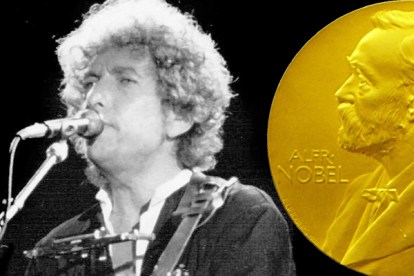
So Bob Dylan won the Nobel Prize for literature, who cares?

I love Bob Dylan……and Joan Baez. Meaning, message and melody unite in them

Ikhide R. Ikheloa's avatarPa Ikhide

bob-dylanThe world has not rested since the 2016 Nobel Prize was awarded, not to Ngugi wa Thiong’o, but to Bob Dylan, that legendary poet who also sings. There have been impassioned essays for and against the award to Dylan. It all makes for fascinating reading.  Take this piece from Rajeev Balasubramanyam, writing in the Washington Post (October 22, 2016) who makes an interesting case for why Ngugi should have won the prize:

Ngugi’s decision to move away from English was a brave one for a writer hailing from Africa, a continent frequently treated as irrelevant by the rest of the world. It could, in fact, have led to his disappearance from the global stage, but instead it solidified his reputation as a writer of supreme political commitment, though few of his contemporaries or juniors took up the call to write in their native languages. Ngugi’s attitude toward this, however, is…

View original post 1,297 more words

Posted in Uncategorized

Mujila Fiston Mwanza’s Tram 83: Requiem for the African writer, and again, the balance of today’s stories

Ikhide comes after the “poverty porn” genre, a six-shooter “in every hand” blazing and blasting away! Raises important issues for a theory of literary aesthetics! A useful read, tout de meme!

Ikhide R. Ikheloa's avatarPa Ikhide

There are cities which don’t need literature: they are literature. They file past, chest thrust out, head on their shoulders. They are proud and full of confidence despite the garbage bags they cart around.

– Mujila, Fiston Mwanza. Tram 83 (p. 96). Deep Vellum Publishing.

The literary acclaim that Tram 83, Fiston Mwanza Mujila’s 2015 debut book (translated from French to English by Roland Glasser) has garnered world-wide is a new writer’s dream. The reviews are uniform in their praise. The UK Guardian crows with awe, “Acclaimed newcomer Fiston Mwanza Mujila has dazzled the literary world with his debut novel, a riotous look at the underbelly of life rarely featured in sub-Saharan African literature.” It is perhaps one of the most highly decorated and acclaimed first novels in the history of “African literature”; it was long-listed for the prestigious Man Booker Prize (2016) and won the 2016 Etisalat Prize…

View original post 4,126 more words

Posted in Uncategorized

Poverty Porn – A New Prison for African Writers

Does prescriptivism not impoverish in the end? Does use of labels such as poverty porn not amount to subtle attempts to influence/control the directions of creative vision, choice and expression? Just questions from a naive reader!

Oduor Oduku's avatar

A critic brings knowledge, taste, and meaningful judgement to a piece of work. The three elements imply that a critic cannot be neutral – to judge is to move away from the line of neutrality, and this is why critics are important. By consistently portraying the courage to have their judgments presented publicly, they become an authority, gatekeepers in a field. They are choosing ‘preferred literature’ to their audiences, and justifying their choice.

They are activists in a way, and done longer enough, a certain preference begins to emerge, a preference for a certain kind of book, a certain kind of literature, of art. Places that have few, major critics, the ‘superstar’ critics, risk having access to only a few approved choices. Since knowledge feeds on itself, and people tend to pursue few definable positions, a society needs many critics in order to have access to a diversity of approved…

View original post 2,226 more words

Posted in Uncategorized

Victims of our own credibility and unrestrained goodwill that blocked all sober criticality! Now, we suddenly wake up and begin to recognise signs and to see things that were always there, staring us in the face whilst we deliberately chose to ignore them.

YUSUF’S RECALL: FAREWELL TO ANTI CORRUPTION POLICY?
AYO OLUKOTUN.
“How can a government official, being investigated for a whopping sum of 919 million naira fraud by the Economic and Financial Crime Commission be reinstated by the Government that came to power promising to sanitize the system. This is very unfortunate.”. Comrade Alade Bashir Lawal, Secretary General, Association of Senior Civil Servants Of Nigeria. The Punch, 8th of February, 2018.
The opening quote sourced from organized labour spokesman, Comrade Bashir Lawal, typifies the growing consternation and dismay across civil society over the reinstatement on Tuesday, of Prof. Usman Yusuf, the suspended Executive Secretary of National Health Insurance Scheme. Usman, it will be recalled was suspended from his post in July last year by the Minister of Health, Professor Isaac Adewole, following his indictment by a panel set up to investigate serious allegations of corruption, misdemeanor and chronic nepotism against him. Many will remember the controversy surrounding Yusuf’s suspension partly because of his widely quoted remark that, “only the President, to whom I report directly can suspend me from office”.
As the panel of inquiry noted, Yusuf engaged frequently in name dropping, leaving no one in doubt that, not only does he come from President Muhammadu Buhari’s home state Katsina, but he is close to him. Beyond that however, is the fact that the inquiry found him guilty of corruption and the siphonning of public funds through skills trainning, some real, many phantom. Among other disturbing issues, is the fact that he purchased an SUV car for 58million naira without due process. It was also alleged, that out of fifteen appointments, eleven, which included his niece, came from the North West, the zone from where he originates and four others from the northern part of the country, in violation of the Federal Character Principle.
The case went through several twists and turns, one of them, being the attempt of Yusuf, to nail the Minister, by claiming that he was being persecuted because he refused to acede to Adewole’s demand, that the scheme cough out funds to support the ministry. In the same connection, the House of Representatives in what appeared to be a hasty intervention and contradiction of a probe ordered by the Senate, ordered the recall of Yusuf, although nothing of the sort happened.
It is interesting to note, that at the time the presidency recalled Yusuf earlier this week, he was being investigated by the EFCC, to which the matter has been referred. It will remain a mystery therefore why government, without making public the result of the ongoing investigation, decided to re-instate the discredited official. Coming in the wake of the smuggling into the civil service of the Dr. Abdul rasheed Maina, a fugitive accused of serial embezzlement of pension funds, the Yusuf saga puts the anti corruption policy or what remains of it, very much in the cooler.
To be sure, it would have been proper if apart from the investigating Yusuf, government took interest in knowing whether his allegations against the minister were an after thought, calculated to divert attention from his feral conduct, or whether there is any substance in them. However that goes, it is improper, unethical and shocking that the presidency decided to re-instate Yusuf inspite of the cloud of doubtful dealings and graft hanging over him. Even if Yusuf were a favoured son, as appears to be the case, the decision to bring him back to office should have been weighed against the moral injury and the public uproar that will attend such a decision.
Besides, this writer is not convinced that there are no alternative ways of rewarding loyalty outside of public service. As matters stand, the decision to re-instate him, traced by commentators to a cabal in the presidency has given rise to several speculations such as the uncharitable one that the scheme will be a source of funding for the 2019 elections, should Buhari be a Presidential candidate. Talking about the cabal, Dr. Junaid Muhammed, a lawmaker in the second republic, suggested recently that Yusuf was appointed by the cabal in the Presidency and that he was not surprised that it insisted on re-instating him despite the heavy albatross of wrong doing around his neck.
Of note, is the fact that the cabal came under attack recently by no less a person than the Chairman of the Presidential Advisory Committee against Corruption, Prof Itse Sagay. Sagay was quoted as saying ” The cabal in his government has no business been in the presidency. As such, it should be fished out and flushed out”, (The Guardian, Wednesday, 7th of February, 2018). Whatever weight and influence one ascribes to the cabal, whose existence is a misnomer in a supposedly reformist government, the point remains that the buck stops at Buhari’s table. Buhari, it is, whom Nigerians overwhelmingly voted for in 2015 and look up to, for redeeming the campaign promises, including sanitizing the polity which he made to them. So, it is he that we must call upon to reverse the recent decision to re-instate a highly placed official of his government , who is facing trial for anti corruption charges.
Remarkably, there is a recent globalization of Buhari’s anti corruption policies, for instance by the African Union and a mark up therefore in Nigeria’ s soft power overseas. This suggests that we cannot afford to lose the moral high ground at a time when the world has begun to take notice. The other reason why Buhari should step in to reverse the reinstatement of Yusuf, is that the official is too closely linked to him suggesting that the anti corruption struggle is wittingly or unwittingly being corrupted by double standards, one, for the masses of Nigerians, especially the opposition, and another for cronies and kinsmen of the President.
To be sure, the nitty-gritty of politics, is such that rewards and opportunities must be extended to one’s political base in order to continue to enjoy their support. That said, nepotism and blatant ethnicity cannot be erected into a directive principle of state policy, without violating the inclusive pre-requisites of Nigerian federalism as spelt out in the 1999 Constitution. It does no credit to Buhari’s image if he is perceived as suspending the requirements of his administration’s flagship policy just to please his kinsmen.
To that extent, the matter at hand should be regarded as a test case for the anti corruption programme, which is in clear danger of being swept into ineffectuality. In the same vein, and deriving from a playbook of prudent and even handed conduct, Buhari should cultivate the image of being hard, if not harder on people close to him than those outside his immediate circle. For, it violently contradicts his reformist credentials if corruption flourishes unchecked and turned a blind eye to around him,while he is shouting himself hoarse himself about the need to kill corruption before corruption kills Nigeria.
Nigeria can draw a leaf from goings on in Israel, where the police has just concluded a probe of allegations of corruption about a sitting President, Benjamin Netanyahu which might well lead to his resignation. We should aim at this kind of presidential non interference and impartiality in law enforcement and judicial institutions.
Prof. Olukotun is the Oba(Dr.) Kayode Sikiru Adetona Professorial Chair of Governmance,Department of Political Science, Olabisi Onabanjo University, Ago Iwoye.
Posted in Uncategorized

The Catholic Bishop’s Conference of Nigeria – Amoses recovering their vision and voices

Saying it as it is……

AN ADDRESS PRESENTED BY THE CATHOLIC BISHOPS’ CONFERENCE OF NIGERIA (CBCN) ON THE OCCASION OF A COURTESY CALL ON HIS EXCELLENCY MOHAMMADU BUHARI, PRESIDENT OF THE FEDERAL REPUBLIC OF NIGERIA, THURSDAY, 8 FEBRUARY 2018

Your Excellency,

Preamble

We, the representatives of the Catholic Bishops of Nigeria, bring you our cordial greetings and blessings. We desired this meeting, in order to continue the dialogue we initiated with you even before your election as President. We therefore thank you for granting us this audience, which affords us the opportunity to share with you, once again, our thoughts and concerns on some issues affecting our dear country, Nigeria.

First, we thank God for bringing you back to us healthier and stronger after a period of ill health. We hope and pray that you continue to make progress on the way to full recovery, in order to be able to face the enormous challenges emanating from your exalted office.

Your Excellency, needless to say that, as President, you are the Father of our dear country Nigeria. It is therefore pertinent that as loyal citizens as well as informed members of the society we come to you from time to time to express not only our willing cooperation with the government in working for the progress of our country, but also to share with you the feelings of the multitude of Nigerians at this moment. We work with the people at the grassroots and, therefore, have first-hand information about what they are going through.

There is no doubt that when you came into office, you had an enormous amount of the goodwill of Nigerians, since many saw you as a person of integrity who would be able to bring sanity into a system that was nearly crippled by endemic corruption. Nearly three years later, however, one has the feeling that this good will is being fast depleted by some glaring failures of government which we have the moral duty to bring to your notice, else we would be failing in our duty as spiritual fathers and leaders.

Our Concerns

Your Excellency, there is too much suffering in the country: poverty, hunger, joblessness, insecurity, violence, fear… the list is endless. Our beloved country appears to be under siege. Many negative forces seem to be keeping a stranglehold on the population, especially the weaker and defenseless ones. There is a feeling of hopelessness across the country. Our youths are restive and many of them have taken to hard drugs, cultism and other forms of violent crime, while many have become victims of human trafficking. The Nation is nervous.

Just as we seem to be gradually emerging from the dark tunnel of an economic recession that caused untold hardship to families and individuals, violent attacks by unscrupulous persons, among whom are terrorists masquerading as herdsmen, have led to a near civil war situation in many parts of the country. We are saddened that repeatedly innocent citizens in different communities across the nation are brutally attacked and their sources of livelihood mindlessly destroyed. Property, worth billions of Naira, including places of worship, schools, hospitals and business enterprises are torched and turned to ashes. We are still more saddened by the recent massacre of unarmed citizens by these terrorists in some communities in Benue, Adamawa, Kaduna and Taraba States which has caused national shock, grief and outcry. What is even more distressful is that the government, whose responsibility it is to protect the life and property of every citizen seems either incapable or unwilling to do this. The silence of the federal government in the wake of these horrifying attacks is, to say the least, shocking. There is a feeling of helplessness among the people and the danger that some people may begin to take laws into their hands.

We therefore earnestly urge the government to take very seriously its primary responsibility of protecting the lives and property of its citizens and ensure that such mindless killings do not reoccur. Herdsmen may be under pressure to save their livestock and economy but this is never to be done at the expense of other people’s lives and means of livelihood. We would like to add our voice to those of other well-meaning Nigerians who insist that a better alternative to open grazing should be sought rather than introducing “cattle colonies” in the country. While thinking of how best to help cattle owners establish ranches, government should equally have plans to help the other farmers whose produce is essential for our survival as a nation.

In a similar vein, daredevil kidnappers, who at present are having a field day, with a feeling of invincibility, must be made to understand that there is a government in this country. Government should invest more in equipping our Police Force with modern high-tech devices that will help them track down and arrest these criminals and make them face the wrath of the law.

The Federal Character Principle is enshrined in the 1999 Constitution of the Federal Republic of Nigeria: “The government of the Federation or any of its agencies and the conduct of its affairs shall be carried out in such a manner as to reflect the federal character of Nigeria and the need to promote national unity and also to command national loyalty, thereby ensuring that there shall be no predominance of persons from a few states or from a few ethnic or other sectional groups in that government or in any of its agencies” (Section 14, Sub-section 3-4). Disregard for this Principle in some federal government appointments as well as perceptible imbalance in the distribution of federal amenities has created the loss of a sense of belonging in many parts of the country, hence the constant cries of marginalization, agitation for secession and calls for restructuring.

Conclusion and Assurance of Prayers

Our Church has always complemented the efforts of government in such areas as providing quality education and primary health care services to our people. We shall continue to support the effort of the government in nation-building. As the voice of the voiceless, we shall therfore continue to highlight the plight of our people and play our prophetic role of sensitizing the government, thus promoting national unity and cohesion. As we encourage you to spare no effort to build a new Nigeria, we reassure you of our support and prayers for your success. On the long run,Government under your watch must do all in its power through good policies to restore confidence that government is for all and sundry. Our collective efforts must be seen in the desire to return to the fine principles of democracy such as true federalism, negotiation and consensus building as means of achieving a more equitable distribution of the resources of our country.

Thank you, Your Excellency, for the audience and may God bless you.

Most Rev. Dr. Ignatius Ayau Kaigama
Archbishop of Jos President, CBCN

Most Rev. Dr. William Avenya
Bishop of Gboko
Secretary, CBCN