
Author: Noel A Ihebuzor
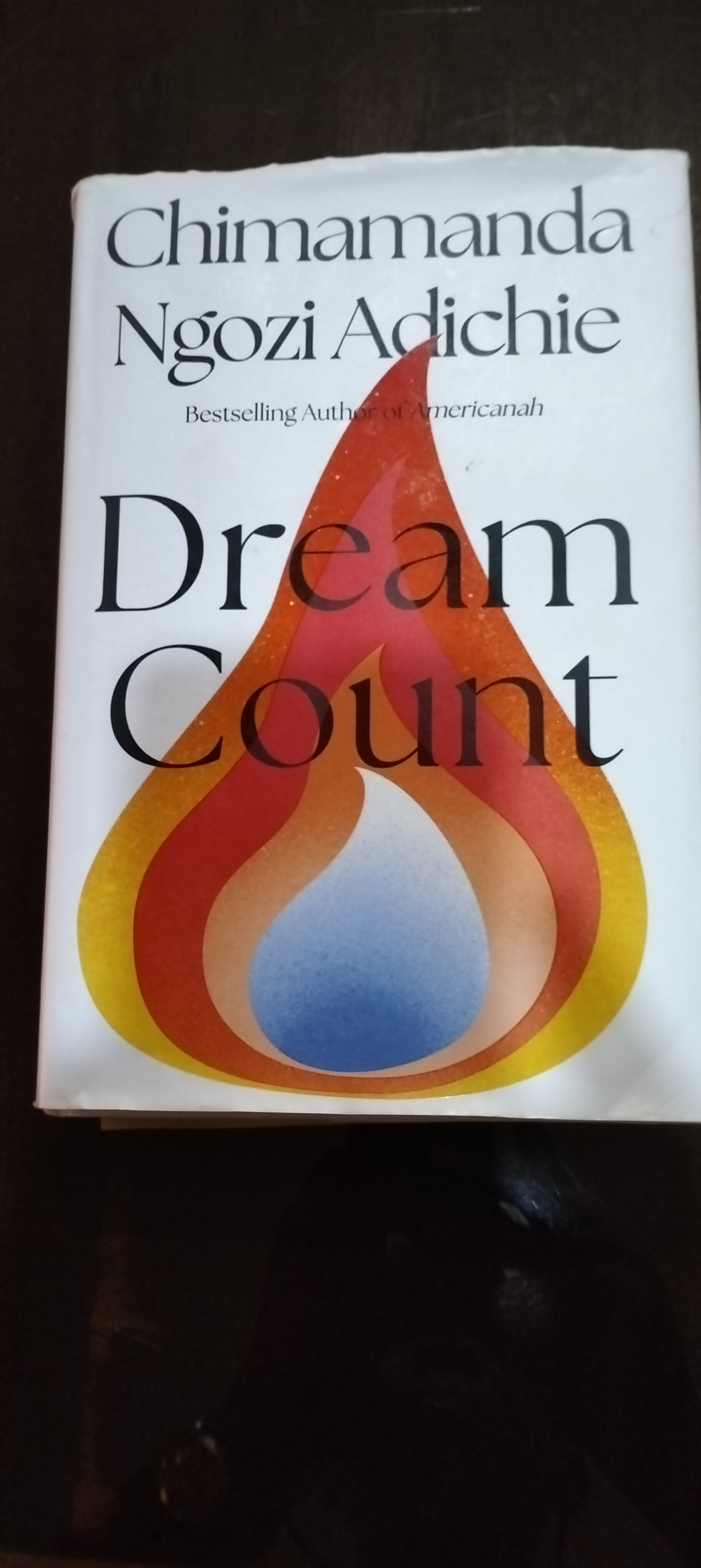
One of the most fascinating lessons I’ve learnt about women in this my short life, and this is based on the women I’ve met, is that a man can never truly claim to know a woman, except perhaps his mum. Because essentially, women are basically unknowable.
Women are mysteries, and the moment they lose their mystery, they lose an essential trait, a trait that makes them women. I am inclined to concluding on the basis of my limited experience (error of limited sample size) that this state of things just has to do with what I believe is at the core of what being a woman, that quality of their “unknowability” to a man. Let us suppose that this applies to the relationships between most women and men and is invariant in time and place. In that case, a man approaching trying to “know” a woman in fiction, and this woman herself being a creation by another woman (would “understand” be a better verb to use in this context?), faces a serious uphill task. Such a man could be said to be embarking on a task which even the bravest of souls would approach with a lot of caution and timorousness.
Yes, it is thus with a spirit of “quaking and trembling” that I embark on this assignment, or this self-imposed task that will not let me rest, of sharing a few thoughts about what I believe I’ve learnt or known or suspect to have known about one of the many female characters that populate Chimamanda Ngozi Adichie’s many books. I’ve picked on one of her female characters that is perhaps the most complex, the most unknowable, and indeed, the most difficult to trap. And this you must agree, is a difficult task for a specie (sincere apologies for any crude biologism here – it is totally unintended) that, at the outset, I’ve said is basically unknowable to most men.
The character in question here is Omelogor, Chiamaka’s cousin in Ngozi Chimamanda Adichie’s newest and most engaging novel – Dream Count. Omelogor is the person I’m trying to wrap my head around to try to see if I can present a description of her that makes sense to me before it can make sense to other people. Omelogor is very complex, but then, trying to decipher a complex character is a project that appeals to us as humans, even when we intuitively feel that failure could be the fate of such an exercise in the long run. But I’ll try. As the French say, “The difficulty of succeeding only makes it more imperative for us to try.” By the way, that’s a very bad translation indeed, because the original expression in Beaumarchais’ play = Le Barbier de Seville goes thus, “La difficulté de réussir ne fait qu’ajouter à la nécessité d’entreprendre.”.
Yes, the subject of my reflection is Omelogor, her actions and her thoughts as reflected in the story in the section of the book that bears her name. I am asking whether Omelogor is the world’s modern female Robin Hood, (And it should not surprise anyone that the name of the NGO she established and devoted to supporting female empowerment is known as Robyn Hood – how cheeky!). I am also wondering aloud whether Omelogor is a social iconoclast, a deliberate disruptor of social norms and conventions, a social avenger, a woman who is willing to stand up to the rich and powerful, a career banker who does not think twice about using a mop to poke at comfortable glass ceilings of society, a very composed male-eater or a bit of all of these. Who thus, is this engaging and unusual character, this bold character, who sets out to speak with frankness on several issues that most women would approach with a lot of caution, you may ask? Omelogor is someone who can throw caution to the wind and who speaks her mind on very difficult issues, can make up her mind on very complex social issues, and who can go ahead to do things that run counter to the dominant trends and the dominant models of sex roles in society. Once her mind is made up, she just goes ahead and does these things, without as much as batting an eyelid about what the consequences could be.
Omelogor is a banker who returns to Nigeria from the USA, after a successful degree, and joins a bank, rises to the very top of the career and becomes a very close associate and confidant of a character in the book simply described as CEO. The appellation CEO is the only one we have of him. Could this be a technique that Chimamanda Adichie uses to suggest that the CEO could refer to anyone, to any of the many individuals who crowd and corrupt the numerous commercial establishments in Nigeria’s financial sector? Through the CEO and his antics, the reader gains an insight into the carryings-on and the putrefaction that has become a distinguishing feature of the dealings in our banking sector. These include money laundering, aiding and abetting financial heists, stealing from clients’ funds, armed with the knowledge that persons who operate accounts made up of stolen funds cannot speak up when those very same funds are expropriated from them by the persons they entrust them to. CEO is just as criminal as those who steal government funds, as he steals from his very customers in the Bank. Omelogor soon finds out that the CEO is stealing from his own bank but shows no moral outrage. This is a reflection of how badly her values have altered that rather than upbraid the CEO for larceny, she actually tells him that she can teach him better ways to cover his tracks and criminal acts, CEO takes the bait, and once he does this, he becomes Omelogor’s accomplice and partner in crime. By thus choosing to cover up the CEO, Omelogor has effectively pocketed him and silenced him forever. To keep him under her thumb, she says – “I never failed to perform respect” because she has come to realize that men like CEO “had shockingly thin skins”. Notice that the expression “to perform respect” serves to convey the superficiality and fakeness of her actions since she actually feels nothing but contempt for these big men in society – “these same men who paraded wealth that they knew to be mere hull and all hollowness beneath.” Omelogor continues to thus “play” this society for her own gains and ends. Is it hypocrisy that she can still decry the collapse of morality in Nigeria or is it the silenced voice of her morality still struggling to speak out amidst all the financial rot and decadence? Her observation that “It is not that Nigeria is poor, it is that it is virulently materialistic…….Money is at the of center of everything, absolutely everything. We don’t admire principle or purpose” is most apt but what gives the moral high ground to speak thus when we know that her behavior in managing funds entrusted to her financial house betrays this same trait?
She makes a number of statements that condemn corruption in society and its consequences. And I find myself agreeing with her when she talks of the “fragile security of stolen wealth”. When she comments thus of a politician – “He was surrounded by many people but he trusted so few because his power had robbed him of the ability to trust”, I find myself feeling very sorry for the politician because he is experiencing the effects of what I describe as a bad tradeoff. The story contains other instances of the damaging results of a life of criminality –aptly expressed in the reflection “who do you go to complain when someone steals the money you stole from you”? This situation is well illustrated in the case of the politician whose money is stolen and who did nothing “because what can you do when a person has stolen what you stole”?
Omelogor crosses the stealing and cheating line and her excursion into philanthropy with stolen funds could be dismissed as the efforts of someone looking for ways to buy back her soul by using of some of the stolen money to financially empower needy women! But I could be wrong as some other reader could simply see Omelogor as our brand new 21st century Robin Hood. She takes the money she shas stolen and sets up a foundation that embarks on an empowerment programme for women in rural communities. Redemption through restitution to non-expropriated? Does this clean up the act of stealing? Her model is that of a thief who steals money with the intention is using it to empower the poor. But do intentions wipe out criminality? Because stealing is criminal. Taking what is not yours is criminal, even if what you’re taking is stolen. And it is important to say this and draw clear boundaries around these issues, for if not we could get trapped in a quagmire of philosophical ramblings, emotional tainted disputations and theological disagreements. A man/woman who steals from the rich to give to the poor, is he/she doing the right thing? And if the intention is to do the right thing, do intentions redeem an act from what it was in the first instance? Now, those are the type of questions that Omelogor’s acts in the story throw our way. The case of stealing from a stealer raises important ethical and moral issues! Whilst Robin Hood is an appealing model for this type of moral conduct, one wonders what the world would become if we all became modern Robin Hoods, acting like EQUALIZERS in the Denzel Washington and Queen Latifa molds.
What would Immanuel Kant say about such a world in the light of his categorical imperatives? Ethics and Morality can often be slippery where acts are judged by the intentions of the perpetrator and not by its outcomes and consequences; The moral and ethical question of “stealing from a thief”—sometimes phrased as “Can it be right to take back what was stolen?” – is a nuanced issue in philosophy. It has attracted and continues to attract volumes and tomes in ethics and theology and Miss Adichie, in her presentation of Omelogor, walks dangerous and slippery grounds here as the actions of her character raise the important question, is it right to steal from someone who has stolen? When Omelogor says “Look, you have to understand that lying and deceiving are not moral issues in everyday life here – they are just survival tools.”
Should we extend the same claim to stealing and “pen robbery”? And she goes on to seal her position and indicate the protective seal one must apply on one’s mind to carry on the way she does – “Compunction is not even an option because you would need to think of these issues first as moral”. Our heroine has provided us with the moral code by which she wants to be judged. Is she rationalizing her dishonesty by thus creating a code by which her acts should be judged? Honestly, I do not know. How did her mind which condemned the sleaze and corruption in the banking sector, her mind which had so much contempt for the corrupt characters in the sector suddenly get twisted? How and why did she allow her soul to be seduced to cross over the line that separates the innocent from the damned?
Maybe the seeds for the conversion could be traced to her unusual sexual ethos. Here is a female character who picks men to sleep with and dispenses with them after the event without any trace of emotional connection. Is she real? Is she acting? Doesn’t she feel anything? Is she well? Is her characterization simply to convey, by role reversal, the frustration that women, like Zikora and Kadiatou, feel on being used and dumped by men. In one episode, she walks over and invites a man who she has spotted ogling her at a party to her flat. In another, she picks a young man in act devoid of emotional connection. She picks the men. She is not picked.
Listen to Omelogor speak about one of such pickups. – “I sensed his fascination with and mild repulsion for women older than him”. Yet she goes on and ends up “bedding” him and this decision is the rational one of a female tigress. About this younger lover, Omelogor observes – “He was to me simply a younger man, an experiment because he was sweet”. Who else but a man-eater could speak thus – Men run for your lives! There is a man eater on the prowl! And she can be so detached during the act of coitus that she is able to provide a neutral and clinical description of the engagement taking place, taking time to talk of the practiced movement of fingers and tongue and accusing the young man trying to please her of simply going through a well-rehearsed performance whilst being completely enraptured with himself over his performance. Reads more like a description of male masturbation with a female accomplice.
There’s a role reversal here in terms of our stereotypes. In standard narratives, men use women and dump them and move on. In the cases of the encounters between Omelogor and men, the tables are turned. Here is a bold female character, an enterprising and upwardly mobile one at that too, a new manifestation of Jagua Nana if you want, who picks up men, chews them and spits them out without any emotional connection. Picking men and sleeping with them without due attention due to considerations such as shared values, social class and adequate background checks of one’s intended sleep mate carries certain risks as Omelogor discovers when one of her “captives” brutalizes her during coitus by pinching her breasts – and he confuses effective and pleasurable coitus with the act of riding her as if he were riding a horse. She is so turned off that she tells him to get off and get going.
I have a nagging feeling that the character Omelogor perhaps offers the author a good platform for speaking out against a number of male inadequacies in relationships with women, be they wives or mistresses. Take the case of Hauwa whose husband is described as a reason and not a person. Or take the case of Mmiliaku and her husband, Emmanuel. Mmiliaku complains that her husband “just climbs on top of her whilst she is sleeping! “I just want us to have enjoyable sex and connect as man and wife. It is terrible, always the same thing: he forces himself into my body when I am asleep”. When Mmiliaku complains to Emmanuel about his approach to sexual relationships in a marriage, he resorts to the strategy of shaming, instead of agreeing to identify his shortcomings – accusing her of talking like a prostitute and advising her to change her ways! My fellow men are we such insensitive and sexually incompetent clods?
The story “Omelogor” is replete with her and the way she treats men. In a few episodes, she makes comments on masculinity and the size of the male organ, which is something you don’t usually find women talking about – but I could be wrong here. Does Adichie use Omelogor to have a laugh at men, and the type of insecurities they feel because of size. One episode during a sexual encounter illustrates this well. When one of her “sex captives” asks whether he was hurting her during the sex act, she reflects and comments to herself – ”hurting me when the man had an object of insufficient size further encumbered by a significant belly, and yet he had the nerve, as he was huffing and puffing to keep asking “am I hurting you”. “Huffing and puffing”, like the ineffective Fox in the three pigs story! Huffing and puffing indeed – this is what a man’s action during coitus is now reduced to.
And the introduction of four of her lovers by the phrase – “There was a man” – is very unusual and subversive. “There was a man”, so we read, “there was a man with long elegant fingers”. “There was a man I could have loved, a man I wanted to love” – all of these read more like the disinterested entries in the social diary of a female qualitative researcher working on the relationship between the sexes, – conducting initial frequency counts, tallying numbers and then making bland entries. There was this man with elegant long fingers she describes as erudite, self-possessed, and not crushingly handsome but he is disqualified by one flaw – self-love because nothing bores Omelogor more than the self-love of men who have their whole lives been praised for their looks. In another relationship, she gets really upset when the fellow keeps repeating “I love you” to her during the act of lovemaking and ends the relationship. Her longest relationship lasts 11 months! Yet this tigress is not immune from emotions that come from the type of autopsies we usually carry out at the end of relationships – “How could I have opened my door to this man who I did not want at all and could not possibly have wanted” = So what happened ? Did Omelogor open her door to him in a moment of irrationality? Please do not ask me.
Like most men, I feel uncomfortable when females discuss male sizes. Why? It is simple – I’m tempted to believe that the saying size matters actually is a derivative, an offshoot from male obsessions with their inadequacies. And that indeed, if you look at the current obsession in pornography, which incidentally Omelogor wanted to do a master’s degree in, and its consistent interest in exaggerations, exaggerated phalluses, exaggerated busts, exaggerated moans and visual exaggerations enhanced by different styles and angles of photography and close ups, you will understand why men feel uncomfortable when size is mentioned. In pornography where one sees such mechanistic and demeaning images, one is right to start to wonder whether sex is really an expression of affection or is it more a physical expression of power and asymmetries? Is the sexual act an expression of power symbolized by size; of force and invasions symbolized by entry for the man; power symbolized by capture for the female; and power symbolized by subjugation for the female? I say subjugation very responsibly and I do so because at the end of most sexual encounters, the man leaves the battlefront a reduced form of himself, feeling very, very insecure at the end of it.
It is these taboos that Omelogor exercises little reluctance in giving expression to. And this is what makes her fascinating as a character in this book. Because she talks freely about these inadequacies, and funny enough, she’s also so aware of male inadequacies that she even sets up a blog to talk to men about issues about sex and relationships that men tend to fret about and are unwilling and afraid to discuss with third parties. Reading the contents of her blog, one cannot but get the feeling that Omelogor is mocking men and having a good laugh at their expense. It is also interesting to note, as I’ve said earlier, that Omelogor decides to abandon her banking career to go to the States to do a master’s degree in all things…in all things on an unholy subject like pornography. Anyway, in the end, she abandons the degree, but that does not mean she has abandoned her restless mind. Her mind is full of energy and brimming with rebellion.
So, what we have here now is a picture of a new female. I’m careful not to say new feminist. Is this a new female that’s assertive, that’s independent, that knows what she wants to do, and that doesn’t really appear to give a hoot about what social conventions say, Is this the model for the new female? Is she the model for the new feminist in Nigeria? I don’t think that’s the author’s intention. The author’s intention is rather to tell us that it is also possible for females to choose paths that do not conform to the conventional. Females can choose paths that set them apart and that are not necessarily tied to obeying the strictures of social conventions.
In the end, looking at Omelogor, you realize that we are dealing with a female who can say what she wants, and does what she wants, and doesn’t allow herself or her horizon to be limited by social norms and conventions. Is this the definition of a feminist? Perhaps so.
Now, if this is the definition of a feminist, then Omelogor is one, a social iconoclast smashing away at all the barriers of morality, whittling down on all expectations of females in normal society, attacking preciously held notions about motherhood. In her discussion with her auntie, she’s very clear about it – attacking and showing very strong moral outrage about attempts to make her conform to the norms of a society. In that case, social iconoclasm for her becomes a route to self-expression. But when you look at her closely, you discover a woman who’s also very anxious to be loved, anxious to be possessed, anxious to possess, but who is not that lucky, because the men she meets don’t meet her criteria. Could it be that she set her criteria too high? Could the source of the problem be in the way she conceives of love as sudden panic syndrome, an emotion described by another writer Mario PUZO in the Godfather as the bolt of lightening effect? Must all love be of this highly romanticized nature?
Omelogor is a woman who has triumphed over a number of socio-cultural obstacles that stand between women and upward social mobility, who has overcome social constraints and barriers that stand between women and success, broken through the glass window and is there in our faces asserting herself, being herself, even at the risk of being labeled a social iconoclast, a man-eater who picks up the men she wants, a lady who trivializes pornography, and who is able to even take risks of sleeping with men she poorly understands. So perhaps our female Robin Hood, our female social iconoclast, our social avenger, our male-eater, is a woman who wants to be what she wants to be and who demands to be understood for what she is and wants to be. But then I’m not sure that men would understand her and accept her in that position.
But there’s a point at which she actually goes beyond this searching for identification and definition and goes into what one could call a subversive role. The typical relationship in society, the typical male-female relationship in society is one that is governed by, in many ways, in many relationships, by power asymmetry where the man either physically or financially or socially enjoys a more privileged status than the woman. That is our standard, paradigm for the relationship between a man and the woman. The man is either richer, stronger, older, more experienced or taller or whatever you want to name it. But there’s always that asymmetry which is a critical part of male-female relationship. Now, in Omelogor’s case that asymmetry is changed, is reversed, is subverted because whereas the rich man uses his money and social position to hire women to come and please him, Omelogor uses her power, her privilege, her connections to hire men to come and please her. Now, that’s subversion because it subverts our normal expectations.
It is also worth noting that in our culturally defined norms, it is the man who makes the move, who chooses, who decides where the playground will be. But then suddenly a woman emerges and she’s the one doing the choosing, choosing when it will start, choosing when it will end, choosing who she will play with, choosing on which terrain she will play with the person. And for me, that’s been very deliberately subversive because like I’ve said earlier, the typical male-female relationship is one that’s characterized by intersection of power, privilege, culture and patriarchy, and all end up favoring men. Omelogor, in one fell swoop, subverts all that. And it is that deliberate attempt to subvert and successfully subverting that qualifies her well as social iconoclast.
There is also a play on the name Omelogor by the author. The name Omelogor in Igbo suggests social philanthropy, and most social philanthropists are men. There are a few women. It is also assumed that money used for such noble exercises was cleanly made. Was the money that Omelogor deploys to social philanthropy made through honest means? No because we know that in Omelogor’s case, the money was made by robbing the rich who had robbed society. Philanthropy made possible with stolen funds is flawed right at the outset! Why then would Chimamanda Ngozi Adichie, her creator “bless” her with a name as Omelogor knowing that her social philanthropy which reflects her name is made possible by illegal-gotten wealth, even if this illegally gotten wealth is obtained by robbing the rich who have robbed society? I find to be another interesting dimension to this story.
Omelogor is socially aware and she has agency. But her behavior shows traces of what can be called a socially amoral strain with a very pronounced pragmatist bent. Her unfolding persona clearly illustrates the difference between the immoral and the amoral person. I hope that I am not being unfair to her if I say that she can be indifferent to conventional morality and may indeed have created her own moral laws. I’m not sure I’ve understood Omelogor, but like I said, I don’t think I understand women and I don’t pretend I do and perhaps I never will.
But the story is well written by a very skilled word and phrase smith and powerful storyteller and the verses and lines flow so beautifully – Just a few examples will suffice to demonstrate this –
“a part of Zikora decayed into a bitterness which she imagines is wisdom”
“if I needed further proof that this was no emotion happening, it was the painful hailstorm of cascading regret that hit me each time I remembered him”
“Friendship should have prefixes, suffixes, gradations”.
“….and leave my skin unmarked by the stigmata of eternal gratitude”
“Jide thinks of his hopes as thwarted even before he hopes”
There is beauty in these lines, even if some of these lines are hauntingly so . Read the book and you will discover more.
 Reflections